
Manchester's Working-Class Anthems That Defined a Generation
Oasis emerged from Manchester in 1991 as the most commercially successful and culturally divisive band of the Britpop era, led by the volatile creative partnership of songwriter Noel Gallagher and vocalist Liam Gallagher. Their fusion of Beatles-inspired melodies, punk attitude, and working-class swagger turned them into stadium-filling icons within three years of their formation. The Gallagher brothers' public feuding became as legendary as their music, transforming Oasis into a cultural phenomenon that transcended typical band narratives. Their peak years, roughly 1994 to 1997, saw them positioned as Britain's answer to grunge-era American rock, offering anthems of defiant optimism rather than Seattle's introspective angst. Where Nirvana channeled disillusionment, Oasis delivered unapologetic confidence. They sold over 75 million records worldwide despite critical ambivalence toward their later work, proving their connection with audiences ran deeper than critical consensus. Their 2009 breakup seemed inevitable given two decades of sibling conflict, yet their influence on British guitar music remains undeniable. The 2024 reunion announcement sparked unprecedented ticket demand, confirming their status as generational touchstones whose significance extends beyond their discography into the fabric of 1990s British identity.
Beatles Worship Meets Punk Snarl: The Sonic Blueprint
Oasis built their sound on unabashed Beatles homage filtered through Stone Roses jangle and Sex Pistols sneer. Noel Gallagher's songwriting borrowed liberally from 1960s British rock—chord progressions echoing "Imagine," string arrangements recalling George Martin's productions—but delivered with amplified guitars and Liam's nasal, confrontational vocal delivery. This wasn't subtle reinvention. It was bold appropriation presented as working-class reclamation of rock mythology. The production, particularly on their first three albums, favored density over dynamics. Owen Morris's mixing on Definitely Maybe and Morning Glory pushed everything into the red, creating a compressed wall of sound where acoustic guitars, electric layers, and orchestral elements competed for space. Critics called it overproduced; fans heard it as triumphant maximalism. Liam's voice became their most divisive element—a limited range deployed with absolute conviction, sneering through verses before opening up on soaring choruses. His phrasing often felt deliberately antagonistic, emphasizing attitude over technical precision. Where other Britpop vocalists like Damon Albarn employed character and wit, Liam offered authenticity through sheer force of personality. The band's slower material revealed their balladic strength: "Wonderwall," "Don't Look Back in Anger," and "Slide Away" stripped away the swagger to expose surprisingly tender melodic craftsmanship, though even these moments carried undercurrents of defiance rather than vulnerability.
From Boardwalk Gigs to Knebworth: Oasis's Meteoric Ascent and Slow Decline
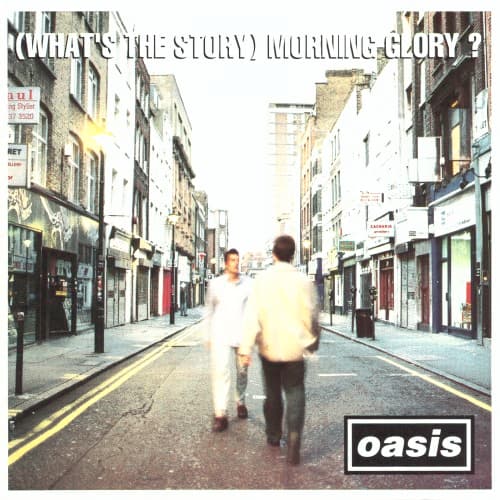
Formed initially as The Rain by guitarist Paul "Bonehead" Arthurs, bassist Paul McGuigan, drummer Tony McCarroll, and rhythm guitarist Chris Hutton, the band transformed when Liam Gallagher joined as vocalist in 1991 and insisted on the name Oasis. The crucial shift occurred when Liam's older brother Noel, returning from a stint as a roadie for Inspiral Carpets, agreed to join on condition he'd control the songwriting. That creative dictatorship proved essential to their trajectory. Creation Records boss Alan McGee discovered them at Glasgow's King Tut's Wah Wah Hut in May 1993 during an unscheduled performance, signing them immediately after witnessing their raw intensity. Definitely Maybe arrived in August 1994 as the fastest-selling debut album in British history, establishing their sonic template with "Rock 'n' Roll Star," "Live Forever," and "Supersonic." The album captured something zeitgeisty about mid-90s British youth culture—aspirational yet rooted, loud yet melodic, arrogant yet sincere. Its success positioned them as Britpop's commercial heavyweights alongside Blur, though the two bands occupied different cultural territories. The Blur-Oasis rivalry peaked in August 1995 when both released singles on the same day, a media-manufactured "Battle of Britpop" that Blur won commercially but Oasis won culturally. Their second album, (What's the Story) Morning Glory?, released October 1995, became one of the best-selling British albums ever despite mixed critical reception. "Wonderwall" achieved global ubiquity, "Don't Look Back in Anger" became a generational anthem, and "Champagne Supernova" showcased their ambition toward epic-length statements. The album's massive success culminated in two Knebworth shows in August 1996, playing to 250,000 fans with 2.5 million ticket applications—a cultural peak they'd never match. Be Here Now followed in August 1997, breaking sales records during its first week before collapsing under its own excess. Recorded during a haze of cocaine and ego, the album exemplified everything critics disliked about Oasis: overlong songs, bloated production, diminishing melodic returns. "D'You Know What I Mean?" and "Stand by Me" had moments, but the album's reputation soured quickly. It marked the beginning of their commercial decline and the first cracks in their cultural dominance. Subsequent albums—Standing on the Shoulder of Giants (2000), Heathen Chemistry (2002), Don't Believe the Truth (2005), and Dig Out Your Soul (2008)—contained strong individual tracks but lacked the cohesive impact of their first two records. Lineup changes saw the departure of founding members, with only the Gallagher brothers remaining constant. Their live performances remained powerful, but the sense of cultural moment had dissipated. An August 2009 backstage fight in Paris before a festival performance became the final breaking point. Noel quit immediately, and Oasis ceased to exist. Both brothers pursued solo careers—Noel with his more experimental High Flying Birds project, Liam continuing the Oasis approach with Beady Eye before his own solo work. Neither achieved Oasis-level commercial impact, though both maintained devoted followings. The surprise August 2024 reunion announcement, confirming 2025 tour dates across the UK and Ireland, reignited public interest on a scale that proved their absence had only strengthened their mythology.
The Britpop Band That Outlasted Britpop's Critical Reassessment
Oasis's influence operates on two distinct levels: their direct impact on subsequent British rock acts and their broader cultural symbolism. Musically, they spawned countless imitators throughout the late 90s and 2000s—bands like Embrace, Cast, and The Stereophonics who adopted similar approaches to anthemic rock. The Arctic Monkeys, despite their different sonic palette, acknowledged Oasis as crucial to their formation, citing them as proof that working-class British bands could achieve massive success without compromising regional identity. Their unapologetic embrace of classic rock structures helped legitimize traditionalism during an era increasingly dominated by electronic experimentation. Culturally, they represented something larger than music: a particular strain of working-class masculinity, regional pride, and generational confidence that defined 90s Britain. Their swagger became aspirational for millions who saw their own backgrounds reflected in the Gallaghers' Manchester accents and council estate origins. This cultural weight, however, also limited their critical reappraisal. Where other 90s acts have enjoyed revisionist appreciation, Oasis remains polarizing. Their best work—Definitely Maybe's raw energy, Morning Glory's melodic peaks—stands up remarkably well, but their refusal to evolve or experiment makes comprehensive defense difficult. The reunion's announcement sparked debates about legacy versus nostalgia, whether their return represents genuine artistic relevance or purely commercial opportunity. Yet the unprecedented demand suggests their significance extends beyond musical merit into collective memory. For those who came of age during their peak, Oasis soundtracked formative years with an emotional directness that transcends critical frameworks. Their legacy isn't about innovation—it's about connection, about massive crowds singing every word, about the feeling that rock music could still matter on a cultural scale.