The Revolution That Began in Liverpool
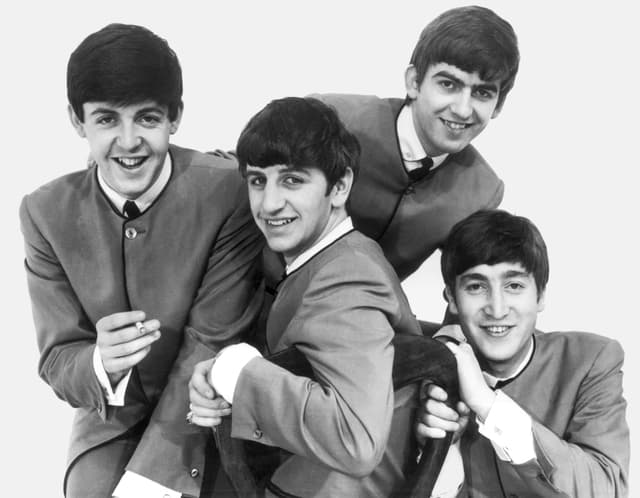
The Beatles didn't just participate in the history of rock music—they essentially wrote its rules. Emerging from Liverpool's Cavern Club in the early 1960s, John Lennon, Paul McCartney, George Harrison, and Ringo Starr transformed from leather-clad rock and roll enthusiasts into the most influential musical group of the twentieth century. Their decade-long career compressed what might have been several lifetimes of artistic evolution into a concentrated burst of creativity that fundamentally altered popular music's relationship with art, commerce, and cultural significance.
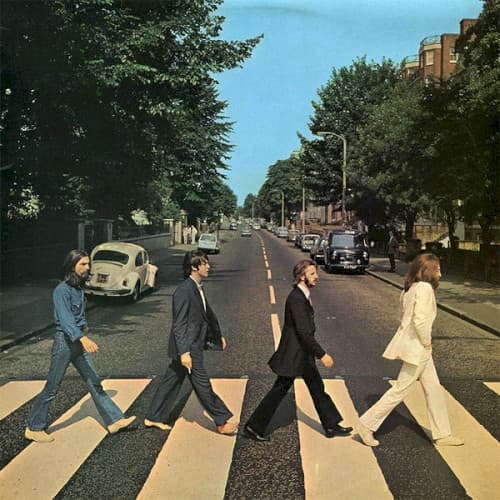
What made The Beatles unprecedented wasn't simply their commercial success, though the numbers remain staggering. They redefined what a rock band could be: self-contained songwriters who controlled their artistic direction, studio innovators who treated recording as composition rather than documentation, and cultural ambassadors who carried youth culture's values into the mainstream. Their trajectory from "I Want to Hold Your Hand" to the symphonic complexity of Abbey Road represents rock's coming-of-age story—the moment popular music claimed equal status with any art form.
The group's dissolution in 1970 ended their direct collaboration but couldn't contain their influence. Every rock band that followed has operated in the world The Beatles created, whether embracing their innovations or deliberately rejecting them. Understanding rock music without understanding The Beatles is like trying to comprehend modern physics without Newton.
From Merseybeat to Studio Revolution: The Beatles' Sonic Evolution
The Beatles began as extraordinarily tight interpreters of American rock and roll and R&B, filtering Chuck Berry riffs and Motown vocal arrangements through working-class Liverpool sensibilities. Their early sound—jangly Rickenbacker guitars, tight three-part harmonies, and Ringo's deceptively simple drumming—created the template for British beat music. Producer George Martin's classical training added sophisticated touches that elevated their arrangements above standard pop fare, introducing string quartets, baroque harpsichords, and unconventional song structures into the top forty.
Their creative relationship with Martin and engineer Geoff Emerick transformed Abbey Road Studios into a laboratory for sonic experimentation. Rubber Soul and Revolver marked their departure from live-performance thinking toward studio composition. They pioneered automatic double tracking, close-miked drums, backward recording, vari-speed manipulation, and innovative microphone placement. The orchestral crescendo in "A Day in the Life" wasn't just ambitious—it was conceptually radical, treating the recording studio as an instrument itself rather than a capture device.
By Sgt. Pepper's Lonely Hearts Club Band, The Beatles had absorbed psychedelic culture, Indian classical music, avant-garde composition, and music hall nostalgia into a singular vision that couldn't be replicated in live performance. Their later work embraced both extremes—the stripped-down directness of "Get Back" alongside the intricate production layers of Abbey Road's medley. This stylistic range, achieved within seven years, demonstrated that rock could contain multitudes: simplicity and complexity, tradition and innovation, accessibility and artistic ambition.
A Decade That Changed Everything: The Beatles' Artistic Journey
The Beatles' Hamburg apprenticeship, playing marathon sets in German clubs, forged their musical cohesion before fame arrived. Brian Epstein's management replaced their rough edges with matching suits and choreographed bows, making them acceptable to mainstream audiences without neutering their energy. The 1962 dismissal of Pete Best in favor of Ringo Starr completed the classic lineup just as "Love Me Do" launched their recording career.
Beatlemania exploded in Britain during 1963, then crossed the Atlantic in February 1964 with a defining Ed Sullivan Show appearance that drew 73 million viewers. The American breakthrough wasn't simply commercial success—it was cultural invasion. The Beatles rendered American rock and roll back to its creators transformed, proving British artists could dominate a genre America invented. Their 1964-1965 period produced relentless touring, formulaic films, and increasingly sophisticated songwriting that strained against the limitations of live performance.
The decision to stop touring in August 1966 freed them to pursue studio experimentation without concern for replication on stage. Sgt. Pepper's Lonely Hearts Club Band (1967) emerged from this liberation, presenting itself as a cohesive artistic statement rather than a collection of singles. The album's cultural impact extended beyond music into visual art, fashion, and the emerging counterculture's aesthetic vocabulary. The Beatles had become not just musicians but cultural theorists, their creative choices analyzed as seriously as their melodies.
The Maharishi Mahesh Yogi's influence and the establishment of Apple Corps in 1968 reflected their attempt to merge spiritual seeking with business innovation. The White Album's sprawling eclecticism captured four distinct artistic personalities pulling in different directions, held together by their collective history. Tensions that had simmered throughout their career—creative disagreements, business disputes, romantic entanglements—began fracturing the group dynamic. The chaotic Get Back sessions, intended as a return to basics, instead documented their disintegration.
Abbey Road, released September 1969, served as an unintentional farewell masterpiece. The album showcased their ability to balance individual songwriting voices within collaborative arrangements. Harrison's maturing compositional skills, McCartney's melodic genius, Lennon's raw emotion, and Starr's understated percussive intelligence all shine across its two sides. The side two medley—a seamless suite of song fragments woven into a cohesive whole—demonstrated that even in decline, The Beatles could achieve what no other rock band had attempted. Legal and personal conflicts made their breakup inevitable, officially announced in April 1970, but Abbey Road proved they remained musically vital until the end.
The Permanent Revolution: How The Beatles Reshaped Rock Culture
The Beatles established the album as rock's primary artistic unit, moving the format beyond hit collections toward conceptual statements. They demonstrated that rock musicians could be autonomous artists rather than interpreters of professional songwriters, fundamentally restructuring the music industry's creative hierarchy. Their success made the self-contained band—writing, performing, and increasingly producing their own material—the expected model rather than the exception.
Their influence on recording techniques remains foundational. Multi-track recording, studio effects as compositional tools, the producer as creative collaborator, the album as a continuous listening experience—these innovations, pioneered or popularized by The Beatles, define modern music production. Countless genres from progressive rock to indie pop to hip-hop production exist in their wake, building on freedoms The Beatles fought to establish within the conservative studio system.
Culturally, The Beatles legitimized rock music as a subject worthy of serious critical attention. They made it acceptable for popular music to address philosophical questions, experiment with form, and claim intellectual ambition. Their visual presentation—album covers as art objects, films as creative expressions, fashion as cultural statement—expanded what a rock band's cultural footprint could encompass. They proved commercial success and artistic integrity weren't mutually exclusive, though countless artists since have struggled to maintain that balance.
Every discussion of rock's greatest albums includes multiple Beatles records. Every conversation about songwriting craft references Lennon-McCartney's melodic inventiveness. Every debate about band chemistry acknowledges their collaborative magic. The Beatles created the template for rock stardom, rock artistry, and rock's cultural significance. Their shadow remains so long that subsequent artists define themselves either by extending their innovations or deliberately rejecting them—but no one escapes their influence entirely.