
How Five New Yorkers Rewired Rock for the 21st Century
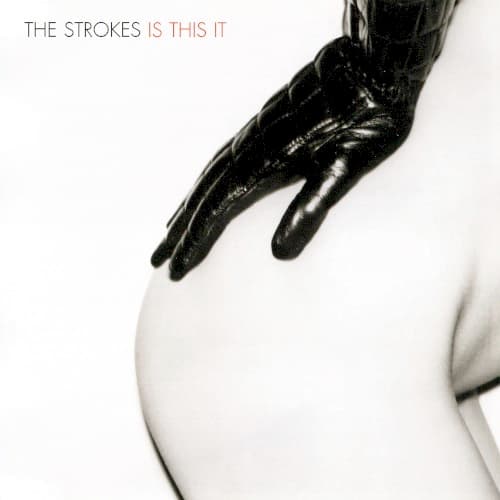
When The Strokes emerged from Manhattan's Lower East Side in 2001, they arrived with a sound so stripped-down and confident it felt like a reprieve from nu-metal excess and pop-punk formula. Julian Casablancas, Nick Valensi, Albert Hammond Jr., Nikolai Fraiture, and Fabrizio Moretti had spent years refining their approach in dingy rehearsal spaces before Gordon Raphael captured their lo-fi precision on Is This It — an album that would become the blueprint for an entire generation of guitar bands.
The group's origins trace back to Manhattan private schools and shared taste for The Velvet Underground, Television, and Cars records. What set them apart wasn't just their influences but their refusal to overcomplicate the delivery. Casablancas sang through blown-out distortion like he was broadcasting from a broken radio. The dual guitars locked into melodic interplay that felt both structured and spontaneous. The rhythm section drove forward with mechanical insistence. Everything sounded deliberate yet effortless.
Their timing proved impeccable. As the music industry struggled to define rock's direction after grunge's collapse, The Strokes offered clarity: short songs, sharp hooks, vintage gear, and zero pretense. They didn't lecture or confess — they just played. That restraint became their signature.
Lo-Fi Precision and the Art of Controlled Minimalism
The Strokes built their sound on contradiction: meticulously arranged parts that sound gloriously ramshackle. Casablancas' vocal processing — compressed, distorted, deliberately degraded — became their most recognizable element. He buried his voice in the mix as if clarity would ruin the mystique, turning every lyric into something you had to lean in to catch. His melodies moved with deceptive simplicity, often hovering around narrow intervals before spiking into unexpected hooks.
Valensi and Hammond traded leads and rhythm duties with telepathic precision, their guitars weaving around each other in patterns that recalled Television's dual-guitar architecture. They favored clean tones pushed just past breakup, vintage Fender amps dialed to that sweet spot where jangle meets grit. Solos were economical — quick bursts of melodic invention rather than extended showcases. The entire guitar approach prioritized interlock over flash.
Raphael's production aesthetic on their early work matched the band's stripped-down ethos. Everything hit the red but never collapsed into mud. Drums sounded tight and slightly distant, bass held the low end without dominating, guitars occupied the mid-range with crystalline aggression. Later albums would explore cleaner production and synth textures, but that early commitment to lo-fi authenticity established their identity. Even when they polished the sound on later records, the foundational approach remained: economy, interplay, and hooks that stick without trying too hard.
From Lower East Side Breakthrough to Reinvention Cycles
The Strokes spent 1998 to 2000 building their craft in New York's club circuit, playing Mercury Lounge and Bowery Ballroom to growing crowds of A&R reps and scenester journalists. Their three-song EP The Modern Age arrived in early 2001 via Rough Trade, generating immediate buzz in the UK press. By the time RCA released Is This It in August 2001, expectation had reached fever pitch. The album delivered — critics hailed it as rock's salvation, and sales followed. Tracks like "Last Nite" and "Someday" became anthems for a generation skeptical of rock excess.
Their sophomore effort Room on Fire (2003) faced impossible expectations. Produced again by Raphael, it essentially refined the debut's formula rather than exploding it. Some fans praised the consistency; others wanted evolution. Commercially it succeeded, but creatively it marked the beginning of internal tensions about direction. Casablancas pushed for experimentation while others preferred the established template.
First Impressions of Earth (2006) represented their first major stylistic expansion. Longer songs, broader production courtesy of David Kahne, and attempts at arena-sized ambition divided their base. "Juicebox" leaned into distortion and aggression, while "You Only Live Once" reached for anthemic scope. The album went gold but represented a creative crossroads — the garage rock revival had peaked, and The Strokes faced the challenge every breakthrough band encounters: how to stay relevant without betraying what made you matter.
A four-year gap preceded Angles (2011), their first album without a unified producer. Recorded in fragments with Joe Chiccarelli overseeing final mixes, it reflected a band working in separate camps. Casablancas was pursuing solo work exploring synth-pop and new wave territories. The album sounded tentative, its best moments — "Under Cover of Darkness," "Taken for a Fool" — recalling their early spark without fully recapturing it.
Comedown Machine (2013) arrived with minimal promotion, almost as if the band wanted to sneak it out. Gus Oberg's production leaned into keyboards and drum machines, pushing further from their guitar-centric origins. Casablancas' falsetto experiments and 80s pop touches confused longtime fans but hinted at artistic restlessness. It marked their last album for RCA and felt like the end of a chapter.
After a hiatus filled with solo projects — Casablancas' work with The Voidz, Hammond's solo albums, Moretti's production ventures — The Strokes returned with The New Abnormal (2020). Rick Rubin's production brought clarity and warmth, while the songs themselves balanced nostalgia with genuine forward motion. "The Adults Are Talking" and "Brooklyn Bridge to Chorus" felt like a band rediscovering chemistry without merely rehashing past glories. The album won a Grammy and proved The Strokes could still write defining rock songs two decades into their career.
The Blueprint That Launched a Thousand Guitar Bands
The Strokes' influence on 2000s rock cannot be overstated. Is This It didn't just sell millions — it provided a template. Suddenly every major label wanted a guitar band with vintage gear, skinny jeans, and studied nonchalance. Interpol, The Libertines, Franz Ferdinand, Arctic Monkeys, and countless others followed in their wake, each adapting the formula to their own geography and obsessions. Whether The Strokes deserved credit or blame for the resulting glut of derivative acts remains debated, but their catalytic role is undeniable.
What endures beyond trend-setting is the songs themselves. "Last Nite," "Someday," "Reptilia," "You Only Live Once" — these tracks still populate rock playlists and festival sets because they nailed the fundamentals: memorable melodies, locked-in grooves, and lyrics that say just enough without saying too much. The Strokes proved minimalism could be magnetic, that lo-fi didn't mean low-effort, and that restraint could be more powerful than bombast.
Their career arc — explosive debut, pressurized follow-ups, experimental detours, reunion triumph — has become its own archetype. They navigated the impossible expectations placed on generational spokespeople and emerged with their core identity intact. Current bands still cite them as foundational, and their aesthetic choices continue to shape how young rock bands approach recording, performance, and presentation. The Strokes didn't invent garage rock or post-punk revival, but they crystallized both into something undeniable for the new millennium.