The scorecard
8.8/10 · Essential
- Songwriting25%
- 9.5
- Production25%
- 8.0
- Performance15%
- 9.0
- Cohesion15%
- 9.0
- Originality10%
- 9.0
- Replay value10%
- 8.5
Ten short stories built on concrete detail and narrative restraint, from the measured opening of the title track to the bitter irony of the closer, with every line doing work.
The four-track bedroom recording captures urgency the Power Station could not, though the hiss and chair creaks are artifacts of necessity rather than intention, and the mastering struggle shows in spots.
Springsteen sings these characters with a conviction that ranges from the flat affect of a condemned killer to the aching falsetto on Johnny 99, every vocal choice serving the story.
The sequencing moves from murder to desperation to childhood and back with a pacing that earns the 40-minute run, each song a chapter in a single vision of American failure.
In 1982, no arena-level rock artist had released a solo acoustic album this stark, and the lo-fi sound prefigured the home-recording movement by more than a decade.
The songs reveal more on repeat as the details accumulate, though the unrelenting bleakness means this is not an album for casual moods, and some tracks blur together on side two.
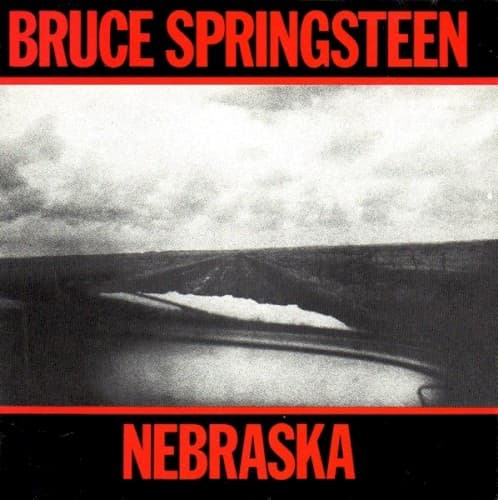
Bruce Springsteen Nebraska — The Dream Dies in a Bedroom in New Jersey
Between the arena tour for The River and the recording sessions that would become Born in the U.S.A., Bruce Springsteen sat alone in a rented house in Colts Neck, New Jersey, reading Flannery O'Connor and watching Badlands, and came back with an album of murder ballads and childhood shame recorded on a four-track in his bedroom. Nebraska is the sound of an artist at the commercial peak of his career deliberately stripping away everything that made him a star: the E Street Band, the studio polish, the possibility of deliverance. What remains are ten songs about people who cannot escape their circumstances, sung by a man who realized his own escape had separated him from the world he wrote about and decided to close the distance.
The thesis is in the first verse of the title track, where Charles Starkweather explains his killing spree by saying the world is full of meanness, and the rest of the album asks what happens to ordinary people when the dream they were promised turns out to be a lie. The stakes are whether Springsteen can make that argument convincing without the tools that made him Bruce Springsteen, and whether the starkness is honest or another kind of pose.
He sent the tape to his manager with notes about arrangements for the full-band sessions, but when the E Street Band tried to rerecord these songs at the Power Station, the results felt wrong. The demos had captured something the studio could not replicate, and Springsteen made the choice to release them as they were, hiss and chair creaks and all. It was the first time a major rock artist treated a home recording as a finished product rather than a sketch, and it remains the most uncompromising album of his career.
Four Tracks and the Meanness in the World
The songs work because Springsteen wrote them with the precision he learned from O'Connor: concrete details, no metaphor, every line advancing the story. Nebraska opens with a killer who shows no remorse, his gentle melody at odds with the confession, and the contrast does more than any electric guitar could. Atlantic City follows a man joining the mob because honest work will not pay the debts, and the mention of the Chicken Man from Philly roots the desperation in a real place and a real moment.
Johnny 99 takes the same crime-and-punishment structure and inverts it, the narrator begging for death after losing his job at the Mahwah Ford plant, his falsetto shouts at the end the only release the album offers. Highway Patrolman builds its conflict around blood versus law, the cop letting his brother cross the border because family is the only bond that holds. These are not songs about ideas; they are songs about choices, and the writing never flinches.
The production is where necessity became style. Springsteen and his guitar tech Mike Batlan set up two Shure SM57s in a bedroom and recorded to a TEAC 144 Portastudio, overdubbing harmonica and mandolin and glockenspiel, then mixed the four tracks down to a cassette using an Echoplex and a water-logged Panasonic boombox. The result is a sound that sits somewhere between field recording and studio demo, lo-fi before that term meant a genre. The hiss is audible, the harmonica overmodulates, the chair creaks, and none of it was planned.
When the album went to mastering, engineer Toby Scott and producer Chuck Plotkin spent two months trying to transfer the tape to vinyl, bringing it to Bob Ludwig and Steve Marcussen and Greg Calbi with no success, before Dennis King at Atlantic Studios solved the problem with noise reduction techniques that preserved the tape hiss as part of the texture. The flaws are real, not affectations, and they give the songs the intimacy Springsteen was after.
State Trooper is just voice and guitar, the riff emulating the repetition of the highway, the paranoia in the lyric amplified by the space around the vocal. The track borrows its dread from Suicide's Frankie Teardrop, and the influence is audible in the static dread.
Open All Night breaks the mood with a Chuck Berry rhythm and a lighter tone, the narrator asking for deliverance but settling for the New Jersey Turnpike and the radio, and the song works as relief without undercutting the album's argument. My Father's House returns to the sadness, a dream of reconciliation that ends with the father gone and the house occupied by strangers, and the glockenspiel in the mix adds a fragility that a full band would have crushed.
The album's weakness is also its strength: the monotony. Ten songs of acoustic guitar and harmonica and despair in the same lo-fi grain means some tracks blur together, especially on side two where Used Cars, My Father's House and Reason to Believe cover similar emotional ground without the narrative stakes of the murder songs. The minimalism that makes State Trooper hypnotic makes the back half feel longer than it is, and the lack of dynamic contrast means the album demands full attention or loses its grip.
Forty Minutes on a Deserted Two-Lane
The album works as a sequence because Springsteen understood that the bleakness had to be earned, and the pacing moves from the starkest material to the most personal and back to irony at the close. The first stretch opens with the unrepentant killer and moves through increasingly personal territory, each song a step closer to the listener's own life, before offering the first moment of loyalty and ending with pure dread. The middle section shifts to childhood memories, then offers the only song that suggests movement might mean something, before closing the door on reconciliation and ending the album with a shrug. The sequencing is deliberate, and the 40-minute runtime is exactly as long as the material can sustain the mood without collapsing into monotony.
The peaks arrive early with the songs that became the album's calling cards, and the sag is the middle of the back half where similar thematic territory of paternal shame and distance gets covered without adding new information. The album does not overstay, but it also does not offer an exit, and that refusal is part of the design.
Where It Stands and Who It Is For
Nebraska is the best album Springsteen made without the E Street Band and the most influential record of his career outside Born to Run. It ranks above The River because it has a singular vision and no filler, and it will outlast Born in the U.S.A. because it cannot be misunderstood. The lo-fi sound prefigured the home-recording movement that became indie rock in the nineties, and the stripped-down storytelling showed that arena-level artists could make small, personal records and have them taken seriously as art. Johnny Cash heard it and made American Recordings a decade later.
The album is for listeners who want rock records that do not sound like rock records, who trust that a song can carry its weight without a band, and who do not need triumph or escape or even hope from their music, just honesty. It is not for anyone looking for the celebratory side of Springsteen or the big-tent anthems, and it is not an entry point unless you are prepared for 40 minutes of unrelieved seriousness.
Start with the title track and Atlantic City to hear the writing and the sound at full strength, then decide if you want the rest. If those two songs work, play the album straight through and let the pacing do its work. The weakness is that the mood does not vary enough to sustain repeat listens in quick succession, and some of the later tracks feel like sketches compared to the narrative architecture of the opening songs.
If this clicks, go to The Ghost of Tom Joad next for the full-band version of the same instinct, or go back to Darkness on the Edge of Town to hear where the darkness started before the bedroom recordings made it inescapable. Nebraska remains the album where Springsteen stopped performing the role of rock star and started writing like a novelist, and the fact that he recorded it by accident and released it against commercial logic is exactly why it still matters.
Track by track
Track Listing
Nebraska
StandoutThe opening track sets the template: a first-person confession from Charles Starkweather as he faces execution for a ten-victim killing spree across Nebraska and Wyoming with his teenage girlfriend. Springsteen sings it with a flat, almost gentle delivery, the soothing melody at odds with the content, and the contrast makes the meanness in the lyric sharper. The narrator offers no remorse, only the explanation that the world itself is mean, and the song ends with him strapped in the electric chair with no resolution. The writing is precise, every detail drawn from the Ninette Beaver book Caril and the Terrence Malick film Badlands, and the restraint makes it more disturbing than any amount of theatricality could. This is the thesis statement for the entire album: people do terrible things, and the reasons do not make the acts forgivable, but the reasons are still worth hearing.
Atlantic City
StandoutThe album's most covered song, and for good reason: the verses tell a story of mob violence and economic desperation in a city turning to gambling as a last resort, while the chorus offers the only moment of romantic hope on the entire record. The narrator mentions the Chicken Man from Philly, a reference to mafia boss Philip Testa murdered in 1981, and the specificity grounds the song in a real place and moment. The performance has an urgency that cuts through the lo-fi haze, Springsteen's vocal pushing against the beat, and the harmonica fills add a mournful texture. The density of the atmosphere and the feeling that the decision has already been made, that the narrator is already halfway to the mob, makes this more than a crime song. It is the best example of how Springsteen uses narrative detail to build a world in four minutes.
Mansion on the Hill
StandoutA childhood memory of watching a mansion on a hill from the car with his father, the lyric built on the distance between the narrator's world and the world of the people in the house. The title comes from the Hank Williams song, but Springsteen makes it his own by staying outside, never entering the mansion or imagining what it would be like to live there, just observing. The guitar and harmonica arrangement is minimal, the atmosphere hypnotic, and the restraint in the performance makes the class divide feel unbridgeable. The song does not argue or plead; it just watches, and the emotional weight comes from what is not said.
Johnny 99
StandoutThe flipside of Nebraska: another crime, another sentence, but this time the killer shows remorse and begs for execution instead of prison. The narrator loses his job when the Mahwah Ford plant closes, murders a night clerk in a drunken rage, and tells the judge he is better off dead because of his debts and his foreclosed house. Springsteen sings it with a rockabilly rhythm and an echoed vocal that starts in a lonely falsetto and ends in exuberant shouts, and the performance is raucous in a way that contrasts with the starkness elsewhere. The writing is specific about the economic collapse that precedes the crime, and the song works because it does not excuse the act but makes the desperation legible.
Highway Patrolman
StandoutThe longest song on the album and the one with the clearest moral framework: a cop named Joe Roberts has to choose between duty and blood when his brother commits a crime, and he lets him go. The chorus states the thesis plainly—a man who turns his back on family is no good—and the song builds to the moment where Joe watches his brother's taillights disappear across the border and knows he made the only choice he could live with. The vocal is restrained, the guitar line repetitive in a way that mirrors the highway, and the length is earned because the song needs time to establish the brother's pattern of trouble and the weight of the decision. This is Springsteen at his most O'Connor-like, building a moral story on concrete actions rather than abstractions.
State Trooper
StandoutThe sparest track on the album, just voice and guitar, the riff emulating the sound of the road at night. The narrator is a car thief driving without a license or registration, paranoid and desperate, pleading with a state trooper—real or imagined—not to stop him. The influence of Suicide's Frankie Teardrop is direct, and the static dread in the performance makes the song feel like it could snap at any moment. The verses are short, the chorus is a repeated plea, and the song ends without resolution. It is hypnotic and claustrophobic, and the lo-fi recording amplifies the isolation. This is the sound of someone who has run out of options and keeps driving because stopping means capture.
Used Cars
StandoutA childhood memory of watching his father buy a used car because the family cannot afford a new one, the lyric built on shame and class difference. The father is worn from manual labor and cannot express his feelings, and the family shows off the car to the neighbors as if it were new, and the narrator vows he will never ride in a used car again. The music is gentle, the performance aching, and the song works because it does not sentimentalize the father or the poverty, just states the facts and lets the listener feel the weight. This is one of the album's most personal songs, and the restraint makes it cut deeper than any amount of drama would.
Open All Night
SolidThe only song on the album with a Chuck Berry rhythm and a lighter mood, the narrator driving the New Jersey Turnpike and asking to be delivered from nowhere as long as rock and roll is on the radio. The song was inspired by a William Price Fox short story, and the up-tempo arrangement provides relief from the bleakness without undercutting the album's tone. The performance is looser, the vocal more playful, and the song works as a palate cleanser before the final two tracks return to sadness. It is not filler, but it is not essential either, and the album would not collapse without it.
My Father’s House
StandoutA dream of reconciliation that ends in failure: the narrator dreams his father saves him from dark forces in a forest, wakes up and drives to his father's house to make peace, and finds a stranger living there. The father is gone, the chance for reconciliation is lost, and the song ends with the narrator standing outside the house with nowhere to go. The glockenspiel in the arrangement adds a fragility that makes the loss sharper, and the vocal is one of Springsteen's most vulnerable performances on the record. The song covers similar emotional ground as Used Cars, and the proximity makes the back half of the album feel longer than it is, but the specificity of the dream and the concrete image of the stranger in the doorway keep it from feeling redundant.
Reason to Believe
StandoutThe closer offers four short stories in four verses—a man poking a dead dog on the highway, a woman waiting for a lover who never comes, a birth and a death, a groom stood up at the altar—unified by the ironic observation that people always find some reason to believe. The writing is bitter and the performance emits sorrow and fatalism, and the song works as a final statement because it does not offer hope or resolution, just the recognition that people endure because endurance is the only option. The humor is dark, the repetition of the chorus hypnotic, and the song ends the album on a shrug rather than a climax, which is exactly the right choice. It is not as strong as the title track or Atlantic City, but it closes the argument and leaves the listener with the question the album has been asking all along: what do you do when the dream is a lie and belief is all you have left?