
The Voice of Working-Class America: Bruce Springsteen's Five-Decade Journey
When Bruce Springsteen released his third album in 1975, critic Jon Landau had already declared him "the future of rock and roll." The proclamation proved prophetic, but not in the way anyone expected. Rather than becoming another flash of hype, the New Jersey native spent the next fifty years carving out territory that few artists even attempt to claim: the intersection of literary ambition, rock and roll viscera, and blue-collar authenticity. His catalog stretches from the wall-of-sound maximalism of Born to Run through the stripped-down severity of Nebraska to the stadium-sized anthems that made him one of rock's most enduring live performers.
Born in Long Branch, New Jersey in 1949, Springsteen grew up in Freehold, a working-class town whose streets, factories, and family dynamics would supply the raw material for decades of songwriting. His early bands — the Castiles, Steel Mill, Dr. Zoom and the Sonic Boom — showed ambition but little direction until he assembled the musicians who would become the E Street Band. That chemistry transformed regional bar-band grit into something larger: a sound that could hold both intimacy and grandeur, desperation and hope, often within the same song.
What sets Springsteen apart is his refusal to choose between commercial appeal and artistic credibility. He's written songs that filled arenas while maintaining the detail and specificity of short fiction. His characters aren't abstractions — they're auto workers facing plant closures, veterans returning to changed hometowns, and dreamers trapped between aspiration and circumstance. This specificity, paradoxically, made his music universal.
From Wall of Sound to Stark Confession: Springsteen's Sonic Range
Springsteen's musical identity resides in his voice — a rough-hewn instrument that can shift from tender whisper to stadium roar, often within a single verse. Unlike technically polished vocalists, his delivery carries the grain of lived experience. He doesn't sing about factory closures; he sounds like someone who's stood outside the locked gates. That authenticity extends to his guitar work: the Chuck Berry-influenced riffs that anchor "Born to Run," the angular folk patterns on Nebraska, the garage-rock simplicity of "Dancing in the Dark."
The E Street Band became his primary sonic vehicle, a sprawling ensemble that could swing from Spectorian density to roadhouse simplicity. Clarence Clemons' saxophone provided the emotional release valve, Roy Bittan's piano added cinematic sweep, and Max Weinberg's drums locked into grooves that felt simultaneously expansive and urgent. Producer Jon Landau helped shape this sound, particularly on Born to Run and Born in the U.S.A., where layers of guitars, keyboards, and backing vocals created a sound both lush and driving.
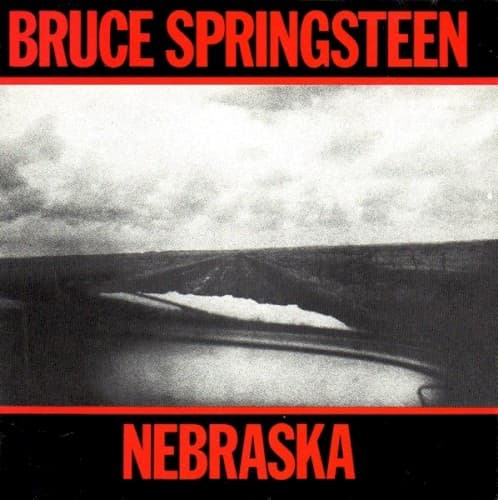
But Springsteen's most revealing sonic moment came when he stripped everything away. Nebraska, recorded on a four-track cassette recorder in his bedroom, revealed what lay beneath the E Street Band's orchestration: folk-influenced storytelling, stark arrangements, and narratives of desperate men at the margins. The album's lo-fi aesthetic wasn't a gimmick — the rough production placed the listener directly inside the songs' claustrophobic world. When he returned to full-band arrangements on Born in the U.S.A., the contrast made both approaches more powerful. He'd proven he could command any sonic territory he chose.
From Asbury Park to Global Icon: Tracing Springsteen's Creative Arc
Springsteen's first two albums, Greetings from Asbury Park, N.J. and The Wild, the Innocent & the E Street Shuffle, showcased a young songwriter trying to cram every idea into every song. Critics heard the influence of Van Morrison and Dylan, but the albums sold poorly. Columbia Records, which had signed him with considerable fanfare, grew impatient. Born to Run arrived in 1975 as a make-or-break moment, and Springsteen delivered. The title track alone — a three-minute operatic sprint toward escape — announced an artist who'd found his voice. The album's romantic grandeur, rooted in specific Jersey Shore geography, made him a star.
Success brought legal troubles. A contract dispute with former manager Mike Appel kept Springsteen out of the studio for nearly three years. When he returned with Darkness on the Edge of Town in 1978, the sound had hardened. Gone was Born to Run's youthful romanticism, replaced by songs about adults facing limitations and broken promises. The album's production, handled by Landau and Springsteen, stripped away excess, leaving lean, muscular arrangements. The River followed in 1980 as a double album that tried to hold everything — party songs next to devastating character studies, joy alongside economic anxiety.
Then came Nebraska in 1982, an album so far outside expectations that Columbia initially resisted releasing it. Springsteen had recorded full-band versions of these songs, but something was lost in translation. The stark four-track demos captured a mood the E Street Band couldn't replicate. The album's characters — murderers, criminals, desperate men — inhabited a America rarely seen in rock music. Its commercial underperformance mattered less than its artistic achievement. Springsteen had created a masterpiece of American gothic folk, proving his songwriting could stand without production gloss.
Born in the U.S.A. in 1984 reversed course commercially while maintaining thematic depth. The album's synthesizer-driven production, courtesy of Landau, Chuck Plotkin, and Springsteen himself, created radio-friendly anthems that were frequently misunderstood. The title track's muscular arrangement led to its adoption as a patriotic celebration, despite lyrics detailing a Vietnam veteran's disillusionment. The album's seven Top 10 singles made Springsteen inescapable, but also threatened to reduce him to a brand. He responded by stepping back, releasing more introspective work throughout the late 1980s and 1990s.
The dissolution of his first marriage and subsequent relationship with Patti Scialfa, an E Street Band member, influenced the domestic focus of Tunnel of Love and later albums. The Ghost of Tom Joad returned to Nebraska's acoustic starkness, while The Rising, his first E Street Band album in eighteen years, addressed post-9/11 America with both grief and resilience. Later career albums like Magic, Wrecking Ball, and Letter to You showed an artist still engaged, still writing about American life with the same attention to detail that marked his early work, but with the perspective that comes from five decades of observation.