Manchester's Brief, Seismic Post-Punk Experiment
Joy Division existed for barely two years before singer Ian Curtis took his own life in May 1980, yet their influence towers over four decades of alternative music. Formed in Manchester in 1976 as Warsaw before adopting their controversial new name in 1978, the quartet — Curtis, guitarist Bernard Sumner, bassist Peter Hook, and drummer Stephen Morris — created music that felt like searching for light in abandoned industrial spaces. They captured something essential about late-70s Britain: economic collapse, urban decay, and psychological isolation rendered as sound.
Signed to Factory Records and shaped by producer Martin Hannett's austere vision, Joy Division recorded just two studio albums before Curtis's death at 23. Unknown Pleasures arrived in 1979 as a transmission from somewhere beyond conventional rock structures. Closer followed posthumously months later, its title grimly prophetic. The brevity of their catalog only intensified their mystique — here was a band that burned through their ideas with such concentrated intensity that the aftermath is still reverberating.
What separates Joy Division from countless post-punk contemporaries is how completely they embodied their moment while transcending it. Curtis's baritone carried genuine desperation rather than affected gloom. Hook's melodic basslines provided warmth against the cold production. Morris's metronomic drumming suggested machinery achieving consciousness. Together they built the template for decades of goth, industrial, and alternative rock while remaining singular, unrepeatable.
Isolationist Architecture: Joy Division's Post-Punk Sound
Joy Division's sonic identity emerged from deliberate subtraction. Where punk bands added volume and velocity, Joy Division stripped away excess until only essential elements remained. Peter Hook's bass became the melodic anchor, played high on the neck to occupy space typically reserved for guitars. His lines didn't just support the songs — they defined them, creating memorable hooks while Bernard Sumner's guitar carved out dissonant textures and icy chords. This role reversal gave Joy Division their distinctive architecture.
Martin Hannett's production work proved equally crucial. He recorded Unknown Pleasures at Strawberry Studios using then-innovative digital delays and plate reverbs to create vast sonic spaces around the band. Drums sound like they're echoing through empty factories. Vocals feel distant even when prominent. Every instrument exists in its own isolated zone, rarely bleeding together. Hannett treated rock music like electroacoustic composition, prioritizing atmosphere over conventional punch. The result was music that sounded simultaneously massive and claustrophobic.
Ian Curtis's vocal delivery completed the picture. His baritone descended from Jim Morrison and Iggy Pop but lacked their swagger — this was wounded observation rather than rebellion. Curtis sang about alienation, mental illness, and relationship disintegration with uncomfortable directness. His lyrics avoided punk sloganeering for something more literary and personal. Combined with his epilepsy-influenced stage presence — rigid movements, arms extended, eyes closed — Curtis transformed rock performance into something closer to exorcism. The music felt less performed than channeled.
From Warsaw to Immortality: Joy Division's Compressed Trajectory
The band that became Joy Division started unremarkably enough. In 1976, Bernard Sumner and Peter Hook attended a Sex Pistols show at Manchester's Lesser Free Trade Hall — the legendary concert that reportedly launched a dozen bands. They recruited Ian Curtis through a classified ad and added Stephen Morris on drums after their original timekeeper proved inadequate. As Warsaw, they played aggressive punk that revealed little of what was coming.
The transformation accelerated after they changed their name in early 1978 and caught the attention of television personality Tony Wilson, who was launching Factory Records. An early BBC session for John Peel brought wider attention. Wilson gave them near-complete artistic freedom, trusting their instincts and Hannett's production vision even when the results challenged conventional rock wisdom. This partnership between band and label became a model for indie credibility — no commercial compromise, just unfiltered artistic expression.
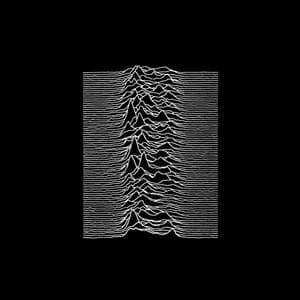
Unknown Pleasures arrived in June 1979 with Peter Saville's now-iconic pulsar wave cover. The album sold modestly on release but its reputation grew steadily. Songs like "Disorder" and "She's Lost Control" didn't fit radio formats or punk rock orthodoxy. Critics recognized something significant was happening, though commercial success remained distant. The band toured relentlessly throughout 1979, their live intensity building a devoted following even as Curtis's health deteriorated.
By early 1980, the contradictions were becoming unbearable. Curtis's epilepsy worsened under touring stress. His marriage collapsed. The band prepared for their first American tour while recording what became Closer. The newer material showed evolution toward greater complexity — "Isolation" and "Heart and Soul" revealed new emotional textures, while "Atrocity Exhibition" pushed into harsher sonic territory. But Curtis was unraveling. On May 18, 1980, the night before the American tour was set to begin, he hanged himself at home.
Closer appeared in July 1980, its arrival transformed into eulogy. The album's exploration of emotional disintegration now carried unbearable weight. "Love Will Tear Us Apart," released as a single just weeks after Curtis's death, became both their biggest hit and a cultural touchstone — a perfect pop song about relationships falling apart, sung by someone who couldn't escape his own dissolution. The remaining members regrouped as New Order, channeling their grief into electronic experimentation that would prove equally influential. But Joy Division was finished, their brief career frozen in place.
The Eternal Present: Joy Division's Continuing Influence
Joy Division's impact operates on multiple levels simultaneously. Musically, they established post-punk as more than punk's aftermath — it was a genuine artistic movement with its own aesthetics and emotional range. Bands from The Cure to Interpol to Editors built directly on foundations Joy Division laid. The bass-as-lead-instrument approach influenced countless groups. Hannett's production philosophy shaped how independent music would sound for decades. Even contemporary artists in indie rock, post-punk revival, and darkwave cite Joy Division as essential DNA.
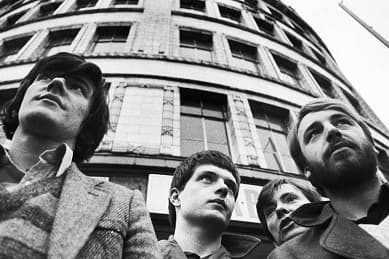
Culturally, they became symbols of artistic integrity and the dangerous romance of doomed creativity. Ian Curtis's death at 23 ensured Joy Division would never reunite for nostalgia tours or diminish their legacy with weak late-career albums. They exist in perpetual 1979-1980, forever young and urgent. This permanence contributed to sustained fascination across generations who discover them as if finding ancient transmissions. The imagery — Saville's stark Factory Records designs, Anton Corbijn's black-and-white photography, Curtis's haunted stage presence — created a complete aesthetic that transcends music.
Their brief catalog remains remarkably durable. Unknown Pleasures regularly appears on greatest-albums lists, its influence undiminished by changing trends. New listeners still report the same sense of discovery, the same feeling that this music operates on frequencies others haven't accessed. Joy Division proved that rock music could be genuinely experimental without abandoning emotional directness, that darkness could be aesthetically rigorous rather than merely theatrical. Their shadow extends across alternative music's entire landscape — every band trying to balance artistic ambition with raw feeling is working in territory Joy Division mapped during their brief, essential existence.