The scorecard
8.9/10 · Essential
- Songwriting25%
- 9.0
- Production25%
- 9.5
- Performance15%
- 8.5
- Cohesion15%
- 8.0
- Originality10%
- 9.0
- Replay value10%
- 9.0
Curtis built verses that refuse resolution and melodies that trap you in their own repetition, with New Dawn Fades and She's Lost Control among the bleakest, most durable songs punk spawned.
Hannett turned three weekends at Strawberry into a studio argument with punk's live-loud doctrine: digital delay, basement toilets, telephone-line vocals on Insight, space as an instrument.
Curtis delivered every line like a coroner's report, Hook played bass with a pick for clarity over warmth, and Morris gave gloom a danceable clock.
The sequencing earns its 40 minutes, front-loading the strongest material and closing with I Remember Nothing's slow collapse, though the middle sags slightly with Wilderness and Interzone.
Took punk's year-zero idea literally and ditched both nostalgia and noise for a sound with no obvious precedent, fusing Velvet Underground dread with a production approach borrowed from dub.
Four decades on, still no album sounds quite like this: the production aged from divisive to canonical, and the songs never wear out their hooks because they barely have hooks to begin.
Joy Division Unknown Pleasures — Punk Finds a Basement and Locks the Door
Unknown Pleasures is punk stripped to nerve endings and recorded in a refrigerator. Ian Curtis sang like he was reading his own autopsy, Martin Hannett built around the silences instead of filling them, and the result was a debut that answered punk's call for year zero by offering something with no obvious past and no reassuring future.
Most records that arrive with a manifesto betray it by the second side; this one kept its promise.
The thesis is in the title: pleasures you cannot name, cannot quite reach, but recognize immediately. Recorded over three weekends at Strawberry Studios in April 1979 and released in June through Factory Records, Unknown Pleasures made no chart impact on release, moved 15,000 copies by year's end, and became one of the genre's founding documents by refusing to sound like anything else first-wave punk had left behind.
Hannett used the band's songs as raw material for a production experiment: digital delays, tape echo, the sound of bottles smashing and a lift with a Leslie speaker inside it, Curtis's voice on Insight piped through a telephone line for distance. The band, especially Peter Hook and Bernard Sumner, thought it sounded too much like Pink Floyd and not enough like the live aggression they were known for. Curtis disagreed. He was right.
What Hannett heard in the songs was the part that mattered: the space where repetition becomes hypnosis, where coldness becomes clarity, and where a four-piece from Salford could sound like they were playing in an empty warehouse on the edge of the world.
The Sound of Refusal
The songwriting strips punk's three-chord urgency down to two chords and a drone, then uses repetition until the songs stop feeling like songs and start feeling like processes. Curtis wrote verses that refuse resolution and choruses that barely lift: New Dawn Fades runs the same bassline and guitar figure for nearly five minutes, building nothing, releasing nothing, just tightening the screw. She's Lost Control locks into a martial stomp and repeats one event — a seizure, witnessed, unable to be stopped — until the music itself feels like convulsion. Disorder opens the album with Hook's bass climbing a simple riff while Curtis lists symptoms of collapse in a baritone that could be diagnosing himself or everyone.
The melodies are durable because they are patient: Shadowplay, Day of the Lords, and Candidate all work by withholding the release a punk song would give you in the first 30 seconds. Curtis never shouts and rarely rises above a monotone, which means every small lift in pitch lands like an event. The lyrics read like automatic writing or police reports: disconnected images, no metaphors, just statements. The effect is less poetic than documentarian.
Martin Hannett's production, recorded and mixed over three weekends in April, is as much the album's signature as the music. He placed Curtis's voice at a distance, used AMS digital delays and the Marshall Time Modulator to smear the instruments across the stereo field, and left空間 where other producers would add a second guitar or a keyboard pad. The result sounds like it was recorded in an unheated room with 20-foot ceilings. Hannett thought punk was sonically conservative because it refused to use the studio as an instrument; he treated every sound like it could be processed into something unfamiliar.
Hook's bass was recorded with a pick for clarity, then given enough reverb and delay that it occupies the space a lead guitar would in a normal rock band. Sumner's guitar is often hard to locate in the mix, appearing as texture or as brief, distorted stabs rather than as riffs. Morris's drums are dry and high in the mix, every snare hit and hi-hat crisp and separate, which makes the rhythm section sound mechanical and hypnotic rather than warm or swinging. Hannett added Syndrum, synthesizer on I Remember Nothing, and various effects that appear once and vanish: breaking glass, footsteps, reversed guitar.
The band hated it at first. Hook said it sounded like Pink Floyd and that Hannett had "toned down" the guitars. Sumner said the production "inflicted this dark, doomy mood over the album" and that they had drawn in black and white while Martin colored it in. Curtis liked it.
Morris understood that records and gigs were different experiences and that the studio version could do something the stage version could not. By 2006 Hook admitted that Hannett had "created the Joy Division sound" and that the production revealed parts of the songs he had never heard clearly before, including Curtis's lyrics.
The album's weakness is the middle stretch. After the first five tracks establish the template, Wilderness and Interzone feel like variations without the same inevitability. Wilderness is two and a half minutes of mid-tempo plod with no real hook, and Interzone — sung by Hook in a monotone that makes Curtis sound expressive — is the album's only throwaway. The track sequence recovers with Shadowplay and the closing weight of I Remember Nothing, but the sag is real.
The Arc of 40 Minutes
The sequencing front-loads the album's strongest material and earns its slow, grinding finale. The opening track is the only one that could function as an opener anywhere else: it moves, it has a riff that climbs, and it establishes Curtis's voice and the production approach in three and a half minutes. From there the album gets slower and more patient. The second and third tracks both stretch past three minutes without offering a release, and by the time the first side closes, the pace has become a trance.
The back half begins with the most direct and danceable track, and then the album coasts into the weak middle. The closing track delivers nearly six minutes of slow-motion collapse: synthesizer, sparse drums, Curtis reciting fragments, the whole thing feeling like the power is draining from the board. It is not a strong song, but it is the right ending — exhausted, unresolved, no catharsis.
The length is just right at 40 minutes. A shorter album would not have time to establish the hypnotic effect, and a longer one would expose how limited the palette is. The album works as a sequence because it refuses to vary the mood or offer an exit. You do not get a breather or an uptempo track to break the spell, which means the spell holds.
Where It Ranks and Who Should Start Here
Unknown Pleasures is Joy Division's defining statement and one of the two or three essential post-punk debuts, the other being Wire's Pink Flag. It sits firmly above Closer, the 1980 follow-up, which refined the approach but added strings and lost some of the raw, unadorned quality that makes this one irreplaceable. The album's influence is everywhere: goth took the atmosphere, industrial took the mechanical rhythms, and every post-punk revivalist band of the 2000s studied Hannett's production and Hook's bass-as-lead-instrument approach. But influence does not make the album.
What makes it is the songs: Curtis at his most direct, Hannett at his most inventive, and a band that played with the discipline of minimalists and the conviction of true believers. It is not for everyone. If you want warmth, hooks you can hum, or guitars that sound like guitars, start somewhere else. If you want to hear what happens when punk's refusal becomes a method, start with the opening third.
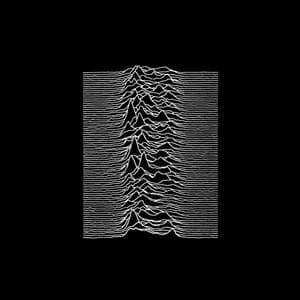
Those early tracks are the album in miniature: repetition as form, Curtis as documentarian, Hannett as architect of negative space. The album aged from divisive to canonical. The production that Hook and Sumner thought was too dark and too Pink Floyd is now the album's signature. The cover — Peter Saville's white-on-black pulsar plot — became as signature as the music, worn by people who have never heard the record and imitated by designers who missed the point.
The music itself has not aged at all. It still sounds like nothing else, still feels colder and more patient than the records it influenced, still refuses to give you a way out. After this, try Closer to hear where the band went next, or Wire's Pink Flag to hear the other way punk could strip itself down.
If you want the live aggression the band thought was missing, the 2007 reissue includes a July 1979 Factory show that proves Hannett made the right call: the gig is raw and fast, and it is not as good as the album. Unknown Pleasures is the sound of a band that played loud and heavy live, recorded cold and patient in the studio, and discovered that the studio version was the truth.
Track by track
Track Listing
Disorder
StandoutThe only track on the album that could open a set or move a crowd, built on Hook's climbing bassline and Morris's steady, driving beat. Curtis lists off symptoms of disconnection and collapse in a near-monotone, the melody slight but enough to carry the verses. The guitar is buried in delay and reverb, less a riff than a texture, and the production gives the whole thing a cold, bright clarity. The song establishes the template: repetition as hypnosis, space as a presence, and Curtis as the voice of someone delivering bad news in an empty room. It is the most direct and immediate thing here, and it works as both an introduction to the band and as one of the strongest tracks in their catalog.
Day of the Lords
StandoutNearly five minutes of slow, deliberate dread, built on a two-chord verse and a bassline that barely moves. Curtis sings about martyrs and lords and suffering with no clear narrative, just images that accumulate. The production is cavernous, with Morris's drums echoing in the mix and Sumner's guitar reduced to occasional stabs of distorted noise. The song does not build or release; it just repeats its figure until the repetition becomes the point. A strong example of how the album works: patient, cold, refusing to give you a hook or a way out.
Candidate
SolidAnother mid-tempo grind, this one shorter and more compact than Day of the Lords but working the same method. The bassline is the song's spine, and Curtis delivers verses about control and observation with no real chorus to break the monotony. The production keeps everything dry and separate, with the drums high in the mix and the guitar appearing only as brief, brittle accents. It is solid but not essential, notable mostly for how little it offers and how well it works anyway.
Insight
StandoutOne of the album's most durable tracks, built on a bassline that climbs and falls in steady repetition while Curtis sings about survival and endurance. Hannett recorded Curtis's vocal through a telephone line to create distance, and the effect makes him sound like he is reporting from another room or another time. The guitar is sparse and echoing, the drums locked into a simple beat, and the whole thing feels like it is being transmitted from a cold, empty space. The melody is minimal but effective, and the song earns its four and a half minutes by staying exactly where it is and never offering relief.
New Dawn Fades
StandoutThe album's centerpiece and one of Curtis's finest moments: a five-minute repetition of one bassline, one guitar figure, and one steady beat, with Curtis reciting verses about exhaustion and endurance in a voice that never rises above reportorial calm. The song does not develop, does not build, does not release. It just runs the same figure for nearly five minutes, and the effect is hypnotic and suffocating in equal measure. The production is stark and spacious, with every instrument clearly defined and separated, and the repetition becomes the song's subject. It is as close as the album comes to a statement of purpose: this is what we do, this is how patient we are, and we are not giving you a way out.
She’s Lost Control
StandoutThe most direct and danceable track, built on a martial drum pattern and a bassline that locks into a steady groove. Curtis recounts witnessing someone's seizure in flat, factual language, repeating the same images over and over until the music itself feels like convulsion. Morris's drumming is mechanical and driving, Hook's bass climbs and repeats, and the production gives the whole thing a bright, cold clarity. The song is the album's most immediate and most widely known, and it works both as a standalone track and as the album's clearest example of how repetition and restraint can generate intensity without volume or speed.
Shadowplay
SolidA steady, mid-tempo track built on a descending bassline and a guitar line that flickers in and out of the mix. Curtis sings about roles, performances, and the gap between what is seen and what is felt, and the melody is one of the album's more conventional, though still minimal. The production keeps the rhythm section dry and the guitar distant, and the song works as a solid, atmospheric piece without quite reaching the intensity of the album's peaks.
Wilderness
WeakThe album's first real sag: two and a half minutes of mid-tempo plod with no strong hook and no clear reason to exist. The bassline is steady but unremarkable, the guitar minimal, and Curtis's vocal delivers images of isolation and wandering without the intensity or the melody to make them stick. It is not actively bad, but it is the first track that feels like filler.
Interzone
WeakThe album's only true throwaway: Hook sings in a monotone that makes Curtis sound expressive, the bassline is forgettable, and the whole thing sounds like a leftover from the Warsaw days. At just over two minutes it does not overstay its welcome, but it is the weakest track by a wide margin.
I Remember Nothing
SolidThe closing track: nearly six minutes of slow-motion collapse, built on sparse drums, a distant bassline, and Sumner's synthesizer (a kit-built Powertran Transcendent 2000) smearing across the top of the mix. Curtis recites fragments in a voice that sounds exhausted, Hannett adds the sound of breaking glass and other effects, and the whole thing feels like the power is draining from the board. It is not a strong song in the traditional sense — no melody, no structure, just a slow fade into silence — but it is the only possible ending for an album this patient and this bleak. It leaves you with no resolution and no catharsis, which is exactly the point.