The Band That Shattered Rock's Commercial Ceiling
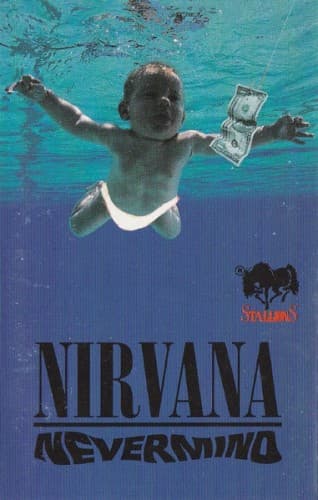
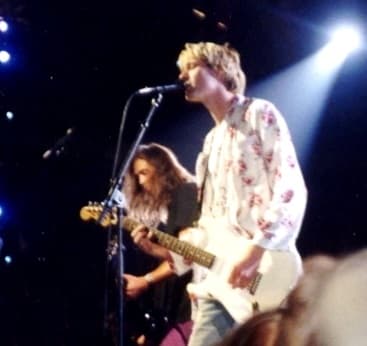
When Nirvana's "Smells Like Teen Spirit" broke through MTV's rotation in late 1991, it didn't just launch a band—it detonated the entire infrastructure of mainstream rock. The Seattle trio, fronted by Kurt Cobain's corrosive howl and sludgy guitar work, with Krist Novoselic's rumbling bass and Dave Grohl's explosive drumming, represented everything the hair metal era had tried to suppress: raw emotional vulnerability wrapped in distorted fury. Their breakthrough album Nevermind turned the underground into the mainstream, selling millions while maintaining the sonic abrasiveness of their Sub Pop origins.
Formed in Aberdeen, Washington in 1987, Nirvana cycled through drummers before Grohl joined in 1990, completing the lineup that would record their most commercially successful work. Yet the band's impact extends far beyond sales figures. They legitimized emotional honesty in rock lyrics, made thrift store aesthetics culturally relevant, and proved that underground music could dominate popular consciousness without compromising its fundamental character. Their influence didn't just reshape rock—it redefined what mainstream music could sound like.
The band's seven-year existence, cut short by Cobain's death in April 1994, produced only three studio albums. That compressed timeline intensifies rather than diminishes their legacy. Nirvana didn't need decades to change music—they needed three years and one game-changing record. Their arc from Pacific Northwest obscurity to global phenomenon remains rock's most dramatic transformation, a trajectory that continues to influence how alternative music navigates commercial success.
Dynamic Extremes: Nirvana's Quiet-Loud-Quiet Architecture
Nirvana's sonic identity rests on brutal contrast. The quiet-loud-quiet structure that defines songs like "Lithium" and "Come As You Are" creates tension through restraint, letting verses simmer with deceptive calm before choruses explode into distorted catharsis. Cobain's guitar work favored thick, sludgy distortion over technical virtuosity—his riffs were simple but physically heavy, owing more to Black Sabbath's doom-laden approach than to punk's rapid-fire aggression. The tone itself became an instrument, a wall of fuzz that could shift from menacing whisper to full-throated roar within a single measure.
Cobain's vocal delivery swung between wounded vulnerability and primal scream, often within the same song. His voice carried a nasal, almost fragile quality during verses, making the explosive release of choruses feel genuinely cathartic rather than performed. This wasn't the polished power of arena rock vocalists—it was raw, sometimes off-key, deliberately ugly when the lyrics demanded it. That willingness to sound broken, to let his voice crack and fray, made the emotional content feel genuine in ways rock hadn't accessed since punk's initial explosion.
The rhythm section provided both anchor and propulsion. Novoselic's bass lines moved independently of Cobain's guitar, creating melodic counterpoint rather than simply doubling root notes. Grohl's drumming, particularly evident on Nevermind, brought a power and precision that elevated the band's sound beyond punk's lo-fi limitations. His fills were explosive yet musical, driving songs forward with relentless energy while maintaining enough space for the guitar and bass to breathe. Together, these elements created a sound that felt simultaneously primitive and sophisticated—simple enough to play, impossible to replicate with the same emotional impact.
From Aberdeen Basements to Cultural Phenomenon: Nirvana's Accelerated Trajectory
Nirvana's early work, including their 1989 debut Bleach, captured the raw aesthetic of the Seattle underground. Recorded for roughly $600 with producer Jack Endino at Reciprocal Recording, Bleach showcased a slower, sludgier sound than what would come later. Songs like "School" and "Negative Creep" leaned into punk aggression filtered through Black Sabbath's doom metal weight. The album sold modestly for Sub Pop but established the band within the Pacific Northwest's tight-knit scene, building a reputation for intense live performances that often ended with destroyed equipment.
The addition of Dave Grohl in September 1990 transformed the band's rhythmic foundation. His powerful, precise drumming gave Cobain and Novoselic a stable platform for their melodic experiments. When the trio entered Sound City Studios in May 1991 to record Nevermind with producer Butch Vig, the sonic ambition had expanded dramatically. Vig's production brought clarity and punch to the band's sound while maintaining its essential rawness. "Smells Like Teen Spirit" emerged from those sessions with its iconic four-chord riff and paradoxical lyrics, a song that became culturally ubiquitous while remaining fundamentally strange.
Nevermind's commercial explosion caught everyone off guard, including the band. Released on DGC Records in September 1991, the album knocked Michael Jackson's Dangerous from the top of the Billboard charts by January 1992. Suddenly, a band that had played to hundreds was filling arenas. That rapid ascent created internal tensions—Cobain particularly struggled with the disconnect between punk's anti-commercial ethos and his band's massive mainstream success. The cognitive dissonance fueled his lyrics but also contributed to his personal struggles.
The band's response came with In Utero, recorded with Steve Albini in February 1993. Where Nevermind had radio-friendly production, In Utero deliberately embraced abrasiveness. Songs like "Heart-Shaped Box" and "Rape Me" featured harsher tones, more confrontational lyrics, and a generally less polished aesthetic. Albini's hands-off approach captured the band's live intensity, though additional mixing by Scott Litt softened some of the album's rougher edges before release. It debuted at number one despite—or perhaps because of—its challenging nature, proving Nirvana's audience would follow them into less accessible territory.
The band's final months saw them exploring acoustic arrangements and quieter dynamics. Their MTV Unplugged performance in November 1993, featuring covers of Lead Belly and Meat Puppets alongside reworked originals, revealed depths beyond their grunge reputation. Cobain's rendition of "Where Did You Sleep Last Night" showcased his ability to channel folk music's raw emotionality. That performance, later released as an album, remains a haunting document of the band at a creative peak, experimenting with restraint after years of amplified assault. Three months later, Cobain's suicide ended both his life and the band's remarkable run.
Nirvana's Enduring Imprint on Alternative Music's DNA
Nirvana's most immediate impact was commercial—they proved alternative rock could dominate mainstream charts without softening its edges. The flood of major-label attention to Seattle and the broader alternative scene in Nevermind's wake permanently altered the music industry's economic landscape. Bands like Pearl Jam, Soundgarden, and Alice in Chains rode that wave, but so did acts from entirely different scenes, all suddenly viable because Nirvana had cracked the door open. Record executives went hunting for "the next Nirvana," usually missing that the band's appeal came from genuine artistic vision rather than calculated marketability.
Beyond economics, Nirvana shifted rock's emotional vocabulary. Cobain's willingness to explore depression, alienation, and self-loathing in his lyrics—combined with his refusal to present these themes as glamorous—gave an entire generation permission to acknowledge their own struggles. The vulnerability in songs like "All Apologies" stood in stark contrast to the machismo that had dominated rock throughout the 1980s. This emotional honesty became alternative rock's defining characteristic, influencing everyone from Radiohead's existential dread to emo's confessional intensity.
Musically, their quiet-loud dynamics became alternative rock's fundamental template. Countless bands adopted that structure, though few matched Nirvana's instinct for when to explode and when to hold back. The influence extends to production aesthetics as well—the way Nevermind balanced clarity and grit established a sonic middle ground between punk's lo-fi purity and mainstream rock's polished excess. Modern alternative producers still navigate that same territory, seeking that elusive combination of accessibility and authenticity.
Three decades after Cobain's death, Nirvana's cultural presence remains remarkably strong. Their music continues finding new audiences, the smiling face logo adorns countless t-shirts worn by people who weren't alive during the band's existence, and their influence ripples through contemporary rock's DNA. They demonstrated that underground aesthetics and mainstream success weren't mutually exclusive, that emotional vulnerability could be powerful rather than weak, and that three people with the right chemistry could reshape popular music's entire trajectory. That lesson endures, even as the specific sound of early-90s grunge recedes into history.