The scorecard
8.9/10 · Essential
- Songwriting25%
- 9.5
- Production25%
- 8.0
- Performance15%
- 9.0
- Cohesion15%
- 8.5
- Originality10%
- 9.0
- Replay value10%
- 9.5
The best punk-pop choruses of the decade wrapped around riffs that sound simple until you try to write one yourself, with lyrics that refuse to explain and somehow say more because of it.
Butch Vig captured the performances and Andy Wallace's mix gave them clarity and punch, but the gloss smooths edges that probably should have stayed raw—listen to how the drums hit versus the guitar distortion.
Cobain sings like he's arguing with himself and winning, Grohl hits harder than any drummer in the studio rock of 1991, and the three-piece locks in tight enough to make the quiet-loud shifts land every time.
Forty-two minutes, no filler, two acoustic breaks placed exactly where the sequencing needs them, though the second half loses a bit of the opening's forward drive.
Pixies wrote the template but Nirvana made it a weapon: the same dynamic trick deployed twelve times without repetition, turning indie rock structure into something MTV could not ignore.
Thirty years later the hooks still work and the production has not dated into a time capsule—this is the sound people still try to reverse-engineer.
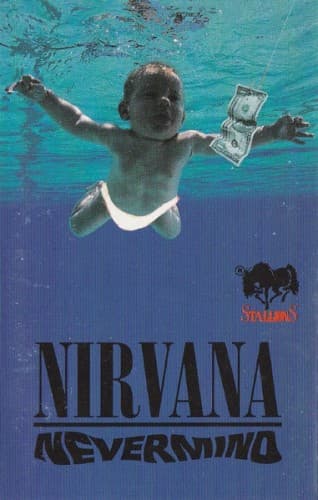
Nirvana Nevermind — Punk Writes the Hook Pop Never Could
Nevermind is the record that proved punk structure and pop instinct were the same thing all along. Twelve songs, most under four minutes, every one built on the same trick—verse quiet, chorus loud—and the trick works every single time because Kurt Cobain wrote melodies that stick and riffs that hit before you notice how simple they are. The Pixies had done the loud-soft thing, Hüsker Dü had done punk with tune, but Nirvana in 1991 did it with hooks so obvious they sounded like they had been waiting in the air, and did it on a major label with a producer who knew how to make it sound huge. The result was not a smart band dumbing down or a punk band selling out; it was three musicians who had figured out that the catchiest song structure in rock history was also the most direct way to sound desperate.
The album arrived when American rock radio was still playing hair metal and mainstream alternative meant R.E.M., and within four months Nevermind was number one, outselling Michael Jackson. That success gets treated as a fluke or a zeitgeist accident, but listen to the first four songs in sequence: every one is a different shape of the same idea, every one has a chorus you know by the second time through, and every one sounds like it was recorded by a band that could do this in their sleep but chose not to. Butch Vig recorded it at Sound City with a budget and Andy Wallace mixed it for clarity, which gave the songs a polish that Cobain would later complain about but which is also why the record still sounds direct instead of distant. The question Nevermind answers is whether a punk band can write for radio without becoming something else. The answer is yes, if the songs are this good and the band plays them this hard.
When the Riff Is the Hook and the Hook Is the Riff
The songwriting is power chords, verse-chorus structure, and melodies that resolve exactly where they should, which makes it sound easier than it is. Cobain was listening to the Pixies and trying to write like the Knack, and what he figured out was that you could take a two-note bass riff, build a verse that barely moves, and then detonate the chorus with one chord change and a scream. That is the structure of the first single, the second single, the third single, and half the album, and it works because the melodies are strong enough to carry the repetition and the riffs are distinct enough that no two songs feel like the same trick twice. The verses on two of the early tracks are both quiet and both circular, but one is tense and the other is narcotic, and the difference is in the riff and the way Cobain sings against it. The writing is ruthlessly efficient: no solos, no bridges that do not earn their space, and no instrumental passages longer than eight bars. The acoustic songs work as breaks in the sequencing and as proof that the band could write a song that does not need a drum fill to make it move.
Vig recorded the band live in the room with overdubs for guitar and vocals, and the production is designed to make three people sound like a wall. The guitar tone is the Boss distortion pedal Cobain insisted on, a sound that is more crunch than saturation, and Vig let it stay raw enough that you hear the pick hitting the string. The drums are where Wallace's mix does the most work: Grohl hit hard but the final drum sound is slick, with reverb on the snare that makes the fills huge and a kick that punches through the distortion. That clarity is why the album sounds big on car stereos and why it translates to radio, but it is also why the band later said it sounded too clean. Compare the one track carried over from the earlier Smart Studios session with original drummer Chad Channing to the rest of the record: the cymbal is thinner, the vocal is drier, and the song feels closer. The rest of the album is more produced, and whether that is a strength or a compromise depends on whether you think the songs needed the help. They did not, but the production made them unavoidable.
The playing is the third leg. Grohl joined just before the recording and the difference is audible: he plays like a hardcore drummer who learned to serve a song, and the fills on the opener and the fastest track are so locked to the riff that the song would collapse without them. Novoselic's bass is the anchor, playing root notes and staying out of the way until the song needs a run, and when it does—the intro to one mid-album track, the verse of another—the bass is what makes the riff work. Cobain's guitar playing is sloppy in the way that makes punk records sound human, but the sloppiness is in the rhythm, not the structure; the riffs are tight and the overdubs double the main line without adding harmony. The vocals are the performance that matters most. Cobain sings the verses like he is muttering to himself and the choruses like he is trying to be heard over the band, and the dynamic shift is what sells the quiet-loud trick. When he strains on the high notes or lets his voice crack on certain tracks, it sounds like he is pushing past his range because the song requires it, and that is more convincing than technique.
Frontloaded, Relentless, and Two Breaths Placed Just Right
The sequencing is a sprint with two pauses. The first five tracks are the argument: the opener is obvious, the second song proves the band can do it again with a different riff, the third slows the tempo without losing momentum, the fourth is the fastest and most direct moment on the record, and the fifth is the first sign that the band can write a melody that does not need distortion to land. By the time the first acoustic track arrives at the sixth slot, the album has earned the break, and the two minutes work because the song is as tightly written as anything plugged in. The second half starts with speed and a sneer that snaps the pacing back, and then the album coasts through four solid tracks before closing with the second acoustic moment, built on a bass riff and a vocal that barely rises above a whisper.
The second half does not have the same forward drive as the first, but that is a function of the opening stretch being absurdly strong rather than the back end sagging. The album runs forty-two minutes without the hidden track, and there is no filler, no interlude, and no song that should have been cut. The pacing issue is that the best songs are all in the first half and the closing run feels like the band ran out of gas, even though the songs themselves are good. The hidden track is six minutes of noise and feedback that was left off the first pressing and is best understood as an argument the band had with itself about whether this record was too clean. It does not belong in the sequencing and accidentally leaving it off was the right call.
The Album That Made Punk Safe for Radio and Hated Itself for It
Nevermind is the second-best album Nirvana made, but it is the one that matters most because it is the one that proved a punk band could write hits without compromise and still feel like they had compromised. In Utero is rawer and more deliberate, and Bleach is more faithful to the band's Sub Pop roots, but Nevermind is the one that has Smells Like Teen Spirit, Come as You Are, and Lithium, and those three songs alone are enough to justify the reputation. The album works as a whole, the production has aged better than the band thought it would, and the songs are strong enough that the few weaknesses—the second half losing steam, the mix being a bit too polished—are not enough to knock it down. This is the essential grunge record, the one that defined the sound for a decade, and the one that every alternative rock band since has either tried to replicate or deliberately avoided.
Start with the first single, then Lithium, then Drain You. If those three do not work for you, the rest of the album will not change your mind, because the album is twelve versions of the same idea executed at different tempos. If they do work, listen to the whole thing front to back, then go to In Utero to hear the band strip the production back and Bleach to hear where they came from. Nevermind is for anyone who wants to hear punk structure with pop instinct, played by a band that knew exactly what they were doing and did it harder and catchier than anyone before or since. It is not perfect, but it is close, and the flaws are the kind you forgive because the highs are too high to ignore.
Track by track
Track Listing
Smells Like Teen Spirit
StandoutThe song that made the album inescapable and the clearest example of Cobain's gift for taking the Pixies' loud-soft formula and writing a hook so obvious it feels like theft. The riff is four notes, the verse is a mutter, and the chorus is a scream with a melody that lands on the repeat, not the first time through. Grohl's drum fills in the second and third chorus are what make the song explode, and the guitar tone is just distorted enough to sound huge without turning into sludge. The bridge is twelve bars of the same chord and it works because the band plays it like they mean it. Vig's production shines here: the verse is sparse, the chorus is a wall, and the transition between the two is so sharp it sounds like a different band kicking in. The song is too famous to hear fresh now, but the structure is still a lesson in how to write a rock song that has one idea and executes it three times without repetition. Lyrically it is Cobain at his most opaque, and the fact that the words barely matter is part of the point. This is the song that sold ten million copies and made Cobain the voice of a generation he did not want to speak for, and the reason it worked is that it sounds like it was written in ten minutes and could not have been written any other way.
In Bloom
StandoutThe second-best song on the album and proof that the band could do the quiet-loud trick with a completely different riff and melody. The verse riff is a descending figure that stays tense, the pre-chorus builds with Novoselic's bass stepping up, and the chorus is a major-key release that somehow sounds angrier than the verse. Cobain's vocal in the verse is sarcastic and nasal, and in the chorus he screams the melody instead of shouting over it. The lyrics are a direct shot at the meathead fans who liked the band for the wrong reasons, and the sarcasm is clear enough that you do not need to parse the words. The song works as a single because the chorus is as catchy as anything on the record, and it works in the sequencing because it keeps the momentum from the opener without repeating the structure.
Come as You Are
StandoutThe most hypnotic song on the record, built on a two-note bass riff and a chorus effect on the guitar that Cobain admitted was lifted from Killing Joke. The verse is circular and the melody barely moves, which makes the chorus hit harder when it opens up. The vocal is the most controlled performance on the album: Cobain sings the verse like he is half-asleep and the chorus like he is trying to convince himself. The bridge is one chord and a drum fill, and it is over in eight bars, which is exactly how long it should be. The guitar tone is the watery chorus sound that became a grunge cliché, and here it works because the riff is strong enough to carry it. The song is slower than the two before it and the tempo shift is what makes the sequencing work. Lyrically it is an invitation that sounds more like a warning, and the ambiguity is the point.
Breed
StandoutThe fastest and most direct song on the album, two minutes of the same riff played at hardcore speed with a chorus that is just Cobain yelling the title. The verse riff is a chug, the chorus is the same riff with the vocal on top, and the song does not need anything else. Grohl plays this like a punk song and the drums are what drive it: the fills are quick and the beat never lets up. The bridge is four bars of feedback and then the verse comes back, and the whole thing is over before it wears out the idea. This is the band at their most Bleach-era punk, and it works because the song is too fast to overthink. The lyrics are about frustration and entrapment, and Cobain sings them like he is spitting them out.
Lithium
StandoutThe first song on the album that shows the band could write a melody that does not need the quiet-loud shift to work, though the song still uses it. The verse is soft and the vocal is nearly a whisper, the pre-chorus builds with Novoselic's bass, and the chorus is a major-key explosion with a melody that resolves exactly where it should. The lyrics were written before Cobain met Tobi Vail but rewritten to reference her, and they are about finding comfort in numbness, which is as close as Cobain gets to a clear statement. The song is sequenced perfectly as the last track of the first side, and it works as a single because the chorus is a hook that could have been written by a pop band if pop bands played this loud. The guitar solo is eight bars of noise and it is the only solo on the album, which makes it feel like an event. This is the third single and it deserved to be.
Polly
StandoutThe first acoustic break, carried over from the Smart Studios session with Chad Channing on drums, and the only track on the album that sounds like it was recorded in a different room. The song is about a real kidnapping and rape, and Cobain sings it from the perspective of the attacker, which makes it the most disturbing two minutes on the record. The vocal is dry and close, the guitar is fingerpicked, and the cymbal crashes are thin and distant. The song works because it is quiet and direct, and the subject matter is handled with no exploitation and no judgment, just a description of what happened. The sequencing is perfect: the album needed a break after five loud songs, and this is the break that makes you pay attention instead of tuning out.
Territorial Pissings
StandoutThe fastest and angriest song on the album, two minutes of shouting and distortion that starts with a sarcastic cover of a Youngbloods line and then detonates. The riff is three chords, the vocal is Cobain screaming, and the song is over before it has time to develop into anything else. This is the band's hardcore roots showing, and it works as a sequencing choice because it snaps the second half back to speed after the acoustic break. The lyrics are about invasion and violation, and Cobain sings them like he is trying to break something. The production is the rawest on the album, and that is probably intentional. Novoselic sings the opening line as a sneer and then Cobain takes over and does not let up.
Drain You
StandoutThe best song on the album that was not a single, and Cobain's own favorite. The verse riff is a jerky stop-start figure, the pre-chorus builds with a descending bass line, and the chorus is a release with a melody that is as strong as anything on the record. The lyrics are about codependency and the power dynamics in a relationship, quoting something Tobi Vail said to Cobain, and the line about completely draining someone is as direct as Cobain gets. The vocal in the chorus is strained and the high notes crack, which makes it sound more convincing than if he had hit them clean. The bridge is one chord and a drum roll, and it works because the song has earned the space. This should have been a single.
Lounge Act
SolidA solid mid-tempo song with a bass riff that drives the verse and a chorus that opens up with a major chord. The lyrics are about Tobi Vail and the line about wearing a shield refers to the K Records tattoo Cobain got to impress her. The vocal is more controlled than the songs before it, and the melody in the chorus is strong enough to carry the song. The riff is simple and the song does not try to do more than it needs to, which makes it effective without being essential. The sequencing puts it between two stronger songs, and it holds its place without standing out.
Stay Away
SolidA fast punk song with a riff that sounds like it was written in one take and a chorus that is just Cobain yelling the title over and over. The verse has a stop-start rhythm that keeps it from turning into a chug, and Grohl's drums are what drive the song forward. The lyrics are about isolation and the vocal is aggressive without being particularly interesting. The song works as part of the sequence but does not have a hook strong enough to make it more than a solid album track. The second half of the album needed the energy, and this delivers it without adding much else.
On a Plain
SolidA mid-tempo song with a verse that lopes along and a chorus that picks up speed without ever exploding. The riff is clean by the album's standards and the vocal is more melodic than aggressive, which makes it feel like a cooldown. The lyrics are fragments that Cobain claimed were meaningless, and the line about being on a plain is either a pun or a geographic reference or both. The song is fine, but by this point in the album the quiet-loud structure is wearing thin, and this does not have the hook to justify another pass. It is not weak enough to cut, but it is not strong enough to remember.
Something in the Way
StandoutThe second acoustic song and the better one, built on a cello (played by Kirk Canning, though not credited prominently) and a bass riff that sounds like it is sinking. Cobain's vocal is barely above a whisper, the lyrics are about living under a bridge, and the whole song feels like it is underwater. The mood is the opposite of everything that came before it, and the sequencing is perfect: this is the exhale after forty minutes of tension. The song is slow and deliberate, and it works because it does not try to build to anything. The album ends here in spirit; the hidden track that follows is an argument with the production, not part of the record.