The scorecard
9.0/10 · Essential
- Songwriting25%
- 9.5
- Production25%
- 9.0
- Performance15%
- 9.0
- Cohesion15%
- 8.5
- Originality10%
- 8.0
- Replay value10%
- 9.5
Eight songs with minimal repetition and maximum development, from the delta blues architecture of When the Levee Breaks to the building tension of Stairway to Heaven.
The drum sound on When the Levee Breaks and the layered acoustics on The Battle of Evermore show a band treating the studio as an instrument without losing the room feel.
The vocal range spans the tender fingerpicking on Going to California to the full-throat wail on Black Dog, with rhythm section power that never mistakes volume for force.
The eight-track sequence moves from blues-metal thunder through folk detours to swamp stomp without a wasted moment, though the side break after Stairway to Heaven creates an unequal split.
The album synthesizes British folk, American blues and hard rock into something larger than its sources, but the folk and blues foundations are worn openly.
Fifty years later every track still functions, from the riff exercises to the ballads, with arrangements that reveal new details on repeat listens.
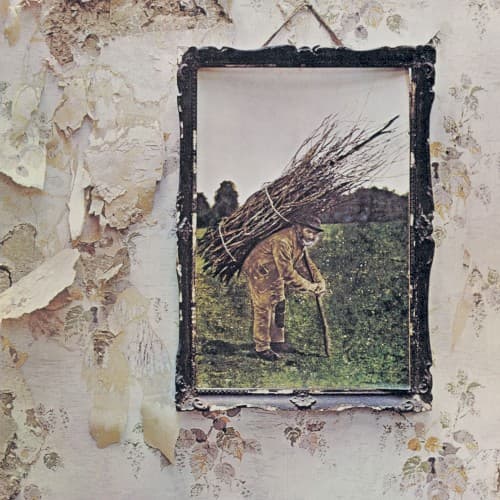
Led Zeppelin IV — The Album That Proved Hard Rock Could Build Cathedrals
The argument of this album is in its refusal to pick a lane. Most hard rock records in the early seventies chose between blues worship and metal volume, between folk purity and electric excess. This one makes all of those choices at once and wins every argument. The opening three tracks alone move from the stop-start riff mathematics of Black Dog through the straight-ahead drive of Rock and Roll to the medieval folk of The Battle of Evermore, and none of it sounds like compromise.
The band that made blues-rock a stadium sound on their first three albums here proved they could also write an acoustic ballad, a mandolin duet and an eight-minute crescendo without losing the plot.
The stakes were credibility. Hard rock in the early seventies was splitting into factions: the purists who wanted rawer blues, the progressives who wanted classical ambition, the pop converts who wanted shorter songs. This album refused the choice and dared the audience to keep up. It worked because the writing and playing earned the length and the left turns.
The obvious proof builds from fingerpicked folk to electric surge over eight minutes without a wasted bar, but the whole album operates on that principle. Even the shorter tracks refuse to sit still: one jerks between silence and roar, another locks into a groove and then bends it. The only real weakness is Four Sticks, which chases a complex rhythm idea without finding a song to hang it on. Everything else justifies its running time and its place in the sequence.
How to Make Thunder Sound Deliberate
The songwriting here is about control and release, rhythm and space. Black Dog is the template: a riff that stops and starts, leaving silence where most bands would fill, with a vocal line that threads through the gaps instead of sitting on top of the beat. The technique comes from blues phrasing stretched over hard rock volume, but the execution is pure calculation. Rock and Roll does the opposite, a straight four-four sprint with no gaps and no letup, the kind of song that sounds simple until you notice how tightly the drums and bass lock in and how much work the guitar is doing in the margins. The two tracks back to back make the point: this is a band that can do space and speed, stop-time and straight drive, and knows when to use each.
The folk material works because the band plays it straight. The Battle of Evermore leans into the medieval balladry with mandolin and call-and-response vocals, no blues inflection and no winking. Going to California is a clean fingerpicked demonstrate with none of the electric bombast that made the first three albums. Both tracks sound like the band trusts the songs enough to get out of the way, which makes them land harder than they would with studio tricks or unnecessary arrangements. The mandolin tone on The Battle of Evermore is bright and direct, the vocal harmony between the two voices is the only decoration, and that is enough.
Stairway to Heaven is the case study in how to build a song in sections without it feeling stitched together. The acoustic opening has its own melody and momentum, the electric entrance halfway through does not erase what came before, and the final solo and vocal peak feel like the destination the first four minutes were aiming toward. The arrangement adds layers without adding clutter: recorders in the intro, electric twelve-string in the midsection, the full band for the finish. When the Levee Breaks takes the opposite approach, one massive drum sound and one riff for most of the song, trusting repetition and the weight of the production to carry it. Both strategies work because the playing has the conviction to sustain them.
The production captures room sound and muscle without choosing between them. The drum reverb on When the Levee Breaks is the famous example, but the whole album has that sense of air and space around the instruments. The acoustic tracks sound like they were played in a room, not a booth, and the electric tracks have enough separation that you can hear what each instrument is doing even when all four are going. The mix does not bury the bass or drown the vocals, which makes the quiet moments land and the loud ones hit without distortion. The main weakness is Four Sticks, where the odd time signature and the guitar layering never cohere into a song that demands repeat listens. It is the one track that sounds like an experiment left on the album because it fit the length, not because it earned its place.
Why the Sequence Feels Inevitable Even When It Jumps Genres
The pacing is all momentum and contrast. The album opens with three songs that establish the range before the centerpiece takes over, and then the second half alternates between groove and stomp. The first stretch resets the tension after the long climb, offering a straightforward rocker that releases the pressure. The back half strips down to two guitars and a voice, giving the listener room to breathe before the closer brings the heaviest sound on the record.
The flow works because the shifts feel like chapters in an argument, not random sequencing.
The weak link is the side break. The first side ends on a peak that the second half does not try to match, which makes the opening track of side two sound smaller than it is. The second side is shorter and less ambitious, four tracks that work individually but do not build the way the first side does. The closer is strong, the kind of song that leaves the listener stuck in its groove, but the path from the middle section to the finish feels more like good songs in order than an intentional arc.
That said, eight tracks with no filler and only one misfire is a better batting average than most hard rock albums manage. The length is earned because nothing repeats and nothing drags.
The Album That Made Hard Rock Safe for Ambition
This is the album that proved hard rock could stretch without snapping. Bands had done louder blues, longer songs and folk detours before, but no one had combined all three on one record and made it sound like a unified vision instead of a grab bag. The writing and playing are strong enough that the shifts in style feel like depth, not indecision. It is the best starting point for the band because it shows the full range without the sprawl of the later records or the narrower focus of the earlier ones. If you only hear one Led Zeppelin album, this is the one that explains why they mattered.
It holds up because the songs still do the work. Stairway to Heaven has been played into the ground, but the structure and the build still function if you listen past the familiarity. Black Dog and When the Levee Breaks have been sampled and copied for five decades and they still sound like the original blueprints. The acoustic material has not aged into easy listening; Going to California still has the bite of a band that earned its folk credentials instead of buying them. The only real flaw is Four Sticks, which remains a curiosity rather than a revelation.
Start with Black Dog, Stairway to Heaven and When the Levee Breaks if you want the highlights. If those three land, play the album front to back because the sequencing matters. For the next step, the earlier albums have rawer blues and the later ones have deeper folk, but this is the record where all the pieces locked into place. It is essential listening for anyone trying to understand how hard rock became an album format instead of just a collection of singles. Fifty years later it still sounds like a band that knew exactly what it was doing and had the chops to pull it off.
Track by track
Track Listing
Black Dog
StandoutThe riff stops and starts, leaving holes where most hard rock fills every second with noise. The vocal line weaves through those silences instead of landing on the beat, a call-and-response between voice and guitar that requires both to listen. The structure is verse and riff, no traditional chorus, just the tension of the stop-start rhythm and the release when the band locks in. The production keeps the guitar dry and the drums tight, so the spaces between the hits feel deliberate instead of empty. It is a clinic in how much power you can generate by knowing when to shut up. The song set the template for riff-driven hard rock that trusted rhythm over melody, and five decades later it still sounds like no one is trying too hard.
Rock and Roll
StandoutStraight-ahead four-four drive with no detours and no apologies, the kind of song that sounds simple until you try to play it at that tempo without losing the groove. The drums push without rushing, the bass locks in without disappearing, and the guitar solo in the middle is all momentum and no showboating. It is the palate cleanser after Black Dog, proof the band could do a traditional rocker as well as they could do the stop-start experiments. The only weakness is that it does one thing for four minutes, but when that one thing is this locked in, repetition is the point.
The Battle of Evermore
StandoutMandolin and acoustic guitar, two voices trading verses, no blues and no electric instruments until the fade. The medieval folk arrangement is played straight with no irony and no rock inflation, just the melody and the call-and-response vocal. The lyrical imagery leans into fantasy without camp, and the performance sells it because no one is winking at the camera. It is the furthest the band had gone into folk territory on record, and it works because the playing is clean and the voices commit. The sequencing is bold, dropping a folk ballad between two hard rock anthems, but the contrast makes both styles sound stronger.
Stairway to Heaven
StandoutEight minutes that build from fingerpicked acoustic to full-band electric surge, and every section earns its place in the structure. The opening is patient, a folk melody with recorders that establishes the theme without rushing. The midsection adds electric twelve-string and builds the arrangement in layers, each new instrument expanding the sound without erasing what came before. The shift to the electric solo halfway through feels like the destination the first four minutes were aiming toward, not a genre switch pasted onto a different song. The final vocal peak and the guitar solo are the payoff, but they land because the quiet opening gave them somewhere to climb from. The song has been overplayed into cliché, but the construction still holds: this is how you write an extended piece that justifies its length with development instead of repetition. It remains the textbook example of dynamics in rock songwriting.
Misty Mountain Hop
SolidA groove-driven rocker built on a single riff and a steady four-four stomp, with none of the rhythmic tricks of Black Dog or the ambition of Stairway to Heaven. It does its job as a pressure valve after the eight-minute centerpiece, giving the listener a straightforward song that does not demand close attention. The production keeps the guitars thick and the bass prominent, and the vocal melody is simple enough to follow on first listen. It is a solid album track that knows its role in the sequence, but it does not reach beyond that. The main weakness is that it stays in one gear for the entire running time, which makes it feel smaller next to the tracks that shift and build.
Four Sticks
WeakAn experiment in odd time signatures that never finds a song to wrap around the rhythmic idea. The drums and guitars chase a complex pattern, but the melody is thin and the structure is more exercise than composition. It sounds like a track that stayed on the album because the band was proud of the technical challenge, not because it holds up on repeat listens. The production tries to add weight with layered guitars, but the song underneath does not have enough substance to carry the arrangement. It is the one clear misstep on the album, the only track that feels like filler.
Going to California
StandoutTwo acoustic guitars and a voice, no rhythm section and no electric embellishment, just clean fingerpicking and a vocal melody that follows the chord changes without forcing anything. The playing is precise without being fussy, and the production captures the room sound and the string tone without adding reverb or studio tricks. It is a showcase for the quieter side of the band's range, proof they could write a folk ballad without leaning on blues clichés or rock power. The lyrical imagery is California dreaming without the psychedelic haze, and the performance sells it with enough restraint that the sentiment does not curdle into nostalgia. It is the calm before the storm of When the Levee Breaks, and the contrast makes both tracks sound more effective.
When the Levee Breaks
StandoutOne enormous drum sound, one riff, one groove sustained for seven minutes. The production is the star here, a cavernous reverb on the drums that makes every hit feel like it is filling a cathedral, with harmonica and guitar layered over the top. The song is a delta blues rewrite, but the arrangement is pure hard rock scale: massive low end, relentless repetition, no динамика because the power is in the weight and the momentum. The riff never changes and the structure never shifts, but the groove is deep enough that repetition becomes hypnotic instead of boring. It is the heaviest moment on the album and the perfect closer, a song that leaves the listener pinned under its slow-motion stomp. The only risk is that it does one thing for its entire length, but when that one thing sounds this inevitable, variation would weaken it.