The scorecard
9.2/10 · Essential
- Songwriting25%
- 9.5
- Production25%
- 10.0
- Performance15%
- 9.0
- Cohesion15%
- 8.5
- Originality10%
- 7.5
- Replay value10%
- 9.5
Eleven tracks without a weak melody: hooks that lodge on first listen in "Dreams" and "Go Your Own Way", verses that develop instead of repeating in "The Chain" and "Gold Dust Woman", and Christine McVie's effortless chord changes in "Don't Stop" and "Songbird".
Ken Caillat and Richard Dashut captured a room sound that feels both intimate and enormous: the API console's EQ work gives every instrument its own space, the vocal stacks are warm without blur, and the Aphex Exciter rescued the worn master tape without making it brittle.
Three singers with distinct timbres who blend perfectly when they need to, Buckingham's guitar parts that serve the song instead of showing off, and a rhythm section that locks in so tightly on "The Chain" and "Go Your Own Way" that the beat becomes a physical presence.
The sequencing moves between tempos and moods without jarring: the acoustic interlude of "Never Going Back Again" gives the listener a breath before "Don't Stop" kicks in, and "Songbird" closes side one with a palate cleanser that makes "The Chain" hit harder.
The band took the California soft rock template and made it meaner and more rhythmically inventive: the four-to-the-floor stomp of "Go Your Own Way" pulls from the Stones, the chair percussion on "Second Hand News" evokes Celtic rock, and the fretless bass solo in "The Chain" does something no one else was trying in 1977.
Forty-plus years later the record still sounds immediate: the production choices that could have dated it instead feel like craft, the personal drama that fueled the lyrics reads as specificity rather than voyeurism, and the hooks remain inescapable.
Fleetwood Mac Rumours — How Dysfunction Became the Studio's Best Raw Material
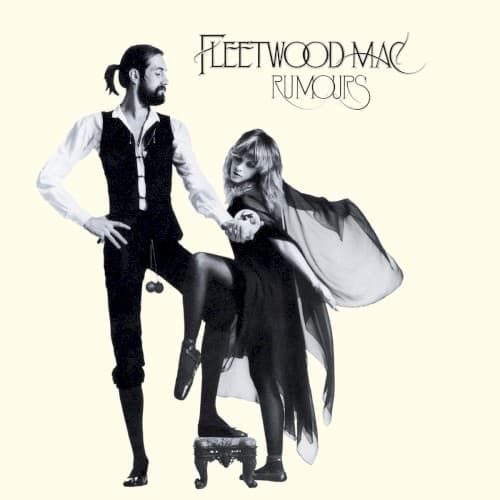
Rumours argues that personal wreckage makes better pop records than happiness does, and it proves the argument across eleven tracks of melody and spite. Lindsey Buckingham, Stevie Nicks and Christine McVie wrote breakup songs about each other while their rhythm section dealt with its own domestic collapse, then went into a windowless Sausalito studio in early 1976 and stayed until the tapes wore out. The result is a record where the craft and the chaos are inseparable: harmonies sung by people who were not speaking outside the booth, arrangements built during cocaine marathons, and a mixing process so prolonged that the master tape lost its top end and had to be rescued with a then-novel harmonic enhancer.
What keeps Rumours from being a tabloid curiosity is that every song works as a song first. The drama matters because it sharpened the writing and the performances, not because it provides gossip. Buckingham pushed the band toward pop structures and away from the blues-rock improvisation of the previous lineup, McVie brought classical training to the keyboard parts, and Nicks wrote verses with enough abstraction to let the instrumentals breathe.
Producers Ken Caillat and Richard Dashut spent nine days testing microphones and amplifiers before discovering they could shape the sound more effectively on the API mixing console, then used that console to give every instrument its own frequency range. The production makes the record feel both spacious and immediate, with vocal stacks that never blur and a rhythm section that hits like a physical presence.
Rumours reached number one in four countries, sold over forty million copies, and won the Grammy for Album of the Year, but none of that commercial dominance explains why it still sounds urgent nearly fifty years later. It lasts because the songs are built to last.
The Room That Buckingham Built
Buckingham took charge of the sessions with one goal: make a pop album that would expand on the commercial success of the 1975 Fleetwood Mac record. According to co-producer Richard Dashut, Buckingham understood "the craft of record making" in a way the blues-rock veterans in the band did not, and that understanding shaped every arrangement choice.
The acoustic tracks are as carefully constructed as the electric ones. One track started as a simple fingerpicking demo called "Brushes", then gained snare rolls played with brushes, vocal harmonies, and layered instrumental tracks until the simplicity became an illusion. Another, conceived by Christine McVie on a nine-foot Steinway, was recorded in an all-night session at Zellerbach Auditorium in Berkeley because Caillat felt it needed a concert hall's ambience.
The electric tracks pull from a wider palette. One began as an acoustic demo called "Strummer" until Buckingham heard the Bee Gees' "Jive Talkin'" and rebuilt it with four tracks of electric guitar and chair percussion to evoke Celtic rock. Another uses a four-to-the-floor dance beat influenced by the Rolling Stones' "Street Fighting Man", with guitars loud enough to make the rhythm section work harder. The most complicated piece on the record came together through editing: Caillat and Dashut edited together parts of two different demos, then the full band crafted the rest using an approach akin to scoring a film, with John McVie's fretless bass solo marking the tempo shift into the final third.
Caillat and Dashut share production credit with the band, but Caillat handled most of the engineering. The Record Plant in Sausalito was equipped with a 3M 24-track machine, high-quality microphones, and an API mixing console with 550A equalisers that controlled each track's timbre. Baffles went around the drums and around John McVie, who played bass facing Fleetwood's kit outside the partition screen. Buckingham performed close to the rhythm section, Christine McVie's keyboards stayed away from the drums, and the best microphones captured the vocal harmonies between all three singers.
The production has one audible flaw: the overdubbing process wore down the 24-track master tape, leaving many sounds dull and flat by the time mixing began. Engineers used the Aphex Aural Exciter, a harmonic enhancer, to restore the lost top-end clarity. The fix works, but some of the high frequencies on two tracks have a slight artificial sheen that would not be there if the tape had held up.
That weakness is minor. The record sounds enormous without ever feeling overproduced, and the vocal arrangements remain the clearest example of what three great singers can do when they stop competing and start blending.
Eleven Tracks Without Filler
Rumours was sequenced with the goal of making every track feel like a potential single, and the pacing justifies that ambition. The first stretch opens with momentum, downshifts to an acoustic interlude, then builds back up before a piano ballad closes the side with a reset. The back half starts with the most ambitious composition on the record, then moves through an R&B groove and twelve-string jangle before the one-two finish.
The only sag is the middle section, where three mid-tempo tracks in a row slow the momentum. One was crafted spontaneously with improvised bass patterns and keyboard blips, and it sounds like it: the groove never quite locks in, and the sarcastic lyric does not have enough bite to justify the running time.
The sequencing recovers immediately with the closing run, a free-jazz-inspired finale that uses harpsichord, Stratocaster and dobro to build a soundscape as disorienting as the Los Angeles lifestyle being explored. At thirty-nine minutes, the record finishes before it wears out its welcome, and the variety in tempos and textures keeps the ear engaged even when the emotional territory stays consistent. Every song is about troubled relationships, but the perspectives shift: pessimism in one, hopefulness in another, optimism and introspection elsewhere. The lyricists were writing journals about each other, but the variety in tone keeps the record from feeling like one long argument.
The Standard for Making Drama Sound Like Craft
Rumours is the best album Fleetwood Mac ever made and one of the best pop-rock records of the 1970s. It ranks alongside Joni Mitchell's Blue and the Beatles' Rubber Soul as proof that personal turmoil sharpens songwriting when the writers have the skill to shape it into structure. The production set a standard for how to record a rock band in a studio: every instrument has its own space, the vocal harmonies sound effortless even when they required dozens of takes, and the tones are warm without being soft. The record aged better than most of its California soft-rock peers because Buckingham's arrangements have more rhythmic invention and because the three songwriters avoided the lyrical clichés that date so many 1970s breakup songs.
It is not for listeners who want blues-rock improvisation or guitar solos that go somewhere unexpected; Buckingham's playing serves the songs, and the songs are built around hooks and verse-chorus structures. It is not for listeners who need optimism; even the most upbeat track is about moving past sadness rather than celebrating joy. It is for anyone who wants to hear what happens when great songwriters, great singers and great engineers all do their best work on the same project.
Start with the opening run to understand the range, then play the full album in sequence to hear how the pacing works. The 2013 deluxe edition includes a Nicks song left off the original release that is stronger than half the tracks that made the cut, and live recordings from the 1977 tour that show how well the material translated to the stage.
For the next Fleetwood Mac album, listen to Tusk, a deliberate attempt to break the Rumours formula that succeeds as an experiment but not as a song collection. For similar records by other artists, try Carole King's Fabric for songwriter craft and vocal warmth, or Joni Mitchell's Court and Spark for personal lyrics shaped into pop structures. Rumours lasts because the dysfunction was real and the craft was meticulous.
Track by track
Track Listing
Second Hand News
StandoutBuckingham heard the Bee Gees' "Jive Talkin'" and rebuilt an acoustic demo into a groove built on four tracks of electric guitar and chair percussion. The Celtic-rock rhythm pushes harder than anything on the previous Fleetwood Mac album, and the vocal melody has enough optimism to keep the lyric about moving on from sounding bitter. The production choice to bury the acoustic origins under electric layers is the right one: the track works as an opener because it announces a busier, more rhythmically inventive sound than the band's blues-rock past.
Dreams
StandoutNicks wrote the song in an afternoon, sang it, and let the band play around her. The two-note bass pattern from John McVie locks in with Fleetwood's drums to create a groove that feels both hypnotic and spacious, while Christine McVie's Fender Rhodes fills the gaps Nicks leaves in the vocal melody. The lyric about breakup and hope is specific enough to feel personal without being so specific that it loses the listener, and the vocal performance has more warmth than most of Nicks' other tracks on the record. The production captures what Dashut called "emotion and feeling without a middle man": every element serves the mood, and nothing is overplayed. The song became Fleetwood Mac's only number-one single on the Billboard Hot 100, and it deserved it.
Never Going Back Again
StandoutA fingerpicking showcase that gains depth from Fleetwood's brushed snare rolls and layered vocal harmonies. Buckingham wrote it after a short relationship in New England, and the lyric about the illusion of permanent contentment has just enough melancholy to keep the acoustic brightness from feeling too cheerful. At two minutes it functions as an interlude that gives the listener a breath before the momentum picks up again.
Don’t Stop
StandoutChristine McVie and Buckingham shared the writing because their sensibilities overlapped, and the collaboration shows in the verse construction: the melody develops through the song instead of repeating, and the shift from acoustic guitar to tack piano on the second verse adds texture without overcomplicating the arrangement. The lyric about optimism and moving forward is the most straightforwardly hopeful moment on the record, and McVie's vocal delivery sells it without overselling it. The triple-step dancing rhythm keeps the track from feeling too earnest.
Go Your Own Way
StandoutBuckingham's most guitar-oriented track on the record, built around a four-to-the-floor stomp influenced by the Stones' "Street Fighting Man" and a vocal melody that moves between verses with enough variation to justify the three-and-a-half-minute runtime. The lyric is the pessimistic counterpoint to Nicks' "Dreams": where she found hope in the breakup, Buckingham found bitterness, and the performance does not try to soften it. Fleetwood and John McVie lock in so tightly on the rhythm that the beat becomes a physical presence, and the guitar tone has enough bite to match the vocal. The production choice to keep the guitars loud and the mix dense makes the track feel like controlled aggression, and it works.
Songbird
StandoutChristine McVie alone on a Steinway, recorded in an all-night session at Zellerbach Auditorium to capture the concert hall ambience Caillat wanted. The lyric is a prayer about "nobody and everybody", and the performance is so understated that the emotion lands without manipulation. The decision to close side one with the sparsest arrangement on the record is a gamble that pays off: it resets the listener's ear and makes side two's opener hit harder.
The Chain
StandoutThe most complicated construction on Rumours: Caillat and Dashut edited together parts of a Christine McVie demo called "Keep Me There" and a Nicks song, then the full band crafted the rest using a film-score approach. The result is a track with three distinct sections that build tension through the first two-thirds before John McVie's fretless bass solo marks the tempo shift into the final third. The whole band shares the writing credit, and the collaboration shows in the arrangement: every instrument has a moment to lead, and the vocal harmonies between Buckingham, Nicks and Christine McVie are the tightest on the record. The lyric about holding a relationship together through willpower alone is the thematic center of the album, and the performance earns the four-and-a-half-minute runtime.
You Make Loving Fun
StandoutChristine McVie wrote it about her boyfriend, the band's lighting director, and the lyric has more joy than anything else on the record. The R&B-inspired groove is built around a clavinet and interlocking rhythm-section parts that give the track a simpler, more direct feel than the more layered compositions elsewhere. The production is clean without being sterile, and the vocal performance is warm enough to sell the optimism without making it cloying.
I Don’t Want to Know
SolidBuckingham and Nicks wrote it in 1974 before joining Fleetwood Mac, and the Buddy Holly influence is audible in the twelve-string guitar jangle and the harmonized vocals. The lyric about refusing to hear bad news is less developed than the stronger tracks on the record, and the arrangement does not add much to the demo origins. It works as a solid album track but not as a standout.
Oh Daddy
WeakWritten about Mick Fleetwood and his wife Jenny Boyd with a slightly sarcastic edge, the track was crafted spontaneously with improvised bass and keyboard parts. The spontaneity shows: the groove never quite locks in, and the lyric about Fleetwood's leadership being correct does not have enough bite or warmth to land. The weakest track on the record.
Gold Dust Woman
StandoutNicks wrote it about Los Angeles and cocaine addiction, and the free-jazz influence shaped the arrangement into something more abstract than the rest of the album. The harpsichord, Stratocaster and dobro create a disorienting soundscape that matches the lyric's focus on struggle and perseverance, and Nicks' vocal performance has more grit and less melody than her other tracks. The decision to close the record with the darkest and least commercial song is bold, and it works: the track earns its four-minute-fifty-one-second runtime by building tension without resolving it. The production captures the chaos without losing the structure, and the result is a fitting end to a record about keeping going when everything is falling apart.
![[Led Zeppelin IV] by Led Zeppelin album cover](/_next/image?url=https%3A%2F%2F44shyya1tglz2lc3.public.blob.vercel-storage.com%2Fcovers%2Fled-zeppelin-led-zeppelin-iv.jpg&w=640&q=75)