The Only Band That Mattered: The Clash's Revolutionary Vision
When The Clash formed in a London squat in 1976, punk rock was a three-chord scream against the establishment. Joe Strummer, Mick Jones, Paul Simonon, and Topper Headon transformed it into something far more ambitious: a global sound that could accommodate reggae, ska, rockabilly, funk, and hip-hop without losing its confrontational edge. For a decade, they proved that politically engaged rock could sell millions without compromising its principles, that you could rage against capitalism while signing to a major label, that punk's narrow orthodoxy was just another prison to escape.
Their manager Bernie Rhodes dubbed them "The Only Band That Matters," a piece of marketing hyperbole that somehow became defensible. Between 1977 and 1982, The Clash released six studio albums that progressively expanded rock's vocabulary, culminating in the sprawling double album London Calling and the genre-blurring triple LP Sandinista! They brought Jamaican sound system culture to white British youth, wrote songs about Spanish Civil War veterans and Nicaraguan revolutionaries, and turned world music into punk rock before the term world music even existed.
What separated The Clash from their contemporaries wasn't just musical ambition—it was their insistence that rock could engage with the world beyond suburban alienation. While the Sex Pistols imploded after one album and most first-wave punk bands settled into formula, The Clash kept pushing outward, treating every album as an opportunity to reinvent what a politically conscious rock band could sound like.
Sonic Expansion: From Three-Chord Assault to Global Sound Collage
The Clash's early sound was pure adrenaline: Strummer's ragged bark colliding with Jones's buzzsaw guitar, Simonon's propulsive bass lines, and Terry Chimes's economical drumming. Their 1977 debut crammed fourteen songs into thirty-five minutes, each track a compact explosion of working-class fury. But even then, the seeds of their eclecticism were visible—"Police and Thieves" stretched Junior Murvin's reggae anthem to six minutes, proving punk's tempo didn't have to be relentless.
By the time they recorded London Calling with producer Guy Stevens, The Clash had absorbed everything: rockabilly guitar licks, New Orleans R&B shuffles, pub rock grit, dub production techniques. Stevens encouraged chaos in the studio, throwing chairs and creating the productive disorder that gave the album its raw immediacy. Topper Headon's arrival as permanent drummer fundamentally changed their rhythmic palette—his jazz training and groove sensibility allowed them to authentically explore reggae and funk without sounding like tourists.
The production ethos evolved from lo-fi urgency to sophisticated layering. By Sandinista!, they were experimenting with dub versions, gospel choirs, rappers, and children's choruses—sometimes brilliantly, sometimes indulgently. Combat Rock refined this sprawl into radio-friendly accessibility, with songs like "Rock the Casbah" proving their global influences could translate to mainstream success. Jones's guitar work grew more textured and melodic, while Strummer's vocals gained nuance, moving from punk's one-dimensional sneer to something that could convey doubt, hope, and weariness.
From Punk Vanguard to Stadium Ambition: The Clash's Rapid Ascent and Internal Fractures
The Clash emerged from the same West London scene that spawned the Sex Pistols, but with a fundamentally different worldview. Where Johnny Rotten preached nihilism, Strummer—born John Mellor, public school educated—advocated engaged resistance. He'd cut his teeth in pub rock outfit The 101ers before Mick Jones and Paul Simonon recruited him for their new project. Their first gigs at the ICA and supporting the Sex Pistols established their reputation: louder, angrier, and more overtly political than their peers.
Their self-titled 1977 debut captured punk at its rawest, but the band immediately chafed against the genre's limitations. Give 'Em Enough Rope (1978), produced by Blue Öyster Cult's Sandy Pearlman, aimed for arena-sized sound, alienating purists who wanted punk to stay small and scrappy. The album's polished production split critics, but tracks like "Safe European Home" and "English Civil War" demonstrated their growing sophistication as songwriters.
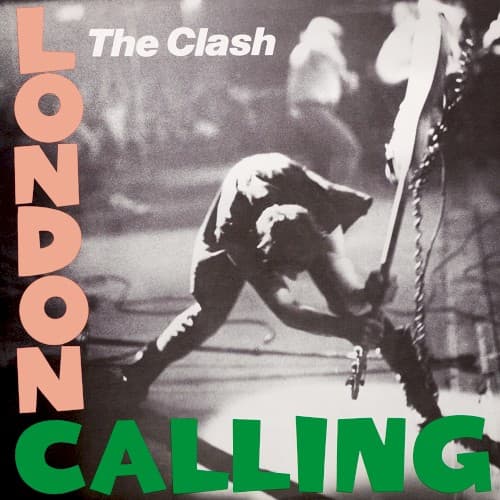
London Calling (1979) changed everything. A double album sold at single-album price, it synthesized punk energy with musical maturity, addressing unemployment, drug addiction, cultural decay, and the Spanish Civil War across nineteen tracks. The title track's apocalyptic vision and Paul Simonon's bass-smashing cover photo became iconic shorthand for punk's second wave. Critics immediately recognized it as a landmark—Rolling Stone later named it the best album of the 1980s despite its 1979 release.
Sandinista! (1980) tested fans' patience with its triple-LP sprawl, but its ambition was undeniable—mixing dub experiments, children's choirs, and gospel alongside traditional Clash rockers. The messy abundance reflected a band confident enough to follow every creative impulse, commercial viability be damned. Combat Rock (1982) reined in the excess, yielding their biggest hits: "Rock the Casbah" hit number eight on the Billboard Hot 100, while "Should I Stay or Should I Go" eventually topped UK charts.
But success accelerated internal tensions. Jones wanted to evolve toward art rock and new wave sophistication; Strummer remained committed to punk's egalitarian spirit. When Jones was fired in 1983, The Clash effectively ended, though Strummer and Simonon released one final album, Cut the Crap (1985), with replacement members—a poorly received coda that everyone including Strummer later disavowed. The band officially dissolved in 1986, having compressed a decade's worth of evolution into ten explosive years.
Political Rock's Blueprint: How The Clash Redefined Engagement and Influence
The Clash proved that politically conscious rock didn't have to be didactic folk music or prog rock allegory—it could be direct, danceable, and genuinely dangerous to power structures. Their willingness to engage with global politics, from British unemployment to American imperialism to anti-fascism, established a template that everyone from U2 to Rage Against the Machine to Green Day followed. They demonstrated you could criticize Western foreign policy, corporate control, and racist policing while still writing songs people wanted to hear.
Their musical expansionism opened punk to world music influences years before that became standard practice. The reggae and ska integration wasn't appropriation—it was cultural exchange rooted in London's multicultural reality, acknowledging the shared struggles of British punk and Jamaican immigrant communities. Bands as diverse as Rancid, The Libertines, and LCD Soundsystem owe their genre-blurring approaches to The Clash's precedent.
London Calling's enduring presence—consistently ranking among the greatest albums ever made—ensures new generations discover The Clash as more than a history lesson. Its cover design became one of rock's most recognizable images, endlessly parodied and homaged. The album's thematic concerns—economic inequality, environmental collapse, cultural fragmentation—feel depressingly contemporary, giving the music continued relevance beyond nostalgia. When protesters spray-paint "London Calling" on walls during demonstrations, or when politicians appropriate "Should I Stay or Should I Go," it confirms The Clash's transformation from band to cultural language—a set of symbols and sounds that communicate resistance, however diluted by time and commercialization.