The scorecard
8.5/10 · Essential
- Songwriting25%
- 9.0
- Production25%
- 8.5
- Performance15%
- 8.5
- Cohesion15%
- 7.5
- Originality10%
- 8.0
- Replay value10%
- 9.0
Nineteen songs that move from apocalyptic visions to intimate paranoia without repeating a melodic idea or wasting a verse, each structured to earn its length.
Guy Stevens and Bill Price captured the band live and raw across rockabilly, reggae and jazz without flattening the differences or polishing out the sweat.
Strummer's bark holds the center while Jones sings the prettiest melodies, Simonon takes his first lead vocal, and Topper Headon shifts from punk bash to jazz swing without breaking stride.
Nineteen tracks across four sides with no filler and only one weak stretch in the back half, sequenced to build momentum rather than coast on the singles.
First major punk band to strip the genre down to its pre-1977 sources and build outward without apology, proving range was not retreat.
Every return reveals another verse that connects, another arrangement choice that lands, another performance that tightens rather than fades.
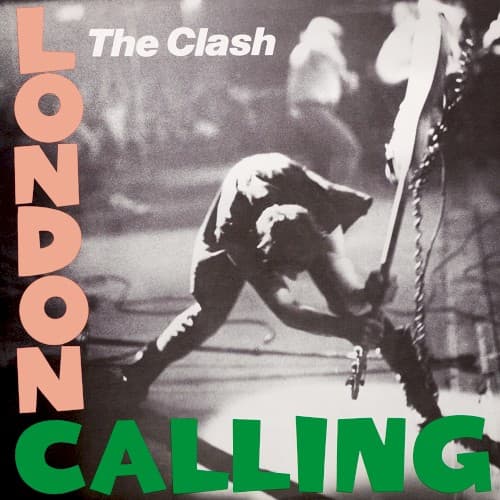
The Clash London Calling — Punk Strips Down to Rebuild
The argument that punk had to sound one way died the moment this double album hit the shops in December 1979 for the price of a single. London Calling works because the Clash heard punk as an engine, not a fence. Strip away the noise and what remains is the same three-chord urgency that powered rockabilly, ska and rhythm and blues before safety pins turned it into a uniform. The band spent mid-1979 in a Pimlico rehearsal room playing covers, rebuilding confidence after a year-long writing block, and discovering that drummer Topper Headon could lock into any tempo they threw at him.
The thesis is in the opening title track: the apocalypse is here, the systems are failing, and the only response is to play everything louder and faster while there is still time. The stakes are survival, musical and otherwise. Most double albums pad their length with jams and detours. This one earns nineteen songs by making each one do different work.
The range is not a parlor trick.
It is proof that punk's real tradition was never a sound but a refusal to accept what rock had become by 1977: bloated, complacent, and disconnected from the streets. The Clash went back to rockabilly and reggae and New Orleans R&B because those styles already knew how to be urgent and economical. CBS Records fought the double-album format and lost. The band recorded the whole thing in five to six weeks at Wessex Sound Studios with Guy Stevens producing, a man who swung ladders and poured wine on pianos to keep the takes raw.
How Covers Became a Crash Course in Songwriting
The Clash arrived at Vanilla Studios in May 1979 with nothing written and no clear direction beyond the sense that their second album had not pushed far enough. Mick Jones and Joe Strummer had not finished a new song in over a year. The solution was to stop trying to write punk songs and start playing the music that punk had always drawn from: Vince Taylor's rockabilly, Jamaican reggae, R&B from New Orleans, and British rock and roll from before the genre calcified into prog. The covers became a template.
The writing followed the same shapes. Brand New Cadillac is a Taylor cover recorded in one or two takes, all snarl and economy, and it sets the standard for the rest: tight, fast, no second chances. Rudie Can't Fail mixes pop melody with a horn section and a reggae lilt, written about a character who refuses to grow up and delivered with enough warmth to make the refusal sound reasonable. The Guns of Brixton was Paul Simonon's first lead vocal and first songwriting credit on a Clash album, a reggae track about paranoia that Strummer had to convince him to finish.
Lost in the Supermarket is the prettiest thing Jones ever sang, written by Strummer about Jones's childhood in a basement flat, a melody that could have been a single if the lyrics were not about consumerism turning people into ghosts. The production is rawer than anything Guy Stevens did on paper. He poured wine on a piano to make Strummer stop playing it one way and try another. He swung a ladder during a take to create chaos in the room.
Bill Price, the chief engineer, kept the tape rolling and made sure the performances stayed live.
The band recorded most songs in one or two takes, which means the mistakes and the energy are the same thing. Clampdown started as an instrumental called Working and Waiting and became a song about people who abandon their ideals the moment it costs them something, the verses tight and the chorus built to last. The Card Cheat was recorded twice, each part doubled to make the sound as big as possible, and it works because the arrangement is specific: horns, piano, a melody that builds instead of repeats.
Topper Headon holds the whole album together.
He plays punk bash on the title track, jazz swing on Jimmy Jazz, reggae riddim on Rudie Can't Fail, and hard rock stomp on Brand New Cadillac, always serving the song and never showing off. The band built a daily routine at Vanilla: afternoon rehearsals, football in the park, drinks at the pub, evening rehearsals. The routine shows. These nineteen tracks sound like a band that locked in and stayed there.
The weakness is length. Nineteen songs is a lot to ask, and the back half of side four sags. Revolution Rock runs past five minutes and does not earn it, a groove that never develops into a song. Four Horsemen is solid but not essential.
The sequencing is strong enough that the sag does not kill momentum, but it is there.
Four Sides That Build Instead of Coast
The sequencing puts the singles and the strangest experiments up front, then lets the second half sprawl without losing the thread. The first stretch opens with the title track and does not let up: four different genres in four songs, no wasted motion. The middle section is the strongest: five tracks that move from the Spanish Civil War to Montgomery Clift to suburban numbness to authoritarianism to Brixton without a single weak link. The flow is deliberate.
The prettiest song on the album sits right before the angriest, and the closing track of the second side works because it does not try to sound like anything else on the record. The third stretch is shorter and less consistent. Two tracks are solid, but one runs under two minutes and does not develop, and another, while beautifully arranged, does not connect the way the earlier material does. The final stretch starts strong with one of the catchiest things the band ever recorded, then sags before the closer lands on a note that feels like a gift.
The double-album length is earned because the band does not repeat itself. Every song does different work. The few tracks that do not land are surrounded by enough strong material that the sequencing holds.
Where Punk Found Its Range Without Losing Its Nerve
London Calling is the best argument punk ever made for range as strength rather than betrayal. The Clash heard the genre as a way of listening, not a rulebook, and that meant rockabilly and reggae and jazz were already part of the tradition because they shared the same refusal to let rock calcify into spectacle. This is the album to start with if you want to hear what the band could do when they stopped worrying about what punk was supposed to sound like. It ranks as the strongest record in the catalog because it is the one that takes the most risks and lands the most of them.
The few weak tracks do not sink it. The double-album length is not padding; it is the band proving they had nineteen songs worth hearing and no reason to hold any of them back. The production is raw and live, which means it has aged better than anything polished in the same year. The performances are tight without being slick.
The writing is specific, which is why the songs about unemployment and racial conflict and nuclear accidents still sound urgent instead of dated. Start with the title track, then Spanish Bombs, then Clampdown. If those three do not land, skip the rest. If they do, play the whole thing in order and let the sequencing do the work.
The album to hear next is the debut, which is faster and rawer and does not have the same range, but proves the band could play punk the traditional way before they decided to strip it down and rebuild it. London Calling is for anyone who thinks punk has to sound one way, and for anyone who already knows it does not.
Track by track
Track Listing
London Calling
StandoutThe title track opens with Simonon's bass line, three notes that set the tone for the next hour. Strummer's verses catalog apocalypse: nuclear meltdown at Three Mile Island, rising unemployment, racial conflict, drug use, the Thames flooding. The urgency is real because the production is raw and the performance is live. The chorus is a call to action that does not specify what action to take, which is the point. The song works because it does not oversell the disaster. It states the problem and moves on.
Brand New Cadillac
StandoutA Vince Taylor cover recorded in one or two takes, all rockabilly snarl and no wasted motion. The Clash used it as a warm-up song before recording, which explains why it sounds like the band hitting full stride with no buildup. Strummer's vocal is a bark, the guitars are sharp and bright, and the whole thing runs just over two minutes. One of the first British rock and roll records, and the Clash play it like they know it.
Jimmy Jazz
SolidA character sketch about an underworld criminal, built on a jazz shuffle that shows off Topper Headon's range. The verses are playful, the horns are loose, and the production keeps it live. The song does not develop much beyond the initial idea, but the arrangement is specific enough that it holds interest. A solid example of the band experimenting with genre without overthinking it.
Hateful
SolidA short, fast rocker about resentment and frustration, delivered with enough venom to make the title literal. The verses are tight, the guitars are sharp, and the song does its work in under three minutes. Not one of the album's peaks, but it keeps momentum and does not waste time.
Rudie Can’t Fail
StandoutThe first track on the album where the horns do real work, mixing pop melody with reggae rhythm and a lyric about a young man who refuses to act like a responsible adult. Strummer and Jones share lead vocals, and the warmth in their delivery makes the refusal sound reasonable rather than reckless. The horn section punctuates the verses without overselling them. The chorus is immediate and the production is clean enough to let the melody shine. One of the album's best examples of the band absorbing a genre and making it sound like the Clash.
Spanish Bombs
StandoutA song about the Spanish Civil War and its lingering effects, delivered with shared lead vocals and a melody that moves between urgency and sadness. The verses reference Federico García Lorca and the tourists who visit Spain without knowing its history. The production is raw, the guitars are bright, and the performance is tight. The song works because it treats history as present tense, not nostalgia. One of the album's strongest tracks, both musically and lyrically.
The Right Profile
SolidA character sketch about Montgomery Clift, the actor whose career faltered after a car accident. The verses catalog his decline with specific details, and the horns give the arrangement shape without turning it into pastiche. The song could have been filler, but the production is sharp and the melody is strong enough to hold interest. A solid mid-album track that earns its place.
Lost in the Supermarket
StandoutThe prettiest song on the album, written by Strummer about Mick Jones's childhood growing up in a basement flat with his mother and grandmother. Jones sings lead, and his vocal is vulnerable and clear. The lyric is about consumerism turning people into ghosts, and the melody is strong enough that it could have been a single. The production is clean, the arrangement is simple, and the performance is one of the band's best. A perfect example of the Clash writing pop songs that do not compromise the urgency.
Clampdown
StandoutStarted as an instrumental called Working and Waiting, then became a song about people who abandon their ideals the moment it costs them something. The verses are tight, the guitars are sharp, and the chorus is built to last. Strummer and Jones share lead vocals, and the performance is one of the album's most urgent. The production keeps it raw and the arrangement serves the lyric. One of the strongest tracks on the album, both musically and thematically.
The Guns of Brixton
StandoutPaul Simonon's first lead vocal and first songwriting credit on a Clash album, a reggae track about paranoia and the threat of state violence in Brixton. Simonon was doubtful about the lyrics, but Strummer encouraged him to finish it. The vocal is conversational, the bass line is heavy, and the production is sparse. The song works because it does not try to sound like anything else on the record. A strong closer for side two and proof that the band had more range than just Strummer and Jones.
Wrong ’Em Boyo
SolidA reggae cover with a loose, live feel. The production is raw and the performance is solid, but the song does not develop much beyond the initial groove. A decent example of the band playing reggae without overthinking it, but not one of the album's peaks.
Death or Glory
StandoutStrummer examines his life in retrospect and acknowledges the complications and responsibilities of adulthood, with a lyric that questions whether the band's ideals can survive success. The verses are sharp, the melody is strong, and the performance is tight. The production keeps it raw and the arrangement serves the song. One of the album's most honest tracks, both lyrically and musically.
Koka Kola
SolidA short blast about advertising and cocaine that runs under two minutes and does not develop into a full song. The energy is there, but the track feels like an idea that did not get finished.
The Card Cheat
SolidA beautifully arranged track with doubled parts to make the sound as big as possible. Mick Jones sings lead, and the production is lush without losing the rawness. The lyric is about a gambler, and the arrangement includes horns, piano, and a melody that builds instead of repeats. The song works, but it does not connect the way the side-two material does. A strong example of the band's ambition, even if it does not reach the same heights.
Lover’s Rock
StandoutA song about safe sex and planning, delivered with one of the catchiest melodies on the album. The production is clean, the arrangement is simple, and the performance is tight. The chorus is immediate and the verses are specific. One of the album's strongest pop songs, and proof that the band could write hooks without compromising the urgency.
Four Horsemen
SolidA solid rocker with a strong riff and tight performance, but the song does not develop much beyond the initial idea. Not one of the album's peaks, but it keeps momentum and does its work in under three minutes.
I’m Not Down
SolidMick Jones on lead vocal, delivering a song about resilience with a melody that is both urgent and hopeful. The production is raw, the arrangement is simple, and the performance is strong. A solid mid-album track that earns its place without standing out.
Revolution Rock
WeakA groove that runs past five minutes and does not earn the length. The production is loose and the performance is live, but the song does not develop into anything more than the initial idea. The weakest track on the album, and the one that drags the back half of side four.
Train in Vain
StandoutOriginally excluded from the track listing because it was meant for an NME promotion that fell through, then added at the last minute. Mick Jones sings lead, and the melody is one of the album's strongest. The lyric is about betrayal, and the performance is both vulnerable and immediate. The production is clean, the arrangement is simple, and the song works as a closer because it feels like a gift. One of the band's best pop songs, and proof that the Clash could write hits without losing their edge.