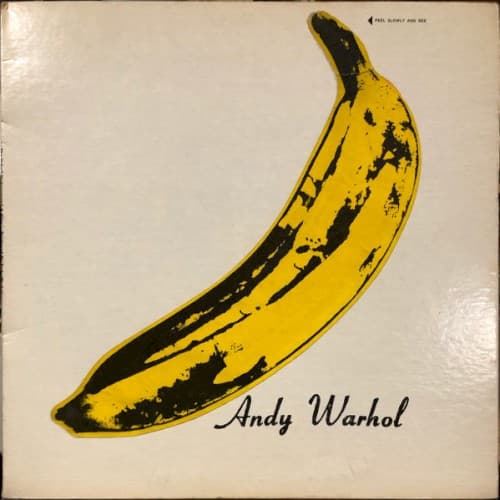
The scorecard
8.7/10 · Essential
- Songwriting25%
- 9.5
- Production25%
- 8.0
- Performance15%
- 8.5
- Cohesion15%
- 7.5
- Originality10%
- 10.0
- Replay value10%
- 9.0
Reed's lyric writing fuses literary realism with rock form on songs like "Heroin" and "I'm Waiting for the Man", while "I'll Be Your Mirror" proves the range extends to genuine tenderness without compromise.
The dry, minimalist Scepter recordings capture the band's garage origins honestly, though Wilson's late addition "Sunday Morning" shows what polish might have done for the rest—the rawness serves the material but leaves moments undercooked.
Reed's deadpan drawl makes explicit content sound matter-of-fact rather than sensational, Cale's screaming viola carves out new guitar-rock textures, and Nico's detached chanteuse tone on "Femme Fatale" makes beauty sound dangerous.
The first side moves from the lush "Sunday Morning" through escalating darkness to "All Tomorrow's Parties" with purpose, but side two scatters: the eleven-minute noise experiment "European Son" feels tacked on rather than earned.
No rock record before 1967 had paired Cale's avant-garde viola drones with Reed's Burroughs-influenced street narratives or applied this degree of formal experimentation to verse-chorus songwriting—the entire template was invented here.
The hooks in "I'm Waiting for the Man" and "There She Goes Again" reveal more on each listen, though the album's uncompromising grimness and seven-minute centerpiece require the right mood and full attention to sustain repeat plays.
The Velvet Underground & Nico — Rock Music Learns to Look at What It Had Been Ignoring
The Velvet Underground's debut does not sound like it is trying to be liked. Most rock albums in 1967 wanted to expand consciousness or build community; this one catalogs junkies, hustlers and sadomasochists in the same flat documentary tone a police report might use. Lou Reed's songwriting operates on the premise that rock lyrics could borrow subject matter from Hubert Selby Jr. and William S. Burroughs without diluting either the literature or the music, and the album proves him correct on both counts. Where peers were painting psychedelic abstractions, Reed was writing character studies of people buying heroin on street corners, and the music—John Cale's screeching viola drones tangled with garage-rock riffs—sounded as uncompromising as the material.
The result was commercial disaster: the album stalled at number 171 on the Billboard charts, radio refused it, record stores banned it, and Verve barely promoted what they had. But the claim here is not that the album succeeded in 1967; it is that the gap between what this record was doing and what the industry could process in 1967 measures how far ahead Reed and Cale were working.
The stakes are in Brian Eno's later observation that everyone who bought one of the thirty thousand early copies started a band. The album did not sell because it was not a product; it was a proof that rock music could be as formally ambitious and thematically adult as any other art form, and the next three decades of alternative music followed the path it cut.
Drones, Detuning and the Ostrich Guitar: How Cale's Avant-Garde Toolkit Rewired Rock
The Velvet Underground & Nico works because Reed's literary songwriting and Cale's experimental production instincts met at the exact point where each needed the other. Reed had already invented the ostrich tuning—all six strings tuned to the same note—for a novelty single, and Cale, trained in minimalist composition under La Monte Young, heard what that flattened harmonic palette could do when applied to songs with verse-chorus structures. The technique removes traditional chord movement and replaces it with a monochromatic drone that locks the listener into a trance state while Reed's melodies work against it.
Cale strung his viola with guitar and mandolin strings and played it through distortion, creating a sound he compared to an airplane engine. The viola does not accompany so much as it provides the sonic equivalent of the leather and whips Reed is describing. The result is a texture no other rock band in 1967 had access to, because no other rock band had a member who had spent years playing with a minimalist composer. Cale's approach was to strip away embellishment and sustain single tones until they became physically oppressive, and that method transferred directly to Reed's songs about heroin, prostitution and obsession, where the music needed to feel like constraint rather than release.
The band recorded the bulk of the album in four days at Scepter Studios in Manhattan, financed by Andy Warhol and engineered by Norman Dolph and John Licata. Tom Wilson, brought in later by Verve, produced the re-recorded Hollywood versions of several tracks, and added one song in a final November session at Mayfair Studios. The production is dry and minimal, with none of the reverb or studio shimmer that characterized psychedelic records of the same year.
Maureen Tucker's drumming—played standing up, using mallets on bass drums and tambourines laid on their sides—sounds tribal and deliberate, closer to early rock and roll than to the fills and flourishes that had become standard by 1967. The guitars, tuned down a full step, produce what Cale called a "sexy" low-end throb that anchors songs in garage-rock tradition while the viola and Reed's lyrics push into territory garage bands never touched.
The sequencing front-loads the accessible material—the opener features celeste and gentle harmonies, a deliberate lure—but by track two the album has arrived at a song about waiting on a Harlem street corner to buy heroin, and it never retreats. Reed's vocals avoid dramatics; he sings about scoring drugs and experiencing their effects in the same conversational register he uses to sing about a girl at a party. That tonal flatness is the album's greatest strength and its commercial liability: it refuses to moralize or sensationalize, which made it unplayable on 1967 radio but also made it the only honest document of its subject matter that rock had produced.
The weakness is that the album's confrontational rigor occasionally tips into self-indulgence. The closing track spends its seven minutes scraping and clattering without a discernible song underneath, an exercise in noise that points toward industrial music but does not yet have the form to contain it.
Front-Loaded Hooks, Back-Loaded Endurance Tests: How the Sequencing Stretches Patience
The album's first stretch establishes a clear emotional arc: it begins with reassurance, escalates through street-level narratives, detours into Nico's three lead vocals, and peaks with the seven-minute centerpiece whose tempo surges and crashes to mimic the drug's effect. By the time the first half ends, the album has already made its case.
The back half feels like a postscript: two of the prettiest songs arrive after the climax and the sequencing does not know what to do with them. The penultimate track experiments with atonality and abstract imagery, and then the closing run offers seven minutes of sustained noise that sounds like the band destroying their instruments.
The decision to end on sustained noise reads as a deliberate middle finger to anyone expecting resolution or radio singles, but it also leaves the album feeling back-loaded with material that tests patience rather than building toward a conclusion. The length—forty-eight minutes—was not excessive by 1967 standards, but the proportion of confrontational tracks to accessible ones made it feel longer. A tighter sequence might have placed the gentler material later to provide breathing room, or cut the final track entirely. Instead the album chooses difficulty, which is consistent with its aesthetic but not always consistent with effective pacing.
The Blueprint Every Underground Band Since Has Tried to Reverse-Engineer
The Velvet Underground & Nico ranks as the single most influential rock album that almost no one bought when it mattered. It did not invent punk, but punk would not exist without this album proving that rock songs could be built from two-chord riffs and deadpan vocals. It did not invent art rock, but it was the first album to apply avant-garde formal techniques to verse-chorus songwriting without sacrificing either side. It did not invent alternative music, but every underground band since has been trying to reverse-engineer the balance Reed and Cale struck between literary ambition and garage simplicity.
The album is not for casual listeners: the subject matter is grim, the prettiest songs are sung by Nico in a detached monotone that some listeners find alienating, and the noise experiments require patience. But for anyone interested in how rock music became a vehicle for adult themes and formal experimentation, this is the starting point. The album has aged well because it never relied on the studio trends or cultural moment of 1967; it sounds like it was recorded outside of time, which is partly why it sold so poorly and partly why it has remained in print for fifty-seven years.
Listeners should start with a few key tracks to understand the range, then decide whether the rest is worth the commitment. For the curious, the band's self-titled third album from 1969 strips away Cale and Nico and arrives at a gentler, more acoustic version of Reed's songwriting, while Nico's solo album Chelsea Girl, recorded during the same sessions, collects the baroque folk songs Reed and Cale wrote for her. The Velvet Underground & Nico does not need those albums to make sense, but they clarify the paths Reed and Cale chose not to take here.
This album is the uncompromising version: no concessions, no radio edits, no attempt to make the subject matter palatable. That purity is why it failed commercially and why it endures critically.
Track by track
Track Listing
Sunday Morning
StandoutTom Wilson's last-minute addition to the album, recorded in November 1966 after the rest of the sessions had wrapped, and the only track that sounds like it was designed for radio. The celeste and Reed's multitracked harmonies create a lush, almost baroque arrangement that could have fit on a Left Banke record, and the lyrics—about paranoia and dread disguised as comfort—are the album's gentlest. The production is the album's most polished, with overdubs and a clear mix that stand apart from the raw Scepter recordings. As an opener it functions as a Trojan horse: it lures the listener in with beauty and then the rest of the album delivers something entirely different. The sequencing choice is deliberate and effective, but the song itself is minor Reed, pretty but not essential.
I’m Waiting for the Man
StandoutThe album's first great song and the clearest bridge between garage rock and punk. Reed's lyric recounts waiting on a Harlem street corner to buy heroin, and the genius is in the specificity: twenty-six dollars in his hand, waiting in Lexington one-two-five, the casual racism of the neighborhood kids. The music is a two-chord stomp with Morrison and Reed's guitars locked into a hypnotic riff and Tucker's tom-heavy drumming pushing the song forward without a break. Reed sings it in a conversational drawl, no melodrama, and that flatness makes the content hit harder—this is routine, not an adventure. The song's structure is pure garage rock, but the subject matter was unprecedented in 1967, and the combination opened the door for every band that followed to write about street life without romanticism. One of the three or four tracks that justifies the album's reputation on its own.
Femme Fatale
SolidNico's first lead vocal, written by Reed at Andy Warhol's request about Factory superstar Edie Sedgwick, and the most conventional song on the album. The melody is pretty, the arrangement is straightforward jangle-pop, and Nico's thick accent and detached delivery make the warning about a manipulative woman sound like a lullaby. The disconnect between the lyric's content and Nico's tone creates an eerie effect—she sounds bored by the danger she is describing—but the song itself is slight. It works as a breather between "I'm Waiting for the Man" and "Venus in Furs", but it does not carry the weight of the album's best material.
Venus in Furs
StandoutThe clearest example of Cale's avant-garde influence reshaping rock songwriting, and the album's most fully realized fusion of Reed's literary ambitions and Cale's experimental production. The song adapts Leopold von Sacher-Masoch's 1870 novella about sadomasochism, and the music enacts the power dynamics Reed is describing: Cale's viola, strung with guitar strings and played through distortion, drones and screeches over the ostrich-tuned guitars, creating a sound that feels claustrophobic and oppressive. Tucker's drumming is minimal, almost ritualistic, and Reed's vocal is detached, observing rather than participating. The song has no chorus, just verses that circle the same images—shiny boots of leather, whiplash girlchild, severin awaits you—and the effect is hypnotic and unsettling. The structure avoids traditional verse-chorus-bridge development and instead sustains a single mood for five minutes, which was not how rock songs worked in 1967. It is one of the two or three most important tracks on the album and the clearest evidence that Cale's minimalist training gave the band access to textures and formal strategies no other rock group had.
Run Run Run
SolidA garage-rock sprint built on a simple riff and Reed's rapid-fire vocal, lyrically another street-level drug narrative. The song lists characters—teenage mary, marguerita passion, seasick sarah—and implies their stories without explaining them, a technique Reed borrowed from pulp fiction writers like Raymond Chandler. The music is propulsive and catchy, closer to early rock and roll than to the experimental tracks surrounding it, and the brevity—four minutes—keeps it from overstaying its welcome. It is one of the album's most immediately accessible songs, but it sits in the shadow of the more ambitious material and feels like a solid album track rather than a standout.
All Tomorrow’s Parties
StandoutNico's second lead vocal and the emotional climax of side one, a song about a poor girl dressing up for parties and the emptiness underneath the glamour. Reed wrote it before meeting Warhol, despite common misperceptions that it was a Factory commission, and the lyric's specificity—"what costume shall the poor girl wear to all tomorrow's parties"—makes the class critique sharper than Nico's detached delivery might suggest. The ostrich-tuned guitars create a droning, hypnotic foundation, and Cale's piano and viola add texture without cluttering the arrangement. Tucker's drumming is martial and insistent, and the song builds in intensity without ever releasing the tension. It is one of the album's strongest tracks, fully realized in both songwriting and performance, and Nico's voice—blank, affectless—turns out to be the perfect instrument for Reed's observation of Factory denizens. The song's length, nearly six minutes, is earned; it does not repeat itself so much as it deepens the initial image with each verse.
Heroin
StandoutThe album's centerpiece and the track that most clearly demonstrates what Reed and Cale were attempting: a rock song that uses tempo changes, dynamics and instrumental texture to enact the subject matter rather than just describe it. The lyric is a first-person account of using heroin, and Reed does not moralize or glorify—he simply reports the feeling of nullification and escape. The music starts slow and deliberate, then accelerates into a chaotic surge as the drug takes effect, with Cale's viola screaming and the guitars building to a wall of noise before collapsing back into the initial tempo. The song's structure mirrors the experience Reed is narrating, and that formal innovation—using the music itself as a representational tool rather than a backdrop—was unprecedented in rock. Tucker's drumming shifts from a steady pulse to a pounding, almost frantic rhythm during the peaks, and the production leaves every element raw and exposed. At seven minutes the song risks overstaying its welcome, but the shifts in tempo and intensity justify the length. It is the track that most clearly illustrates why the album was unplayable on 1967 radio and why it became a foundation text for every underground band that followed. Richard Goldstein's contemporary review called it "seven minutes of genuine twelve-tone rock and roll," and that description holds: the song is as formally adventurous as anything in the avant-garde while remaining rooted in verse-chorus structure.
There She Goes Again
SolidA rewrite of the Marvin Gaye hit "Hitch Hike" as filtered through the Rolling Stones' cover version, and the album's most conventional song structurally. Richard Goldstein's contemporary review called it a "blatant lift," and he was correct—the riff and rhythm are lifted wholesale. The lyric is about a woman who lets men mistreat her, and Reed's vocal is sympathetic rather than judgmental, but the song does not add much to the template it borrows. It is pleasant enough, with a catchy hook and a tight two-and-a-half-minute runtime, but it feels like filler next to the album's more ambitious material. Useful as a breather after "Heroin," but not a track anyone would cite as a reason to own the record.
I’ll Be Your Mirror
StandoutThe album's most tender song, written for Nico and sung by her with a warmth that contrasts sharply with her detached performances elsewhere. The lyric is a straightforward love song, promising to reflect back the beauty the subject cannot see in themselves, and the simplicity is affecting. The arrangement is minimal—acoustic guitar, light percussion, bass—and the mood is gentle and almost fragile. Nico's voice, often described as cold, sounds genuinely affectionate here, and the result is one of the album's most emotionally direct moments. At just over two minutes it does not overstay its welcome, and it proves that Reed's range extended beyond the grim narratives that dominate the album. The song is slight but effective, and its placement in the middle of side two provides necessary relief from the darker material surrounding it.
The Black Angel’s Death Song
SolidAn experiment in atonality and abstract imagery that points toward the Velvet Underground's more avant-garde second album but does not fully commit. The lyric is surreal and fragmented, the viola and guitars scrape and clash, and Tucker's drumming is sparse and disorienting. The song rejects conventional structure and melody in favor of texture and mood, and the result is more interesting than enjoyable. At just over three minutes it is mercifully brief, and it serves as a warning of the noise experiment that closes the album. Some listeners will hear it as a bold formal move; others will hear it as self-indulgent. Both readings are defensible.
European Son
WeakSeven and a half minutes of sustained noise, credited to all four core members, that sounds like the band destroying their instruments in real time. The song begins with a brief sung section and then collapses into feedback, scraping, crashing and distortion. There is no discernible structure or melody, just sound for its own sake. As an act of provocation it succeeds—this is the album's most uncompromising moment, a deliberate rejection of anything resembling commercial accessibility—but as a song it is an endurance test. The track points toward industrial music, noise rock and the more extreme ends of post-punk, and it clarified for everyone listening in 1967 that the Velvet Underground had no interest in meeting the audience halfway. Whether that makes it essential or indulgent depends on the listener's tolerance for avant-garde gestures. It is the album's weakest track by conventional standards, but it is also the track that most clearly announces the band's refusal to compromise.