The Band That Invented the Underground
The Velvet Underground sold barely 30,000 copies of their debut album in its first five years. Producer Brian Eno later observed that everyone who bought one of those records started a band. That's the entire story in miniature: commercial failure, cultural earthquake. Formed in New York City in 1964 by Lou Reed and John Cale, the group rejected every commercial instinct of mid-sixties rock, choosing instead to document drug addiction, sexual deviance, urban alienation, and psychological darkness with a sonic palette borrowed equally from doo-wop, free jazz, and the classical avant-garde. Andy Warhol's patronage gave them a venue and an audience, but also locked them into art-world associations that obscured their fundamental achievement—they were a rock band, playing rock venues, who simply refused to acknowledge the genre's implicit boundaries.
What made The Velvet Underground dangerous wasn't shock value. Reed's deadpan narratives about heroin and sadomasochism carried less prurient thrill than documentary detachment. The band's true radicalism was structural: they proved rock could sustain minimalism, dissonance, and repetition without losing its essential power. Where psychedelic contemporaries added layers of sound to approximate altered consciousness, the Velvets stripped everything away until only tension remained. Their first album landed in 1967 alongside Sgt. Pepper's, and the contrast couldn't have been starker—one album celebrated rock's limitless possibilities through ornate production, the other suggested those possibilities required nothing but two chords and absolute conviction.
Their influence operates on two levels. Musically, they created the template for punk, noise rock, and indie—minimalist approach, unconventional song structures, willingness to privilege atmosphere over melody. Culturally, they established the underground as a legitimate space, proving commercial failure and artistic significance could coexist. Every band that's ever valued credibility over sales, every artist who's chosen difficulty over accessibility, traces their lineage back to four musicians in black clothes playing a residency at a multimedia art happening.
Minimalism, Drone, and the Aesthetics of Restraint
The Velvet Underground's sonic identity emerged from a productive collision between Reed's street-level rock instincts and John Cale's conservatory training in avant-garde composition. Cale studied under La Monte Young, working in drone-based minimalism and sustained tones that rejected Western music's emphasis on development and resolution. That influence saturated the Velvets' early work—"Heroin" builds its intensity through relentless eighth-note pulse and Cale's shrieking viola, creating a sonic analog for the drug's rush without a single conventional solo. "Venus in Furs" sits on one droning chord while Cale's electric viola scrapes and moans, turning a song about consensual pain into an exercise in sustained discomfort.
Reed's songwriting provided the crucial counterbalance. His melodies drew from doo-wop, early rock and roll, and Brill Building pop—simple, memorable, structurally conventional beneath the surface noise. "I'm Waiting for the Man" is essentially a twelve-bar blues dressed in feedback and urban paranoia. "Sunday Morning" could've been a hit single in a parallel universe where radio programmers had higher tolerance for existential dread. This tension between pop accessibility and avant-garde experimentation gave the band their distinctive edge—they weren't art students playing at rock or rockers dabbling in weirdness. They genuinely inhabited both worlds.
Production choices reinforced the minimalism. Where contemporary rock aimed for clarity and separation, the Velvets favored murk and compression. Tom Wilson's production on their debut left vocals buried, drums distant, feedback prominent. The sonic result felt closer to a field recording of a rehearsal than a proper studio album, which only increased its documentary power. Later albums would refine this approach—White Light/White Heat pushed into pure sonic assault, while their self-titled third record stripped away all distortion for stark, almost folk-like intimacy. But the core principle remained: less is more, and silence carries as much weight as sound.
From Warhol's Factory to Rock's Historical Record
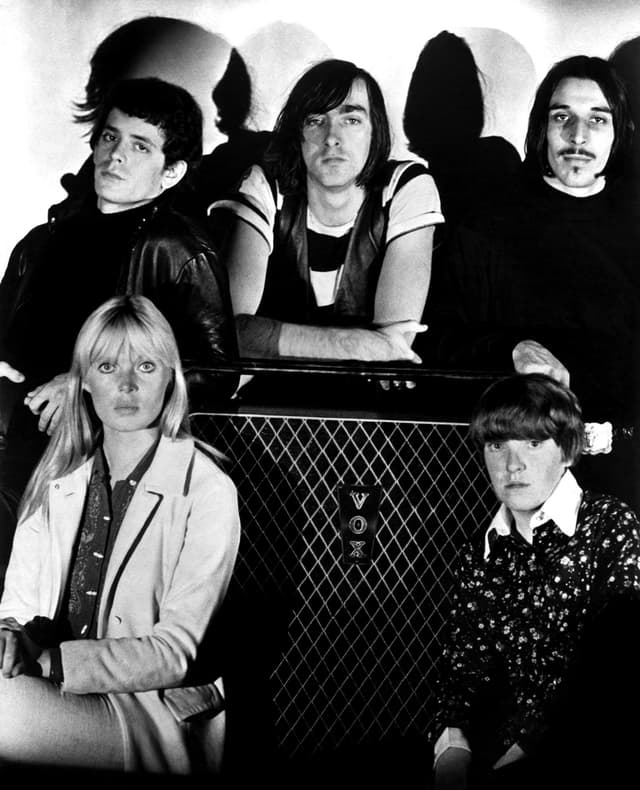
Lou Reed and John Cale met through mutual acquaintance Tony Conrad in 1964, initially collaborating on soundtrack work and experimental performances. Reed had been writing songs and playing in local bands; Cale was earning money as a classical session musician while pursuing avant-garde composition. They recruited guitarist Sterling Morrison and drummer Maureen Tucker, whose standing-tom minimalism became as crucial to the band's identity as any other element. The addition of German model and singer Nico came at Warhol's insistence—he'd taken over as manager and needed a visual focal point for his multimedia Exploding Plastic Inevitable shows. The arrangement was awkward but productive: Nico's cold, accented delivery on songs like "Femme Fatale" and "All Tomorrow's Parties" added another layer of alienation to Reed's character studies.
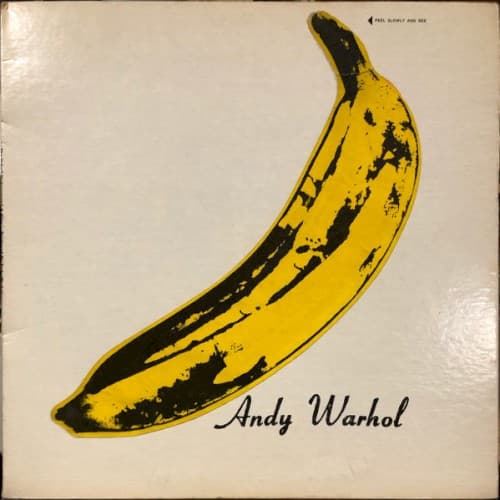
The Velvet Underground & Nico arrived in March 1967 to minimal sales and baffled reviews. Its cover—Warhol's iconic banana design—became more famous than the music inside. But the album functioned as a complete artistic statement: eleven songs documenting New York's demimonde with unflinching clarity, wrapped in production that refused to prettify or apologize. "Heroin" and "Venus in Furs" established the template for darkness-as-subject-matter; "I'll Be Your Mirror" proved the band could do tenderness without sentimentality; "European Son" closed with seven minutes of pure noise that made clear their avant-garde credentials weren't affectation. The Warhol association helped secure the album's place in cultural history, but also created problems—critics dismissed them as art-world novelty rather than serious musicians.
Tensions between Reed and Cale intensified through 1967, complicated by Nico's presence and Warhol's hands-off management style. For White Light/White Heat (1968), they pushed deeper into sonic extremism. "Sister Ray" alone justified the album's existence: seventeen minutes of relentless two-chord grind, lyrics about drag queens and amphetamine, organs and guitars battling for frequency space until the mix collapsed into beautiful chaos. But Reed wanted more control and less avant-garde purism. Cale was forced out in September 1968, replaced by Doug Yule, whose more conventional musicianship shifted the band's center of gravity.
The Velvet Underground (1969) marked a dramatic stylistic turn. Recorded after Cale's departure, it traded noise for nuance—acoustic guitars, quiet dynamics, Reed's voice finally audible in the mix. Songs like "Pale Blue Eyes" and "Candy Says" revealed a melodic sophistication the first two albums had deliberately obscured. Critics have debated this shift for decades: artistic maturation or commercial compromise? The answer is probably both. The album found beauty in restraint, proving the band didn't need distortion to communicate emotional depth. It also barely sold, confirming that the Velvets' problem wasn't their sound—it was Reed's subject matter and their refusal to perform conventional rock-star charisma.
Loaded (1970) was explicitly designed for radio play—Reed later claimed the Atlantic Records executives literally told him to "load" it with hits. The result was their most accessible record: "Sweet Jane" and "Rock & Roll" became enduring classics, "Who Loves the Sun" opened with Beach Boys-style harmonies. But Reed left before the album's release, exhausted by years of indifference and internal friction. Morrison departed shortly after. Yule kept the name alive through several more albums, but without Reed and Morrison, the Velvets were effectively finished. A brief 1993 reunion tour—Reed, Cale, Morrison, and Tucker—reminded audiences what the original lineup had sounded like, but Reed's death in 2013 closed that chapter permanently.
The Most Influential Band in Rock History?
Brian Eno's quip about those 30,000 record buyers isn't hyperbole—it's measurable fact. Punk wouldn't exist without the Velvets' minimalist attack and Reed's deadpan delivery. David Bowie's glam era drew explicitly on their New York decadence. Joy Division, Sonic Youth, Pixies, R.E.M., Pavement, The Strokes—every generation of alternative rock rediscovers the Velvet Underground and finds something essential. The band created a permission structure: rock didn't have to be blues-based virtuosity or psychedelic excess. It could be two chords, one droning note, and absolute commitment to the song's emotional core.
Their influence operates beyond direct musical imitation. The Velvet Underground established the underground itself as a space with its own values and aesthetics. They proved commercial failure didn't equal artistic failure—in fact, the two might be inversely related. That idea became foundational to indie rock as a cultural movement: authenticity measured by independence from mainstream approval, credibility earned through difficulty and uncompromising vision. Without the Velvets' example, the entire ecosystem of college radio, independent labels, and alternative venues might not exist in its current form.
The band's relationship to punk is particularly complex. They provided the sonic template—minimalism, feedback, confrontational subject matter—but also demonstrated that punk attitude didn't require punk stupidity. Reed and Cale were conservatory-trained musicians making deliberate artistic choices, not nihilists smashing guitars out of incompetence. That sophistication influenced bands like Television, Talking Heads, and Wire, who took punk's energy but kept the Velvets' intellectual rigor. The result was post-punk: music that was aggressive, experimental, and smart all at once.
Cultural historians continue arguing about the Velvet Underground's exact position in rock's genealogy. They weren't the first to use feedback—that was the Who, or maybe the Kinks. They weren't the first to write about drugs—that was the entire psychedelic movement. But they were the first to combine unflinching lyrical realism, avant-garde sonic experimentation, and rock's fundamental energy into something that felt genuinely new. Every subsequent generation of musicians has returned to their catalog and found something still shocking, still useful. That's not just influence—that's permanent relevance.