The scorecard
9.5/10 · All-time
- Songwriting25%
- 9.5
- Production25%
- 10.0
- Performance15%
- 8.5
- Cohesion15%
- 10.0
- Originality10%
- 9.0
- Replay value10%
- 9.5
Waters's concept unified by mortality and madness holds together across forty-three minutes with no wasted lines, from the clock sermon in "Time" to the you-are-not-alone resolution in "Eclipse".
Parsons and the band used sixteen-track recording, quadraphonic panning, and tape loops to build a record where every coin clink and heartbeat thump sits exactly where it belongs in the mix.
Gilmour and Wright harmonize without seams on "Us and Them" and "Time", and Torry's wordless wail on "The Great Gig in the Sky" conveys more about death than any lyric could.
The heartbeat that opens "Speak to Me" returns in "Eclipse" to close the loop, and every track bleeds into the next without a single jarring edit across two unbroken sides.
The album pruned the extended jams that had defined post-Barrett Floyd and replaced them with tight songs built from synthesizers, found sound, and a concept clear enough for a first listen.
Fifty years of constant airplay have not worn down the clock chimes in "Time" or the cash register groove in "Money", and the album still works as a single forty-three-minute thought.
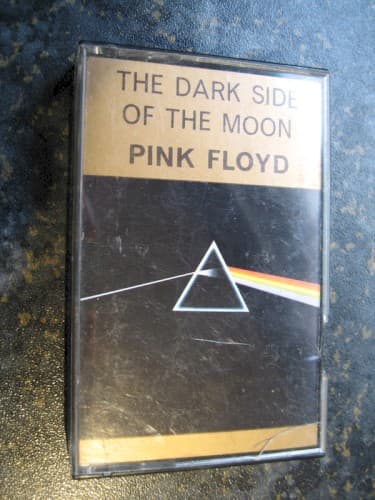
Pink Floyd The Dark Side of the Moon — The Blueprint for Turning Dread Into Architecture
The argument for The Dark Side of the Moon is that Pink Floyd built the first prog album where every decision served the songs instead of displaying them. Roger Waters conceived a record about the pressures that break people—greed, time, war, fame, death—and the band recorded it as a continuous piece with no room for noodling or detours. The result was an album that spent nearly a thousand weeks on the Billboard chart not because it sounded like 1973 but because it sounded like a finished thought, every element locked to the concept and every note doing work. The question is whether the design is so airtight that it leaves no room for accident or discovery, whether the album is a triumph of architecture or just a very expensive diagram.
The album was road-tested for a year before the band entered EMI Studios in mid-1972, which meant they arrived with the structure already proven and the only task left was to capture it. Alan Parsons engineered the sessions using sixteen-track recording and quadraphonic mixing, and the band used synthesizers, tape loops, and musique concrète techniques to fill the spaces that earlier Floyd albums had left to extended instrumentals. Waters recorded cash registers and coins for "Money", Parsons mic'd clocks at an antique shop for "Time", and the band built a heartbeat effect from a treated bass drum that opens and closes the album. The sessions were methodical: each track was assembled from demos Waters had made in his garden shed, and the final mix was supervised by producer Chris Thomas, hired to mediate between Waters and David Gilmour over how dry or ambient the sound should be. The album that emerged was the opposite of jamming—it was a record where every moment had been considered and placed, where the only improvisation was Clare Torry's vocal on "The Great Gig in the Sky", and even that was edited into shape.
How Quadraphonic Panning and a Heartbeat Made a Concept Audible
The album is a demonstration of what sixteen-track recording could do when paired with a band willing to treat the studio as an instrument. Parsons and the band used double-tracking, flanging, phase-shifting, and quadraphonic panning to create a mix where sounds move through the stereo field and where every element has its own space. The heartbeat that opens "Speak to Me" was made by treating a bass drum to sound human, and it reappears throughout the record as a reminder that the album is about mortality. The cash register loop in "Money" was spliced together from recordings Waters made at home, then adapted to four tracks so the sound could walk around the room in quad. The clock chimes in "Time" were assembled from Parsons's test recordings at a clock shop, layered to chime simultaneously before the song's Rototom intro. These effects are not decoration—they are the argument made audible, the pressures and anxieties that the lyrics describe given physical presence in the mix.
The songwriting is concise by Floyd standards, with no track longer than seven minutes and no instrumental that overstays its function. "Breathe" builds its verse melody from a descending chord progression and a two-line lyric about living in the moment, then returns as a reprise after "Time" to underline the retreat into solitude that the album diagnoses as one response to existential dread. "Time" itself is a lecture set to a 4/4 groove, with Gilmour delivering the verses in a flat register that makes the sermon land harder than any shout would. "Money" uses a 7/4 riff built from the cash register loop and sarcastic lyrics about greed, and it became the band's only US top-twenty single despite the odd meter and the cynicism. "Us and Them" borrows Richard Wright's unused composition for Zabriskie Point and turns it into a slow meditation on war and materialism, with Gilmour and Wright harmonizing over Dick Parry's saxophone. "Brain Damage" names Syd Barrett's breakdown without using his name, and "Eclipse" closes the album with a list of human experiences—everything under the sun is in tune, but the sun is eclipsed by the moon—that ties the concept together and brings the heartbeat back.
The production is flawless in the sense that nothing is out of place, but the perfection is also the album's one weakness. The mix is so controlled that it leaves no rough edges, no moment where the band sounds like they are discovering something in real time rather than executing a plan. The vocals are doubled and harmonized to the point where Gilmour's voice loses its grain, and the synthesizers on "On the Run" and "Any Colour You Like" are sequenced with such precision that they sound more like demonstrations of the EMS VCS 3 than like music. The album works as a piece of design, but the design is so totalizing that it can feel airless, a record where every breath has been accounted for and there is no room left for the listener to bring anything except attention.
A Record Built to Play Straight Through Without Breaks
The album was designed as two continuous sides, and the sequencing enforces that structure by making it nearly impossible to hear the tracks as separate songs. The opening overture cross-fades elements from the rest of the album—the heartbeat, the cash registers, the clocks, the scream—before bleeding into the first proper song, and the transition from acoustic folk-rock to synthesizer panic happens without a seam. The first side peaks with its longest piece, which uses the extended runtime to build from clock chimes through verse sermon into a guitar solo that stretches over organ, then collapses back into a reprise before the side closes with a wordless vocal performance.
The second side is more even in tone, with one uptempo moment built on a 7/4 groove before the remaining tracks flow through a slow build, an instrumental passage, and the final pair that close the album. The pacing is deliberate to the point of being rigid. The album never sags because there is no filler, but it also never surprises because every transition has been smoothed and every peak has been placed exactly where the structure demands it.
The length is earned in the sense that the concept requires the full forty-three minutes to develop, but the album also feels like it could not be shortened or rearranged without breaking, which makes it more of a monument than a record you can enter at any point. The album makes its case for being played straight through without skips.
The Prog Album That Chose Clarity Over Sprawl and Built a Standard
The Dark Side of the Moon is the best argument Pink Floyd ever made for progressive rock as a form that could be popular without compromising its ambition. The album pruned the extended instrumentals that had defined Meddle and earlier records and replaced them with songs that stated their ideas in under seven minutes, and it used studio techniques not to show off but to make the concept of mortality and madness into something you could hear in the mix. The result was an album that sold forty-five million copies and charted for nearly a thousand weeks not because it was accessible—though "Money" and "Time" proved that it was—but because it sounded finished, a record where every element had been considered and no moment felt like a sketch or a detour. It is the band's most important album and the one that defined what prog could be when it chose clarity over sprawl.
The album ranks as the essential Floyd record, the one that every fan needs to hear first and the one that the band never quite escaped. It set a standard for concept albums that required every track to serve the theme and every production choice to reinforce the argument, and it proved that a prog band could make a record that worked in pieces—"Money" on the radio, "Time" as a standalone warning—while still insisting that the album be heard as a whole. The production is so meticulous that it leaves no room for spontaneity, and the design is so totalizing that it can feel more like a lecture than a conversation, but those are features of the approach rather than flaws. The album does not age because it was never tied to a moment; it was built as a statement about human experience that would outlast its era, and it succeeded.
Start with "Time" for the clearest statement of the album's thesis, then "Money" for the groove and the sarcasm, then "The Great Gig in the Sky" for Torry's performance. If those three tracks land, play the album straight through to hear how the structure works. If the concept feels too controlled or the production too sterile, try Meddle for a looser version of the band or Wish You Were Here for a more human take on similar themes. The Dark Side of the Moon is not the band's most adventurous album, but it is the one where every ambition was realized and every tool was used exactly as intended. It is a record built to last, and it has.
Track by track
Track Listing
Speak to Me
SolidAn overture that cross-fades the heartbeat, cash registers, clocks, helicopter sounds, and Torry's scream from the rest of the album over a bed of ambient noise. Nick Mason received the sole composing credit for assembling the elements, which he roughed out at home before finishing in the studio. The track does no musical work on its own, but it establishes the album's use of found sound and musique concrète as structural devices rather than decoration.
Breathe
StandoutThe album's thesis in two verses: do not be afraid to care, live your own life, do not let the mundane bury you. Gilmour sings over a descending chord progression with slide guitar and Wright's electric piano, and the melody is simple enough to land on first listen. The lyrics came from an earlier collaboration between Waters and Ron Geesin for The Body soundtrack, repurposed here as the philosophical anchor for the concept. The track works as both a standalone song and as the opening argument for the album's exploration of how pressure and time erode the self.
On the Run
SolidA synthesizer-driven instrumental built from the EMS VCS 3 and the Synthi A, designed to evoke the anxiety of modern travel and Wright's fear of flying. The track uses sequenced patterns, tape loops, and the sound of Peter James running around the studio's echo chamber to create a sense of motion and panic. It is the album's most explicitly experimental piece, but the experiment is functional: the track bridges "Breathe" and "Time" by escalating the existential dread into physical terror. The absence of lyrics makes the effect more visceral, though the relentless sequencing can feel mechanical over repeated listens.
Time
StandoutThe album's longest track and its clearest statement: time controls your life, the years slip away while you wait for the signal, and by the time you realize it you are already old. The song opens with Parsons's clock recordings—each timepiece ticking and then chiming simultaneously—before launching into a 4/4 groove anchored by Mason's Rototoms and Gilmour's rhythm guitar. Gilmour delivers the verses in a deadpan register that makes the sermon hit harder than any theatrical performance would, and his guitar solo stretches over Wright's Hammond organ for nearly two minutes before the song collapses back into the "Breathe" reprise. The lyrics are blunt to the point of being preachy, but the bluntness is the point: the song is a warning, not a meditation. The track is the album's emotional center and the one that justifies the entire concept.
The Great Gig in the Sky
StandoutWright's instrumental composition paired with Clare Torry's improvised wordless vocal, recorded in a few takes on a Sunday night after Parsons suggested her for the session. Gilmour asked her to express emotions rather than sing words, and she responded with a performance that moves from quiet resignation through anguish to acceptance, all without a single lyric. The vocal was edited from her takes to fit Wright's piano progression, and the result is the album's most human moment, a track where the production's control loosens just enough to let accident and intuition shape the final version. Torry was paid thirty pounds and assumed her performance would be cut; she only learned she had made the album when she saw her name in the credits. The track works as a metaphor for death that is more effective than any literal treatment could be, and it closes the first side with the album's only moment of catharsis.
Money
StandoutThe album's commercial breakthrough, built from a 7/4 riff and a cash register loop that Waters assembled from recordings of coins, paper, and adding machines. The odd meter does not stop the song from grooveing, and Gilmour's bass-heavy guitar tone and Parry's tenor saxophone give the track a strut that the rest of the album avoids. The lyrics mock greed and consumerism with enough sarcasm to avoid sounding pious, and the song became the band's only US top-twenty single despite the cynicism and the time signature. The track is the album's most obvious concession to radio, but it earns its place by being the only moment where the band sounds like they are enjoying themselves instead of delivering a lecture.
Us and Them
SolidWright's unused composition for Zabriskie Point, reworked into a slow meditation on war, materialism, and isolation. Gilmour and Wright harmonize over Parry's saxophone and a minimal arrangement that leaves space for every element to breathe. The lyrics use simple dichotomies—us and them, black and blue, who knows which is which and who is who—to describe the senselessness of conflict and the breakdown of empathy. The track is the album's most overtly political moment, but the politics are general enough to apply to any war or any division, which gives the song durability at the cost of specificity. The arrangement is gorgeous, but the song's slow pace and lack of dynamic shifts make it the album's most passive moment.
Any Colour You Like
WeakAn instrumental built from the EMS VCS 3 and Wright's keyboards, designed to illustrate the illusion of choice in a consumerist society. The track is a showcase for the synthesizers and for Wright's ability to build melodies from sequenced patterns, but it does no thematic work that "Money" and "Us and Them" have not already done. The track feels like filler, a necessary bridge between "Us and Them" and "Brain Damage" that could have been half its length without losing its function.
Brain Damage
StandoutWaters's first lead vocal on the album, and the track where the concept of madness moves from subtext to explicit statement. The lyrics describe the elevation of fame and success above the needs of the self, with the line about the band playing different tunes a direct reference to Syd Barrett's breakdown. Peter Watts's laughter punctuates the verses, and the track uses call-and-response backing vocals to reinforce the sense of communal recognition: the lunatic is on the grass, and we have all been there. The song is the album's most personal moment, but Waters keeps the focus on the systemic pressures rather than on Barrett's individual story, which makes the track feel like a diagnosis rather than a eulogy.
Eclipse
StandoutThe album's closing statement, a list of human experiences—everything under the sun is in tune, but the sun is eclipsed by the moon—that ties the concept together and brings the heartbeat back. The track is built from a simple chord progression and Waters's vocal, with the female backing vocalists adding harmonies that lift the verses into anthem territory. The lyrics espouse the unity of human experience and encourage the listener to recognize the common traits shared by everyone, which makes the track a resolution to the alienation and dread that the rest of the album has diagnosed. The heartbeat fades out, and Gerry O'Driscoll's voice returns with the final line: there is no dark side of the moon, really, it is all dark. The track works as a summation, but it also feels like the only possible ending, which makes the album's structure feel inevitable rather than chosen.