The scorecard
9.1/10 · Essential
- Songwriting25%
- 9.0
- Production25%
- 10.0
- Performance15%
- 9.5
- Cohesion15%
- 7.0
- Originality10%
- 9.5
- Replay value10%
- 9.0
The melodic invention on the title track and the structural daring of 1983 prove Hendrix was writing songs, not just riffs, with Dylan's tune reworked into something entirely his own.
Eddie Kramer's stereo work and Hendrix's command of flanging, backmasking and phasing on Voodoo Chile and the studio suite make this the defining example of the console as instrument.
Hendrix's guitar on All Along the Watchtower and the vocal insecurity that drove him behind screens produced takes that sound utterly convinced, while Mitchell's drumming locks every shift.
The fifteen-minute Voodoo Chile works, the thirteen-minute 1983 earns its length, but Little Miss Strange and the bloated runtime suggest Hendrix needed an editor he refused to have.
No one in 1968 was using the studio like this or playing the guitar like Voodoo Child, and the album redrew the borders of what a rock record could contain.
The hits and Voodoo Chile hold up across decades, though the deep tracks and the filler Redding tune make this a front-to-back listen only for committed fans.
Electric Ladyland — The Album That Heard the Studio Before Anyone Else
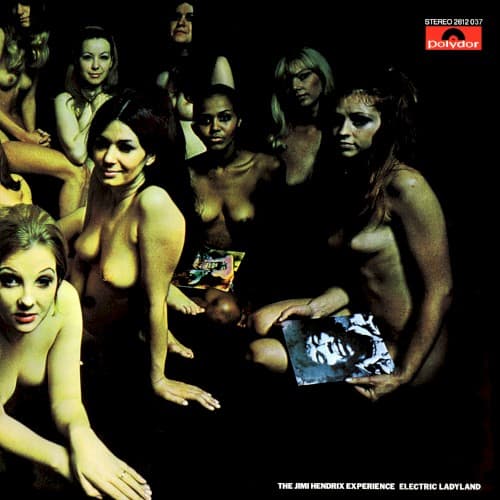
Electric Ladyland is the sound of a guitarist realizing that the twenty-four track console mattered as much as the Stratocaster. Hendrix had been the best player in rock since Are You Experienced arrived, but this double album, released in October 1968 and the only Experience record he produced alone, is where he stopped chasing the single and started building worlds that could only exist on tape. The thesis: when the greatest technician in the genre gets unfiltered control of the studio and unlimited time, the result justifies the chaos even when the album sags under its own length. This is the record that taught rock what the mixing board could do, and everything that uses phasing, flanging or stereo as composition rather than effect is downstream from it.
The stakes were immediate: Chas Chandler, who produced the first two albums, walked out during sessions after the Record Plant turned into a party Hendrix refused to shut down, and bassist Noel Redding was already forming his own band. The Experience was fracturing, and Hendrix used the studio to prove he did not need their approval. He played bass on six of the sixteen tracks himself, recorded fifty takes of Gipsy Eyes across three sessions, and invited guests including Steve Winwood, Jack Casady and Brian Jones to fill the room Chandler had kept clear.
The result reached number one in the United States by mid-November, spent two weeks there, and produced the only top-forty single the band ever had. It also confused critics who praised individual songs but called the album muddled and too dense. They were half right: Electric Ladyland is muddled in the same way a painter's studio is muddled, and the density is the point.
The Console as Fourth Member
Hendrix recorded Electric Ladyland between July 1967 and August 1968 across multiple studios, with the bulk of the work happening at the Record Plant in New York with engineers Eddie Kramer and Gary Kellgren. The production credit goes to Hendrix alone, and the sound proves he understood what that responsibility meant. Kramer experimented with backmasking, chorus, echo and flanging throughout the sessions, and Hendrix used every trick not as decoration but as structure.
The phasing on the title track does not sit on top of the song; it is the song, turning a two-minute verse-chorus sketch into a narcotic drift that moves in three dimensions. The stereo separation on Voodoo Chile places Winwood's organ in one channel and Hendrix's guitar in the other, then lets them circle each other for fifteen minutes without the mix ever feeling cluttered. The wah-wah on Burning of the Midnight Lamp, a 1967 single Hendrix recycled here, does not punctuate the riff but bends every note into a different shape. Robert Christgau called it the best job of stereo for its own sake he knew, and fifty years later nothing has improved on it.
The writing moves across blues, funk, R&B and psychedelia without sounding like a tour. Crosstown Traffic builds a hard rock riff around comb-and-paper kazoo and backing vocals from Dave Mason, Gipsy Eyes locks into a one-chord vamp that never loses momentum, and House Burning Down uses a social-protest lyric about riots as the frame for a guitar line that sounds like the fire itself.
All Along the Watchtower, the Bob Dylan cover that became the band's best-selling single, is a complete reimagining: Hendrix turned a sparse acoustic folk song into a tightly coiled rock track with a guitar solo that moves like a conversation, and Dylan himself later said he heard the song as Hendrix's from that point forward.
The playing is virtuosic but never flashy for its own sake. Hendrix recorded his vocals behind studio screens because he was insecure about his voice, but the takes he kept sound lived-in and direct. Mitch Mitchell's drumming follows every tempo shift and dynamic break without a single wasted fill.
The weakness is discipline. Hendrix's perfectionism produced brilliant results on the key tracks, but it also meant he could not tell filler from content. Little Miss Strange, a Redding-sung pop tune, has no reason to be here. The seventy-five minute runtime includes at least two tracks that could have been cut without loss, and the sequencing does not build toward anything; it just ends when the tape runs out.
A Double Album That Moves Like Four Singles
Electric Ladyland does not flow; it sprawls. The sequencing puts the fifteen-minute opener of side two fourth on a four-song side, follows it with a side that opens with a two-minute Redding novelty, and saves the two best-known tracks for the final side. There is no arc, no build, no sense that the four sides were designed to work as a journey.
What it has instead is a series of peaks that justify the runtime when they arrive and long sags between them. The first stretch opens the album after a one-minute scene-setter, and the opening songs move quickly enough to establish momentum. Then the first side closer stops everything for a quarter of an hour, and the album never recovers a consistent pace.
The second side is where the filler lives: three tracks that are all competent and all unnecessary. The third side is the deep-album stretch, where the thirteen-minute centerpiece builds an underwater suite with Chris Wood's flute and tape effects that foreshadow ambient music, and it works because Hendrix designed it as a studio piece from the start.
The final side is the closer, and it is the only side that feels like a planned sequence: four tracks that move from loose funk to protest rock to the Dylan cover to the signature riff, and the final five minutes are the sound of Hendrix soloing over a groove that could have kept going forever. If the album had been a tight single disc built around the closing run, the blues marathon, the title track and the underwater suite, it would be flawless. As a double album it is fifty minutes of essential music and twenty-five minutes of a great band killing time.
The Blueprint Every Hendrix Disciple Studied
Electric Ladyland is the best album Hendrix made, and the best argument for why double albums rarely work. The production is untouchable: no rock record before it used the studio this way, and only a handful since have matched it. The guitar playing set a standard that has not been exceeded in five decades. The writing, when Hendrix is locked in, is as strong as anything in his catalog.
The problem is that he was writing and producing in a room full of guests with no one willing to tell him which tracks to cut, and the result is an album that requires patience to hear in full. It is the album to start with if you want to understand what Hendrix did that no one else could, but it is not the album to put on in the background.
The best tracks are Voodoo Chile (slight return), All Along the Watchtower and the title track; the deep cuts worth hearing are 1983…(A Merman I Should Turn to Be) and House Burning Down. Skip Little Miss Strange unless you are a Redding completist. The album to hear next is Band of Gypsys, the 1970 live recording that took the funk experiments here and stripped them down to a three-piece with no studio effects.
Electric Ladyland is where Hendrix proved the guitar could be a paintbrush, and the canvas was the recording itself. Every prog album, every metal record that uses the studio as an instrument, every psychedelic revival act and every jam band that thinks the fifteen-minute blues is a valid form learned it here. It aged perfectly because nothing that came after it made the techniques sound dated; Hendrix was so far ahead in 1968 that the rest of rock spent two decades catching up. The question was never whether it was good; the question was whether the runtime was earned.
The answer is mostly yes.
Track by track
Track Listing
And the Gods Made Love
SolidA one-minute tape collage of phased voices, reversed guitars and studio hiss that sets the mood without establishing a theme. It works as an overture in the sense that it announces the album will be about sound, not songs, but it does not connect to anything that follows.
Have You Ever Been (to Electric Ladyland)
StandoutThe title track is a two-minute funk vamp that uses phasing and stereo panning to create a sense of physical space. Hendrix sings the backing vocals himself and plays bass, and the production makes the song feel like it is moving around the listener rather than sitting in front of them. The groove is hypnotic, the vocal melody is stronger than Hendrix usually managed, and the whole thing ends before it wears out the idea. One of the cleanest examples of the album's thesis: the studio as the composition.
Crosstown Traffic
StandoutA hard rock single built on a riff that sounds simple until you try to play it, with comb-and-paper kazoo and Dave Mason's backing vocals adding texture without cluttering the mix. The guitar tone is huge, the drums are mixed loud and dry, and the vocal is Hendrix at his most direct. It works as both a pop song and a showcase for how much power the band could generate in two and a half minutes. The UK single edit is tighter, but this album version does not overstay.
Voodoo Chile
StandoutFifteen minutes of slow blues with Steve Winwood on organ and Jack Casady on bass, recorded live in the studio and mixed in stereo that puts the guitar in one channel and the organ in the other. This is not a song; it is a jam, and the structure is three long verses with solos between them that stretch as far as Hendrix wanted to go. The playing is extraordinary: Hendrix's tone is thick and sustained, Winwood's organ fills every gap without stepping on the guitar, and Mitchell's drumming stays loose without losing the beat. The problem is length. The first ten minutes justify themselves; the final five are the band proving they can keep going, not because the music demands it. Still essential for what it teaches about Hendrix's phrasing and dynamics, and the template for every blues-rock jam that followed.
Little Miss Strange
WeakNoel Redding sings lead on a lightweight pop tune that belongs on a British Invasion compilation, not on a Hendrix album. The guitar work is minimal, the melody is forgettable, and the whole thing feels like Hendrix letting his bassist have a track to keep him happy. Skip it.
Long Hot Summer Night
SolidA mid-tempo R&B number with Al Kooper on piano and Hendrix on bass and vocals. The groove is solid, the vocal is more confident than usual, and the production is clean, but the song does not build toward anything. It is a well-played album track that could have been left off without loss.
Come On, Part 1
WeakAn Earl King cover that drags a four-minute New Orleans R&B groove past the point where it has anything left to say. The guitar work is fine, the backing vocals add energy, but the song is filler. Hendrix could play this style in his sleep, and it sounds like he did.
Gipsy Eyes
StandoutFifty takes across three sessions produced a one-chord funk-rock vamp that never loses momentum. Hendrix plays bass and guitar, and the interplay between the two is where the song lives: the bassline is a low, insistent riff, and the guitar darts around it without ever settling into a pattern. The vocal melody is simple, but the rhythm section is locked in tight enough that the song holds attention for three and a half minutes without a chorus. Evidence that Hendrix's perfectionism could produce results when the idea was strong enough to support the process.
Burning of the Midnight Lamp
StandoutA 1967 UK single recycled here, and one of Hendrix's most prominent uses of the wah-wah pedal. The production is dense, with harpsichord, backwards guitar and the Sweet Inspirations on backing vocals, and the whole thing sounds closer to baroque pop than to blues-rock. The wah does not punctuate the riff; it bends every note into a different shape, and the effect is narcotic and claustrophobic in the way the lyric describes. It does not fit the flow of side two, but it is too strong to cut.
Rainy Day, Dream Away
SolidA loose, jazzy shuffle with Buddy Miles on drums, Mike Finnigan on organ, and Freddie Smith on tenor sax. The groove is relaxed, the playing is casual, and the whole thing feels like the warmup for the track that follows. It works as a palette cleanser after the density of side two, but it does not stand alone.
1983…(A Merman I Should Turn to Be)
StandoutThirteen minutes of studio composition that moves from a guitar-and-vocal intro into an underwater suite with Chris Wood's flute, phased drums, reversed tape and sound effects that suggest waves and submersion. This is Hendrix using the studio as the instrument, and the piece works because it was designed for tape from the start rather than being a song stretched past its limits. The structure is loose but deliberate: verses that describe a science-fiction escape, instrumental sections that build texture rather than solos, and a final movement that fades into the brief Moon Turn the Tides. The guitar work is restrained, the production is the most adventurous on the album, and the whole thing预igures ambient music and prog in equal measure. It drags in the middle, but the ambition and the execution are both rare enough that the length is justified.
Moon, Turn the Tides…gently, gently away
SolidA one-minute coda to 1983, with guitar and tape effects fading into silence. It functions as part of the previous track, not as a standalone piece.
Still Raining, Still Dreaming
SolidThe second half of the jazz-funk suite that began with Rainy Day Dream Away, with the same personnel and the same groove. The playing is tighter here, the sax solo is more focused, and the track works as a bridge between the experimental side three and the closing run. Still not essential, but functional.
House Burning Down
StandoutA protest song about urban riots with a guitar line that sounds like fire spreading. The riff is built on a descending chromatic figure, the vocals describe buildings burning and people running, and the solo in the middle is pure controlled chaos. The production uses stereo panning to make the guitar move across the speakers, and the effect is disorienting in the way the lyric describes. One of the strongest examples of Hendrix using the guitar to paint a specific image, and one of the few tracks on the album with explicit social commentary.
All Along the Watchtower
StandoutThe Bob Dylan cover that became the band's only US top forty hit, and a complete reimagining of the original. Dylan's version was sparse, acoustic and apocalyptic; Hendrix turned it into a tightly coiled rock track with a guitar solo that moves like a conversation between two players even though it is all him. The structure is verse-solo-verse-solo-verse-solo, with each solo building on the last, and the whole thing is under four minutes without a wasted note. Dave Mason plays twelve-string guitar, Brian Jones plays percussion, and the arrangement is dense but never cluttered. The solo is one of the most studied in rock: every phrase is melodic, every bend is intentional, and the tone is so saturated that the notes sustain forever. Dylan himself said he heard the song as Hendrix's after this version, and he was right. The definitive recording.
Voodoo Chile (slight return)
StandoutThe closing track and the other half of the Voodoo Chile idea: where the fifteen-minute version was a slow blues jam, this is a five-minute riff-driven rocker with the wah-wah pedal as the lead voice. The intro is Hendrix alone, with the wah and a talk-box effect that makes the guitar sound like it is speaking, and then the band kicks in and the whole thing becomes a groove that could have gone on forever. The solo is fiercer than anything else on the album, the tone is meaner, and the vocal is Hendrix at his most aggressive. It is the signature track, the one that every cover band plays and every guitar student learns, and it earned that status. The perfect closer: it leaves the listener with the sound of Hendrix at full power, no studio effects, just the guitar and the amp and the best player in rock proving it one more time.
![[Led Zeppelin IV] by Led Zeppelin album cover](/_next/image?url=https%3A%2F%2F44shyya1tglz2lc3.public.blob.vercel-storage.com%2Fcovers%2Fled-zeppelin-led-zeppelin-iv.jpg&w=640&q=75)