The scorecard
9.4/10 · Essential
- Songwriting25%
- 9.5
- Production25%
- 10.0
- Performance15%
- 9.0
- Cohesion15%
- 8.5
- Originality10%
- 9.0
- Replay value10%
- 9.5
Seven sophisticated compositions blend adult cynicism with melodic craft that lasts: the blue-note ambiguity in the chorus of Peg, the multi-section construction of the title track, the narrative specificity in Black Cow.
Gary Katz, Roger Nichols and Bill Schnee created the benchmark for studio perfection: every instrument sits exactly where it should across forty musicians and seven songs, with dynamics that breathe instead of compress.
Fagen's dry vocal tone carries weary intelligence without melodrama, while session aces like Wayne Shorter, Steve Gadd and Pete Christlieb deliver solos that serve the songs rather than showboat.
Seven tracks, forty minutes, no filler: the sequencing balances the eight-minute centerpiece Aja with concise funk like I Got the News, though the second side loses a bit of momentum after Peg.
In 1977, nobody else was synthesizing jazz harmony, session-musician precision and sardonic pop into something this commercially successful: the Purdie Shuffle on Home at Last, the stacked thirds in Deacon Blues, the chord movement in Black Cow.
Decades of audiophile worship confirm it: the arrangements reveal new details on every listen, from Victor Feldman's Rhodes solo recorded live with the rhythm section to the interplay between Gadd and Shorter on the title track.
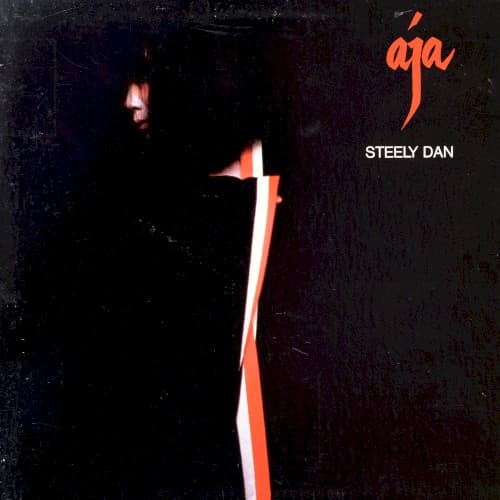
Steely Dan Aja — The Studio as Instrument
Most rock albums from 1977 sound like a band in a room. Aja sounds like a laboratory where Donald Fagen and Walter Becker dissected the American songbook, reassembled it with forty session musicians, and emerged with seven songs so immaculately recorded that audiophiles still use them to test speaker wire. The thesis of this album is in the process: perfection as a creative stance, not a marketing term.
Where most jazz-rock fusion chased virtuosity for its own sake, Steely Dan chased the optimal take, the exact tone, the arrangement that left no fat. The result is the rare record where the clinical approach serves the songs instead of suffocating them. Producer Gary Katz and engineers Roger Nichols and Bill Schnee built a sound so precise that the Library of Congress added it to the National Recording Registry, and so adaptable that it became a commercial hit, peaking at number three on the Billboard chart and spawning three singles.
The album works because Becker and Fagen understood that sophistication and accessibility are not opposites. The eight-minute title track sits next to the three-minute-fifty-seven Peg, and both justify their lengths. The writing is dense with jazz harmony and narrative detail, but the hooks are immediate. The performances are flawless, but they never sound like exercises.
This is not fusion as prog-rock indulgence. It is pop songwriting taken to its logical extreme: every note in service of the whole, every player chosen for what the song needs, every arrangement stripped to what works.
Forty Musicians, One Vision
The foundation is the writing. Fagen and Becker built these songs from jazz chords and rock structures, then hired the players who could make the theory feel human. Black Cow opens with a Fender Rhodes voicing that implies both major and minor, a harmonic ambiguity that matches the lyric about a relationship ending in a Brooklyn luncheonette. The verse melody sits in the cracks between the chords instead of landing on them.
Victor Feldman's Rhodes solo was recorded live with the rhythm section, a rarity for Steely Dan, and the result has a conversational flow that overdubbed solos often lack. The title track is the album's ambition made audible: an eight-minute suite assembled from independent sections, including an instrumental called Stand by the Seawall that predates the band's formation. The jazz-based chord progression gives Wayne Shorter room to solo without the song turning into a blowing session. Shorter plays ideas, not scales.
Steve Gadd's drum solo is a study in dynamics, building from brushes to a climax that never oversells. The composition stitches its pieces together so seamlessly that the seams only show when you read the liner notes. Deacon Blues stretches the verse-chorus form across seven and a half minutes by developing the melody instead of repeating it. Pete Christlieb's tenor sax solo, recorded after Becker and Fagen saw him on The Tonight Show and brought in saxophonists one by one until they found the right tone, has the late-night ache the lyric requires.
The arrangement knows when to swell and when to pull back. Peg is the outlier: an altered blues that does not sound like a blues, built on major seventh and minor seventh chords that create what Steely Dan biographer Anthony Robustelli called a joyous yet ambiguous sound. Jay Graydon's guitar solo took eight attempts to get right, and the one that made the album is worth the labor.
The production by Katz, with Nichols and Schnee engineering, treats every instrument as a solo. The mix is wide but never diffuse. The bass sits low without muddying the Rhodes. The horns have presence without crowding Fagen's vocal.
The drums on Home at Last demonstrate the Purdie Shuffle, a half-time feel that Bernard Purdie suggested when Becker and Fagen said they did not want a typical Motown or Chicago shuffle. The groove is funky and laid back, and it anchors the song without announcing itself. The album's clinical reputation is earned, but clinical does not mean cold. These are warm sounds recorded with precision.
The weakness is consistency of inspiration. I Got the News, rewritten from the Royal Scam sessions, has a solid funk groove and a tight vocal arrangement, but the melody does not develop past its opening idea. Josie closes the album with energy, but it feels lighter than the songs that precede it, more concerned with rhythm than with harmonic or melodic invention. Neither is filler, but neither operates at the level of the first four tracks.
The Arc of Restraint
The sequencing uses the title track as a fulcrum. Side one builds to it: the opener establishes the tone, the eight-minute centerpiece justifies the album's scope, and the closer lands the emotional weight before the side ends. Side two starts with the album's brightest moment and its biggest single, then moves through the more relaxed middle section and the funk before the finale sends the listener out with a grin.
The pacing works because the album never repeats itself. Each song has a distinct rhythm: the lope of the opener, the shifting tempos of the centerpiece, the strut of the single, the shuffle of the middle section. Forty minutes is exactly the right length, but the back half does not sustain the invention of the front. The peak of side two arrives early, and the songs that follow are solid without being essential.
The album earns its length by avoiding filler, but it does not earn the reputation of flawlessness that some fans claim. The second side is good; the first side is among the best in the genre. The flow never sags enough to lose the listener, but it does not build the way the first three tracks do. The centerpiece remains the focal point, and everything else is positioned around it.
That is smart sequencing, but it also means the album is front-loaded with its ambition.
The Standard for the Studio
Aja is Steely Dan's highest and tightest achievement, the album where their obsession with craft produced something more than the sum of its session bills. It ranks as the essential entry point for the band and as one of the benchmarks for what rock recording can accomplish when the studio is treated as an instrument. Fans of jazz-inflected pop, session musicianship at its peak, and production that rewards close listening will find this indispensable. Fans who prefer rawness over precision, or who hear yacht rock as a pejorative, should start elsewhere.
The album has aged into a genre signifier, cited in retrospectives on yacht rock and smooth jazz, but the best tracks outgrow the category. Black Cow, Aja and Deacon Blues remain studies in how to build a song from sophisticated materials without losing the tune. Peg is the hook that justifies the intelligence around it. The weaker tracks on side two do not damage the whole, but they do prevent the album from being the masterwork some critics claim.
It is very, very good, and it set a production standard that few records have matched. Start with Black Cow for the harmonic and melodic craft, then the title track for the ambition and the solos. If those work, Deacon Blues and Peg will seal it. Gaucho is the natural next step for those who want more of this sound.
For those curious about the jazzier side, check The Royal Scam for a slightly rawer version of the same vision. Aja is the culmination of one approach to rock recording, and it remains the measure against which similar attempts are judged.
Track by track
Track Listing
Black Cow
StandoutThe album opens with a Fender Rhodes voicing that sets the harmonic palette: sophisticated, ambiguous, adult. The verse melody sits between the chord tones instead of landing on them, which gives the lyric about a doomed relationship a floating, unresolved quality. Fagen sings the breakup scene in a luncheonette with dry specificity, no melodrama. The chorus lifts without turning bright. Victor Feldman's Rhodes solo, recorded live with the rhythm section rather than overdubbed, has a conversational flow and a loose swing that contrasts with the song's meticulous construction. The arrangement breathes: the verse pulls back, the chorus swells, and the solo section opens up before the final verse returns. The bass and drums lock into a groove that never rushes. The production captures every note clearly without sounding sterile. This is the thesis statement: precision in service of feeling, complexity that never obscures the song. The melody earns its five minutes without repeating a single idea verbatim. This is Steely Dan at full strength, where the writing, the playing and the recording align.
Aja
StandoutAn eight-minute suite built from independent sections and stitched into a coherent whole. The opening establishes a jazz-based chord progression that gives the soloists room to work. Wayne Shorter's tenor sax solo is the centerpiece, and he plays melodic ideas rather than running changes. The phrasing is unhurried, the tone is warm, and the solo develops across its length instead of repeating licks. Steve Gadd's drum solo starts with brushes and builds to a controlled climax, never overselling the moment. Denny Dias takes a guitar solo that contrasts with Becker's bluesier turn later in the track. The middle section was adapted from an earlier instrumental called Stand by the Seawall, and it shifts the mood without breaking the flow. Fagen's synthesizer adds texture in the spaces between the solos. The composition never feels like a collection of solo breaks; the sections connect through shared harmonic material and careful dynamics. The song justifies its length by developing its themes instead of vamping. The engineering captures the ensemble interplay, especially the conversation between Gadd and bassist Chuck Rainey. This is the album's most ambitious track and its most successful.
Deacon Blues
StandoutA seven-and-a-half-minute meditation on romantic failure and small-time dreams, built on a melody that develops across the verses instead of cycling. The lyric is specific and literate without tipping into cleverness for its own sake. Pete Christlieb's tenor sax solo has the late-night ache the song requires, a warm tone and phrasing that serves the mood. The arrangement knows when to build and when to stay quiet. The verse sits in a pocket, the chorus lifts with backing vocals and a slight tempo shift, and the bridge opens the harmonic space before the solo. The solo section never feels like an interruption; it is part of the song's arc. The production lets the sax sit forward in the mix without burying the rhythm section. Fagen's vocal is world-weary but not theatrical, delivering the lyric with just enough distance to let the details land. The song earns its length by never repeating without development. The fade is gradual, letting the groove dissolve instead of cutting it short. This is Steely Dan writing about failure with more care than most bands bring to triumph, and the music matches the empathy in the lyric.
Peg
StandoutThe brightest and tightest song on the album, an altered blues built on major seventh and minor seventh chords that sound joyous and ambiguous at once. The verse melody is a descending line that hooks immediately. Jay Graydon's guitar solo, the result of eight rejected takes, is the album's most economical: every note placed exactly where it needs to be, a melodic statement rather than a technical display. The horn arrangement in the chorus is tight and punchy without cluttering the mix. The rhythm section locks into a strut, and the groove is propulsive without rushing. Fagen's vocal has a little more snap than usual, matching the energy of the track. The song was recorded in New York with engineer Elliot Scheiner, whom the band had fired during The Royal Scam sessions, and the reconciliation produced the album's most radio-ready moment. The production is as immaculate as the rest of the record, but the song has a lightness that the longer tracks do not attempt. Three minutes fifty-seven seconds, no waste, every section earning its place. The fade comes too soon, which is the mark of a good pop song.
Home at Last
SolidBuilt on the Purdie Shuffle, a half-time groove that Bernard Purdie suggested when Becker and Fagen asked for something funky and laid back but different from a typical Motown or Chicago shuffle. The rhythm is the song's hook: loose and propulsive, with Purdie and Chuck Rainey feeding off each other in the pocket. The melody is simpler than the preceding tracks, and the lyric is more straightforward. The arrangement uses the shuffle as the foundation and adds guitar and horn accents that punctuate without crowding. The song feels like a breather after the intensity of the first four tracks, which is both its function and its limitation. The groove is strong enough to carry the five and a half minutes, but the melody does not develop past its opening idea. The solo section is competent without being memorable. This is solid craft, a showcase for the rhythm section and an example of Steely Dan working in a more relaxed register, but it does not reach the level of invention in the album's peaks.
I Got the News
SolidA funk track rewritten from the Royal Scam sessions, with a tight groove and a clipped vocal arrangement. The verse melody is rhythmically interesting, syncopated against the bass line, but it does not develop harmonically. The chorus is more of a rhythmic break than a melodic payoff. The production is as clean as the rest of the album, and the rhythm section is locked in, but the song feels like an exercise in groove rather than a fully realized composition. The solo section is brief and functional. The fade comes at five minutes, which is about a minute longer than the material justifies. This is the album's closest approach to filler, not because it is weak but because it does not add anything the previous tracks have not already established. Competent, well-played, but inessential.
Josie
StandoutThe closer is the album's loosest moment, a mid-tempo groove with a melody that bounces and a lyric that plays lighter than the rest of the record. The arrangement is spare: rhythm section, a few guitar accents, backing vocals in the chorus, and a synthesizer solo from Fagen that has more personality than precision. The song feels like a palate cleanser after the weight of the preceding tracks, and it works in that role. The groove is relaxed, the melody is catchy without being complex, and the fade leaves the listener in a good mood. It is not among the album's strongest tracks, but it is a smart choice for the closing spot. The synthesizer solo is playful, almost whimsical, a tone the album has not touched before. This is Steely Dan letting the session breathe a little, and while it does not reach for the heights of Aja or Deacon Blues, it does not need to. Solid, enjoyable, the right note to end on.