The scorecard
8.8/10 · Essential
- Songwriting25%
- 9.0
- Production25%
- 9.5
- Performance15%
- 8.5
- Cohesion15%
- 8.0
- Originality10%
- 7.5
- Replay value10%
- 9.0
Smith shapes verse into crescendo across nine-minute spans, letting melancholy unfold without repeating the hook or rushing the resolve.
David M. Allen captures layers of flanged guitar, reversed tape and keyboard washes at Hook End Manor with cathedral space and surgical separation.
Smith sings with low resignation on the title track and whispered dread on "Lullaby", while Gallup and Williams lock the rhythm section into a patient, unyielding crawl.
Seventy-one minutes of glacial tempos risk monotony, yet the sequencing earns the length by alternating nine-minute dirges with briefer, sharper tracks like "Closedown" and "Lovesong".
The return to Pornography-era gloom after Kiss Me pop was radical timing in 1989, though the flanged basslines and synthesizer slabs were established Cure vocabulary by then.
The slow reveal rewards patience: guitar lines buried in the mix on first listen become the architecture on the tenth, and the mood deepens instead of thinning out.
The Cure Disintegration — Thirty at the Edge of the Abyss
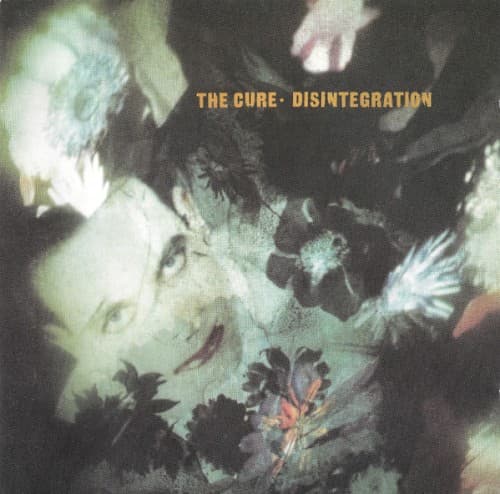
Robert Smith wrote Disintegration because turning thirty frightened him more than any line of LSD he took to blunt the fear. The claim sounds like rock-star theatre until you hear the record: seventy-one minutes that move at the pace of dread, stretching two-chord vamps into nine-minute hallways with no exit in sight, burying guitar leads so deep in the mix they sound like they are trying to claw their way out from under the rhythm section. Smith had spent 1987 as a pop star, playing sold-out arenas off the back of Kiss Me, Kiss Me, Kiss Me, and hated every minute of the visibility. Disintegration was the correction: a deliberate return to the suffocating gloom of Pornography, recorded in a manor house in Oxfordshire while the band's co-founder drank himself toward dismissal and Smith adopted what he later called a "monk-like" silence to keep the mood unpleasant. Elektra Records received the finished album and asked him to delay the release, calling it "wilfully obscure." Smith released it on schedule in May 1989, and it became the biggest record of the Cure's career, reaching number three in the UK and number twelve in the US, spinning off two top-ten singles and shifting over four million copies worldwide. The tension at the center of Disintegration is that Smith built a cathedral to despair and the world walked in and stayed.
Synth Slabs and Buried Leads: The Architecture of Slow Collapse
Disintegration works by accretion. Smith and co-producer David M. Allen recorded at Hook End Manor with a strategy of layering: flanged guitars, reversed tapes, delay treatments and synthesizer washes stacked until the songs feel less like compositions and more like weather systems. "Plainsong" opens the album with what Jeff Apter called "a shower of synths and guitars," Roger O'Donnell's keyboards swelling underneath Porl Thompson's treated guitar before Smith steps to the microphone and delivers fragments ("I'm so cold") as if reading from scripture. The track sets the template: patient builds, glacial tempos, vocals mixed like another texture rather than the focal point. Allen's production captures the space without losing the separation; you can hear every instrument even when six are playing at once, and the clarity makes the gloom more oppressive, not less.
The band recorded thirty-two demos at drummer Boris Williams's house in the summer of 1988, then chose twelve for the album. Most of the writing came from Smith, though O'Donnell confirmed that the rest of the band contributed substantial musical ideas to more than half the final tracks. Bassist Simon Gallup and Williams form the chassis: Gallup's descending four-note bassline on "Fascination Street" and his locked-in pulse on "Prayers for Rain" give the songs their forward motion, while Williams plays with the discipline of a session drummer, never rushing the crawl. Smith and Thompson treat their guitars to heavy effects—flanging, delay, backwards tape—but the lead lines are often buried in the mix, audible but subordinate, which makes the arrangements feel vast and claustrophobic at the same time. The title track is the clearest example: Smith's guitar lines scale to epic heights while sitting behind the rhythm section, trying to burst through the upfront bass and drum assault.
Keyboards dominate the texture. O'Donnell, hired as a touring member for Kiss Me and made permanent during the Disintegration sessions, plays synthesizer slabs that sound like orchestral sections compressed into two chords. "Closedown" layers keyboard textures over a slow, gloomy guitar line, and the effect is not so much melodic as it is atmospheric, a fog that refuses to lift. The album's length—over seventy minutes—tests patience, and not every track earns its runtime. "The Same Deep Water as You" stretches past nine minutes without developing its central idea, and "Homesick" meanders for seven. Smith later admitted the album's title was tempting fate, and the sprawl is the cost of the mood: Disintegration works by immersion, but it sags in the middle when the immersion feels like drowning.
The Arc from Cathedral to Crypt
The album sequences like a descent. The opening establishes grandeur through synthesizer washes and treated guitar building to a crescendo, then drops into a two-chord cascade with affecting lyrics and screaming underneath. By the third track, the mood has turned inward, Smith listing his shortcomings over a slower, more oppressive arrangement, and the first quarter establishes the album's governing law: nothing accelerates, nothing resolves, and the only direction is down.
The middle stretch risks monotony. Three consecutive tracks break the gloom with sharper hooks and tighter runtimes, but they also break the trance, and the album takes until the fifth track to recover its suffocating pull. From there the final third earns the length: two tracks both exceed eight minutes, and both justify the space by letting the arrangements unfold without repeating the chorus or rushing the fade. The closer delivers six and a half minutes of unresolved murmur, no hook and no climax, and the effect is less like an ending and more like the tape running out. The sequencing is deliberate but unforgiving; if you bail at track seven, you miss the point.
The High-Water Mark and the Long Shadow
Disintegration is the Cure's best album because it is the only one where Smith's ambition, his band's patience and his label's indifference to his vision aligned long enough to let him build something this slow and this large without interference. It refines what the band had been circling since Seventeen Seconds: gothic rock that uses space and repetition not as minimalism but as a kind of maximalism, where the mood is the structure and the structure is the song. The album's commercial success—number three in the UK, number twelve in the US, over four million sold—proved Smith wrong about what audiences would tolerate, though it also made the next decade of the Cure's career a long, losing argument with the expectations this record created.
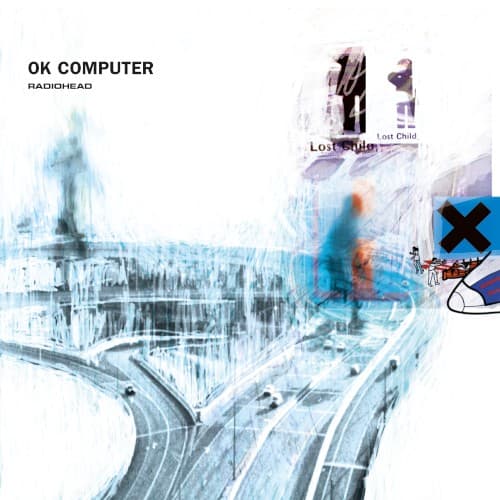
The album is for listeners who want to hear how far a two-chord vamp can stretch before it snaps, and who can tolerate seventy-one minutes at a funereal pace. Skip it if you need forward motion or melodic development; Disintegration moves like a glacier, and the pleasure is in watching the scene change under the pressure, not in waiting for a payoff. Start with "Plainsong," "Fascination Street" and "Disintegration" to hear the album's range, then commit to the full sequence or bail. The album aged well because it never chased a contemporary sound; Smith was reaching backward to Pornography in 1989, which means Disintegration sounds neither dated nor timeless, just removed. Hear it alongside the Cure's Pornography for the blueprint, or Radiohead's OK Computer for the record that learned how to make guitar rock sound this anxious without sounding this slow. Disintegration remains the cathedral Smith built to turning thirty, and he has spent thirty-five years since trying to leave it behind.
Track by track
Track Listing
Plainsong
StandoutThe album's opener is its best advertisement and its most honest warning. O'Donnell's synthesizers swell for nearly a minute before Smith enters, and when he does his voice is mixed low, almost as if he is testing whether anyone is listening. The guitar and keyboard layers build to a crescendo that never quite arrives, sustaining tension across five minutes without releasing it, and the effect is both grand and claustrophobic. Simon Price called it the most breathtaking anthem the band ever recorded, and the claim holds because "Plainsong" sounds like an anthem that refuses to celebrate anything. The mood is cathedral-sized despair, and the track sets the template for the seventy minutes that follow: patient, vast, and in no hurry to resolve.
Pictures of You
StandoutA seven-and-a-half-minute track built on a two-chord progression that should collapse under its own weight but instead becomes hypnotic. The rhythm section locks into a mid-tempo churn while Smith and Thompson layer guitars and O'Donnell adds synthesizer washes that sound like strings without using them. The lyrics describe screaming at make-believe and letting go, and Smith sings them with enough conviction to sell the poignancy even when the verse structure is just the same two chords cycling for another minute. The song became a single in March 1990, a year after the album's release, and reached number twenty-four in the UK, which says something about how long it took for listeners to catch up to the album's patient sprawl. The interweaving guitar and bass lines give the track enough movement to justify the length, but only just.
Closedown
SolidThe first track on the album to feel genuinely oppressive rather than merely gloomy. Smith wrote it as a catalog of his physical and artistic shortcomings, and he delivers the lyric with low resignation over a slow, processed guitar line and layers of keyboard texture. The tempo drops further than "Pictures of You," and the arrangement offers no relief: no chorus, no bridge, just verse after verse of self-criticism set to a two-chord vamp that never shifts. At four minutes it is one of the album's shorter tracks, and the brevity is a mercy. The song does what it sets out to do—establish a mood of total shutdown—but it also reveals the album's central risk, which is that this much gloom at this slow a pace can tip from immersive to inert.
Lovesong
StandoutSmith wrote it as a wedding present for Mary Poole, and the lyric is the most straightforward declaration of affection he had allowed himself to record by 1989. The Gallup and Williams rhythm section creates a tight, serviceable groove, and Smith and Thompson add guitar fills and filigrees that give the song just enough bite to keep it from floating away. O'Donnell's keyboards stay in the background, and the production is notably cleaner and more upfront than the tracks that surround it. Smith later said that without "Lovesong" the album would be easy to dismiss as having only one mood, and he was right: the song is the album's pressure valve, and its presence makes the gloom on either side feel like a choice rather than a monotone. It became the Cure's biggest US hit, reaching number two on the Billboard Hot 100, and it remains the most accessible entry point to Disintegration for listeners who cannot tolerate seventy minutes of droning guitars and whispered dread.
Last Dance
SolidA solid mid-tempo track that falls somewhere between the gloom of "Closedown" and the relative brightness of "Lovesong." The arrangement is built around a steady bass pulse and treated guitar, and Smith's vocal is mixed with enough clarity to let the lyric come through without the extra distortion and reverb that cloud other tracks. The song does not reach for the epic scale of "Plainsong" or the hypnotic pull of "Pictures of You," and the result is a track that works without commanding attention. At four and a half minutes it fits comfortably in the album's midsection, offering a brief respite before the album drops back into full suffocation with "Lullaby."
Lullaby
StandoutSmith whispers the lyric over sharp, rhythmic guitar stabs, and the effect is genuinely unsettling in a way that most of Disintegration's slower, more ponderous tracks are not. The premise came from lullabies Smith's father used to sing, which always ended with something horrible, and the song builds that dread into the arrangement: the bass and drums stay tight and precise, the guitars jab rather than wash, and Smith's voice stays low and close, as if he is singing directly into your ear. The track became the Cure's highest-charting UK single when it reached number five in 1989, and the success makes sense; "Lullaby" is one of the few moments on Disintegration where the mood is eerie rather than merely sad, and the precision of the arrangement gives it a sharpness the album's longer tracks often lack. The string-laced production adds texture without cluttering the mix, and the song remains one of the band's most immediately striking moments.
Fascination Street
StandoutThe bassline is a descending four-note arpeggio, and Gallup plays it with the insistence of a man who knows the entire song rests on whether he can make four notes interesting for five minutes. He does. Williams locks in behind him, and the rhythm section creates a groove that is as close as Disintegration gets to danceable, though the flanged guitars and Smith's low, processed vocal keep the track from ever feeling celebratory. The lead guitar line, as Simon Price noted, is strikingly similar to John McGeoch's work on "Israel" by Siouxsie and the Banshees, a song Smith played often during his stint as the Banshees' guitarist, and the resemblance is close enough to sound like a deliberate homage. Elektra Records released "Fascination Street" as the first US single because it appeared in the film Lost Angels, and the choice was smart; the track has enough forward motion to work outside the album's funereal context, even if it loses some of its power when separated from the gloom that surrounds it.
Prayers for Rain
SolidNed Raggett called it savage torpor, and the phrase applies to the entire album but fits this track in particular. Smith and Thompson treat their guitars to heavy flanging, delay and reversed tape, and the result is a slow, moody crawl that sustains dread across six minutes without offering a single moment of release. The rhythm section stays locked in a patient, unyielding groove, and O'Donnell's keyboards add shading without melody, which makes the arrangement feel more like a fog than a song. The track is depressing by design, and it works on those terms, but it also marks the point in the album where the gloom starts to feel like a trap. Six minutes of this is a long time to spend in one mood, and the song does not develop enough to justify the length. It is essential to the album's architecture—the descent has to go this low to make the title track's elevation feel earned—but taken on its own it is more endurance test than pleasure.
The Same Deep Water as You
SolidNine minutes and twenty-two seconds, and the question is whether the song earns the time or simply fills it. The track builds slowly, layering synthesizers and guitars over a mid-tempo pulse, and Smith sings with a combination of cutting clarity and low resignation, his voice further distorted with vocal treatments that bury the lyric under the arrangement. The instrumental passages stretch for minutes at a time, and the patience required to sit through them is the point: the song is about immersion, about sinking, and the structure mirrors the theme by refusing to surface. The problem is that the central idea—two chords, a slow build, no climax—does not develop across nine minutes; it just repeats, and the repetition starts to feel like filler by the six-minute mark. O'Donnell's keyboards add shade and melody, and Smith's guitar lines are commanding when they break through the mix, but the track is one of the album's clearest examples of ambition exceeding execution.
Disintegration
StandoutThe title track and the album's centrepiece, over eight minutes of Smith's guitar lines scaled to epic heights while buried in the mix, almost as if they are trying to burst from behind the rhythm section. The arrangement is dense—keyboards, multiple guitars, bass, drums, treated vocals—but Allen's production keeps every element audible, and the clarity makes the song feel vast rather than cluttered. The lyric is Smith at his most resigned, singing about falling apart with the same low, distorted vocal treatment he used on "Prayers for Rain," and the effect is less cathartic than it is exhausting, which is exactly the mood the song is after. The track justifies its length by building slowly and sustaining tension without releasing it, and the decision to bury the guitar leads in the mix is the kind of perverse choice that makes Disintegration fascinating: the most commanding elements of the song are the ones you have to strain to hear, and the effort required to listen that closely is part of the experience.
Homesick
WeakO'Donnell confirmed that Lol Tolhurst contributed to the foundation of this track, one of his few musical contributions to the album before his dismissal. The song stretches past seven minutes without developing its central idea, and the result is one of the album's weakest moments. The arrangement is built around a slow, processed guitar line and layers of synthesizer, and the mood is the same low-level despair that defines most of Disintegration, but the track meanders where "Disintegration" and "The Same Deep Water as You" at least build toward something. The rhythm section stays patient, and Smith's vocal is mixed with enough clarity to let the lyric come through, but the song does not have enough melodic or structural development to justify seven minutes. It is not bad, exactly, but it is the clearest example of the album's sprawl working against it: by the time "Homesick" arrives, fifty-seven minutes into a seventy-one-minute album, the mood has been established and re-established, and another seven minutes of the same texture feels like redundancy rather than reinforcement.
Untitled
SolidSix and a half minutes with no hook, no chorus, no climax, and no resolution. The track is less a song than an extended outro, a slow fade that never quite fades, and the effect is both fitting and frustrating. Smith sings fragments of lyric over a two-chord vamp, and the arrangement stays sparse—guitar, bass, drums, keyboards—without ever building to anything. The song works as an ending because it refuses to provide closure; the album just stops, as if the tape ran out, and the lack of resolution mirrors the mood of the entire record. Taken on its own, "Untitled" is filler, but in context it is the only possible way to close an album this committed to gloom and patient sprawl. The song does not leave you satisfied, but Disintegration was never interested in satisfaction.