From Crawley Suburbs to Gothic Cathedral: The Cure's Unlikely Trajectory
The Cure emerged from the unlikely setting of Crawley, a planned town south of London, in 1977, when Robert Smith and childhood friends began experimenting with the raw energy of punk while harboring ambitions beyond three-chord rebellion. What started as an adolescent project called Easy Cure would evolve into one of rock's most emotionally expansive catalogs, spanning four decades without a single stable lineup beyond Smith himself. Their significance lies not in pioneering a single sound but in demonstrating how deeply personal songwriting could scale to arena-level impact without compromising its intimacy.
By the mid-1980s, The Cure had become synonymous with a particular strain of romantic melancholy that reshaped rock's emotional vocabulary. Smith's smeared lipstick and teased black hair became visual shorthand for outsider identity across multiple generations, while the band's willingness to oscillate between three-minute pop confections and sprawling atmospheric epics defied the era's demand for genre consistency. They proved commercially successful without chasing commercial formulas, maintaining creative control through Fiction Records while influencing everyone from Nine Inch Nails to Slowdive.
The band's cultural footprint extends beyond music into fashion, visual aesthetics, and the very concept of alternative culture as mainstream phenomenon. They occupied a unique position where darkness felt accessible rather than alienating, where depression could coexist with danceability, and where sincerity trumped ironic distance. This emotional honesty, paired with Smith's distinctive vibrato and the band's constantly shifting sonic approach, created a body of work that resists easy categorization while remaining unmistakably recognizable.
Architectural Sadness: The Cure's Sonic Evolution from Sparse to Symphonic
The Cure's sound defies simple categorization because it never stopped moving. Early recordings like "Boys Don't Cry" carried punk's energy stripped down to essential elements—jagged guitar lines, economical bass, Smith's yearning vocals cutting through minimal arrangements. This austerity gave way to the dark atmospherics of "Seventeen Seconds" and "Faith," where negative space became as important as the notes themselves, with each instrument occupying its own cathedral of reverb. These records established the template for gothic rock not through heaviness but through carefully constructed emptiness.
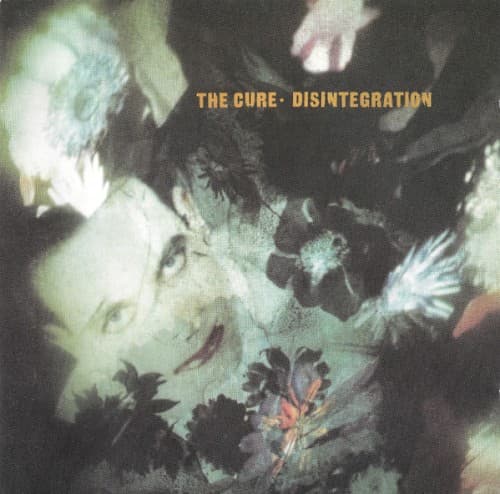
The mid-1980s brought radical tonal shifts. "The Head on the Door" introduced jangly guitars and major keys without abandoning melancholy, proving the band could craft genuinely catchy singles while maintaining emotional depth. Then came "Disintegration" in 1989, their commercial and artistic zenith—a masterclass in layered production where keyboards wash over driving basslines, guitars shimmer and swell, and Smith's voice floats through arrangements that feel both massive and fragile. Songs like "Pictures of You" and "Lovesong" demonstrated how studio craft could amplify rather than diminish raw feeling.
Smith's guitar work deserves specific attention. Unlike virtuoso contemporaries, he built signature sounds through texture and repetition—the chiming arpeggios of "Just Like Heaven," the caustic scrape of "The Walk," the tremolo-drenched atmosphere of "A Forest." His approach prioritized mood over technique, creating instantly recognizable tones that served the song rather than showcasing ability. Paired with Simon Gallup's melodic basslines, which often carried the hooks while guitars provided color, The Cure developed a sonic architecture where sadness had room to breathe, dance, and occasionally transcend itself.
Forty Years Without Compromise: The Cure's Arc from Post-Punk Pioneers to Alternative Icons
The Cure's formation coincided with punk's first wave, but they quickly diverged from that movement's restrictive orthodoxy. Their 1979 debut "Three Imaginary Boys" showcased a band already thinking beyond genre limitations—spare, angular post-punk with hints of the atmospheric exploration to come. Smith's decision to simultaneously play guitar in Siouxsie and the Banshees exposed him to more ambitious production approaches, knowledge he imported back into The Cure's increasingly expansive sound.
The early 1980s trilogy of "Seventeen Seconds," "Faith," and "Pornography" remains one of rock's most uncompromising artistic statements—three albums descending deeper into darkness with each release. "Pornography" in particular pushed so far into claustrophobic despair that it nearly destroyed the band. Smith dissolved the lineup, rebuilt around himself and new bassist Phil Thornalley, and executed a dramatic tonal pivot. "Let's Go to Bed" was deliberate pop provocation, a disco-influenced single that baffled existing fans while expanding the band's palette. This willingness to risk alienating their audience became a defining career characteristic.
The commercial breakthrough arrived with "The Head on the Door" in 1985 and "Kiss Me, Kiss Me, Kiss Me" in 1987—double albums and hit singles coexisting with extended experimental pieces. But "Disintegration" elevated everything. Initially considered too dark by their label, the album became their biggest success, reaching the top 20 in multiple countries and spawning genuine radio hits. The album's emotional generosity proved that atmosphere and accessibility weren't mutually exclusive, that you could make people dance while breaking their hearts.
The 1990s and 2000s brought diminishing commercial returns but consistent creative output. "Wish" spawned alternative radio staples like "Friday I'm in Love," while later albums like "Bloodflowers" and "4:13 Dream" found the band revisiting earlier atmospheric approaches with the confidence of veterans. Lineup instability became chronic—Smith remained the sole constant while drummers, keyboardists, and guitarists cycled through. Yet this instability rarely impacted the music's quality, suggesting The Cure had always been Smith's vision more than a democratic collective.
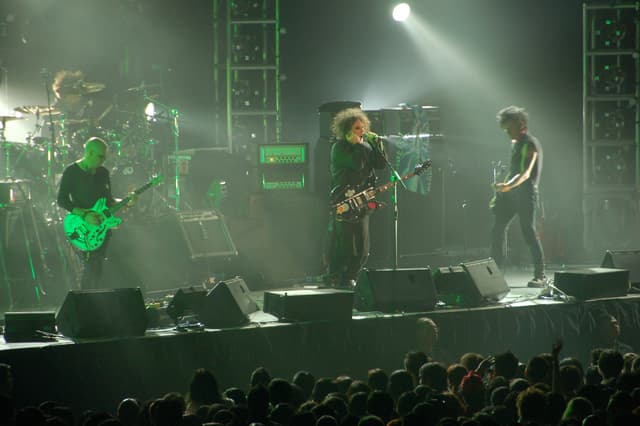
Their live reputation deserves emphasis. The Cure transformed into a genuinely powerful arena act, with Smith's shambling stage presence and disheveled appearance contrasting against tightly executed performances that could stretch past three hours. Festival headlining slots and sold-out tours demonstrated sustained demand across generations, while Smith's reputation for fan-friendly pricing and opposition to exploitative ticketing practices built loyalty beyond the music itself.
The Cure's Enduring Shadow: How Melancholy Became Mainstream
The Cure's influence operates on multiple levels simultaneously. Musically, they provided a template for atmospheric rock that prioritized emotion over aggression, proving that darkness could be beautiful rather than simply brutal. Bands from The Smashing Pumpkins to Interpol to The 1975 carry audible traces of The Cure's approach to layered guitars, melodic bass, and vocals that convey vulnerability without weakness. The entire shoegaze movement owes a debt to The Cure's textural experimentation, while emo and post-hardcore took cues from their unashamed emotional directness.
Culturally, Robert Smith became an unlikely style icon whose visual aesthetic transcended music. The disheveled hair, smeared makeup, and thrift store clothing created a look that communicated outsider status while remaining fundamentally approachable. Unlike the calculated menace of gothic contemporaries, Smith projected sadness rather than danger, making The Cure a gateway band for countless teenagers discovering alternative culture. This accessibility helped normalize non-conformist aesthetics in mainstream spaces long before Hot Topic made it profitable.
The band's business model—maintaining creative control through independent-minded labels, resisting commercial pressure, pricing concerts fairly—demonstrated an alternative to industry exploitation. Smith's public battles with Ticketmaster over service fees and his willingness to extend shows beyond scheduled times reflected artist-fan solidarity that influenced younger musicians' approach to career sustainability. In an era of streaming dominance, The Cure's insistence on album-length artistic statements rather than playlist-optimized singles feels increasingly prescient. Their legacy isn't a single sound or look but rather an ethos: that commercial success need not require creative compromise, that sincerity beats cynicism, and that the deepest sadness often produces the most transcendent beauty.