From Temple of the Dog to Genre-Defining Force
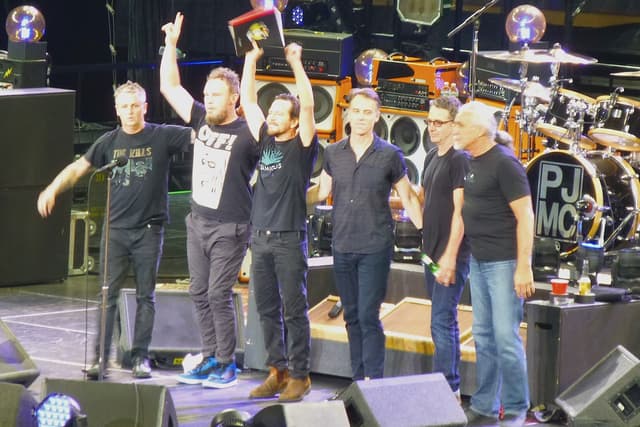
Pearl Jam emerged from Seattle in 1990 as the product of a specific convergence: Jeff Ament and Stone Gossard, veterans of the dissolving Mother Love Bone, joined forces with Mike McCready, Eddie Vedder, and Dave Krusen to form what would become grunge's most commercially enduring entity. While Nirvana captured the movement's anarchic spirit and Soundgarden its sonic brutality, Pearl Jam channeled something different—an arena rock sensibility filtered through Pacific Northwest intensity, built on Vedder's baritone howl and the band's classic rock foundation.
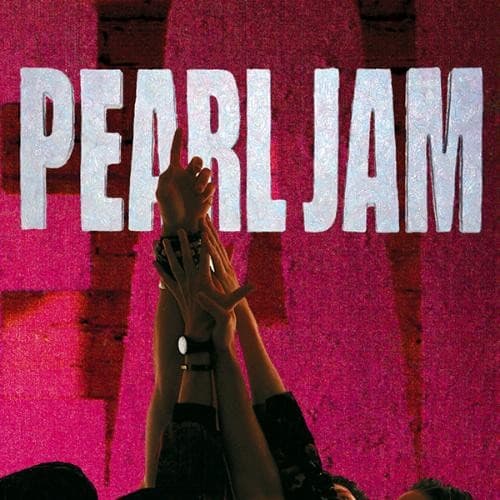
Their 1991 debut Ten arrived months after Nevermind, initially overshadowed before slowly accumulating massive sales through sustained touring and MTV rotation. By 1993, they were simultaneously the biggest rock band in America and the most ideologically conflicted about that position. This tension—between mainstream success and underground credibility, between commercial pressure and artistic autonomy—would define their entire trajectory.
What distinguishes Pearl Jam from their grunge peers is survival through adaptation. They've released eleven studio albums across three decades, each reflecting different phases of musical exploration and industry positioning. They've outlasted the genre that birthed them, the alternative rock explosion that followed, and the collapse of the traditional music industry itself, emerging as a self-sustaining touring institution with complete creative control.
Arena Grunge: Classic Rock Architecture Meets Seattle Intensity
Pearl Jam's sonic identity rests on a foundation most grunge bands rejected: classic rock guitar interplay and dynamic song construction borrowed from 1970s arena acts. Gossard and McCready's dual guitar approach recalls the textural layering of Led Zeppelin and Neil Young's Crazy Horse—one player establishing rhythmic foundation while the other explores melodic counterpoint or explosive lead work. This creates a harmonic density absent in the stripped-down approach of many contemporaries.
Vedder's voice became the band's most identifiable element—a deep baritone capable of wounded vulnerability and primal rage, often within the same song. His phrasing owes more to Pete Townshend and Jim Morrison than to punk's staccato delivery, favoring sustained notes and dramatic crescendos. The combination of his vocal weight and the band's muscular arrangements created what critics termed "arena grunge," a sound built for large venues despite its emotional rawness.
Production choices evolved dramatically across their catalog. Brendan O'Brien, who worked with the band from Vs. onward, helped refine their sound from Ten's somewhat polished debut into leaner, more aggressive territory before gradually incorporating experimental textures—strings, keyboards, unconventional song structures—that distanced later work from grunge orthodoxy. By the 2000s, Pearl Jam embraced a garage rock directness that stripped away excess, then circled back to embrace atmospheric production on recent releases.
Three Decades of Strategic Defiance and Musical Evolution
Ten's slow-burn success—eventually selling over thirteen million copies in the United States—established Pearl Jam as commercial heavyweights, but the band immediately resisted the trajectory that success implied. Their 1993 follow-up Vs. sold over 950,000 copies in its first week, setting records and confirming their arena status. Yet they simultaneously refused to make music videos for the album and limited interviews, creating a paradox: the biggest band in rock actively sabotaging their own promotional machinery.
This tension exploded in 1994 with their battle against Ticketmaster, a legal and logistical war over service fees that forced the band to tour alternative venues and ultimately proved unwinnable. The experience was creatively costly—Vitalogy, released during this period, captured the band's fraying cohesion through experimental detours and Vedder's increasingly cryptic lyrics. Dave Abbruzzese's departure following the album left the band without a permanent drummer for years, cycling through Jack Irons and eventually settling on Matt Cameron in 1998.
The late 1990s represented Pearl Jam's commercial decline but artistic resurgence. Yield (1998) and Binaural (2000) explored psychedelic textures and unconventional arrangements that alienated casual fans while deepening their core audience's devotion. The band's decision to release official bootlegs of every concert in 2000—seventy-two live albums in a single year—demonstrated their pivot from chasing hits to serving a dedicated fanbase. This strategy proved prescient as the music industry collapsed; Pearl Jam had already built an alternative economic model.
Their 2006 self-titled album and Backspacer (2009) marked a creative renaissance, with critics noting renewed energy and melodic focus. But the band's significance had shifted—they were no longer culturally dominant but institutionally important, a rare example of 1990s alt-rock survival. Lightning Bolt (2013) and Gigaton (2020) continued this pattern: solid, occasionally adventurous rock albums that confirmed Pearl Jam's status as a heritage act still capable of moments of genuine inspiration. Their ability to fill stadiums globally while maintaining complete independence from major label control represents the career arc they'd fought for since Vs.
Outlasting Grunge: Pearl Jam's Institutional Survival
Pearl Jam's influence operates on two distinct levels: musical and structural. Sonically, they demonstrated that grunge could incorporate classic rock's expansive ambitions without sacrificing intensity—a blueprint bands like Foo Fighters and Queens of the Stone Age would refine. Their willingness to embrace Neil Young's shambling experimentalism and The Who's dynamic range expanded what "alternative rock" could contain, opening space for bands uncomfortable with punk's minimalist orthodoxy.
More significantly, Pearl Jam pioneered the artist-controlled touring economy that now dominates rock music. Their Ticketmaster battle, though unsuccessful in changing industry practices, forced them to develop alternative revenue streams and direct fan relationships. Their official bootleg program predated digital streaming's disruption, establishing a model where catalog depth and live performance mattered more than hit singles. This approach allowed them to survive the 2000s music industry collapse while peers disbanded or became nostalgia acts.
Culturally, they represent grunge's survivor narrative—the band that outlasted the genre's implosion by refusing its limitations. Where Nirvana became frozen in tragedy and Soundgarden ended in acrimony, Pearl Jam aged into an institution. Their political activism, from Ralph Nader benefit concerts to voting rights advocacy, positioned them as rock's social conscience when that role seemed increasingly irrelevant. They've become proof that commercial success and artistic integrity can coexist, provided the band controls the terms. For younger artists navigating an industry that offers fame without infrastructure, Pearl Jam's three-decade independence offers a rare survival manual.