
The Australian Thunder Machine That Redefined Hard Rock Simplicity
When Malcolm and Angus Young formed AC/DC in Sydney in late 1973, they weaponized a philosophy most rock bands abandoned in pursuit of complexity: strip everything down to its essential voltage. No synthesizers, no ballads, no conceptual detours. Just rhythm guitar as industrial machinery, lead riffs as circular saws, and a rhythm section built to shake concrete foundations. The band emerged from Australia's pub rock circuit with a sound so deliberately primitive it became revolutionary, proving that restraint and repetition could generate more raw power than any progressive rock suite. Their name, suggested by their sister Margaret after seeing the acronym on a sewing machine, perfectly captured the electrical current they channeled into three-chord anthems.
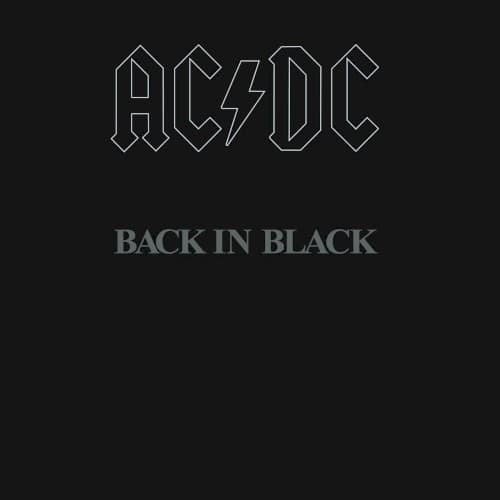
AC/DC's career splits into two distinct eras defined by their frontmen, yet the sonic blueprint remained fanatically consistent. Bon Scott, the charismatic original vocalist who joined in 1974, brought larrikin humor and working-class grit to songs about drinking, fighting, and sexual conquest. His death in February 1980 could have ended the band. Instead, Brian Johnson's arrival produced Back in Black, the second-best-selling album in music history and a masterclass in converting grief into defiance. Across five decades, lineup changes, and shifting rock trends, the Young brothers maintained their vision with fundamentalist conviction. AC/DC became the rare band whose refusal to evolve became their greatest strength.
The Science of Maximum Impact Through Minimal Means
Malcolm Young's rhythm guitar is AC/DC's true secret weapon. While Angus earned headlines for his schoolboy uniform and duck-walking solos, Malcolm constructed the foundation with rhythm parts that most bands would consider lead work. His open-chord riffs, often recorded through a small Gretsch amplifier, created a percussive chug that locked with Phil Rudd's metronomic drumming to form an unbreakable groove. The formula was deceptively simple: establish a riff, repeat it with hypnotic insistence, let Angus punctuate with pentatonic leads, then bring the riff back. No ambient passages, no dynamic departures. The band understood that limitation breeds power.
Producer Mutt Lange recognized this during the Highway to Hell sessions, polishing their raw pub rock attack into arena-ready anthems without sacrificing edge. Subsequent collaborators like George Young (the brothers' older sibling) and later Brendan O'Brien learned the same lesson: serve the riff. AC/DC's guitar tone became instantly recognizable—Angus's Gibson SG through Marshall stacks delivering midrange snarl, Malcolm's rhythm sitting just beneath, creating space for the bass and drums to drive forward. Where Led Zeppelin expanded blues into mysticism and Queen layered operatic theatrics, AC/DC moved in the opposite direction, reducing hard rock to its molecular structure. Their songs breathe together as a single organism: when the band locks into "You Shook Me All Night Long" or "Thunderstruck," there's no separation between instruments, just unified force.
From Australian Pubs to Global Conquest Through Tragedy and Triumph
The band's early albums—High Voltage, T.N.T., and Dirty Deeds Done Dirt Cheap—captured their pub rock ferocity but barely dented international markets. Their first true global statement came with Let There Be Rock in 1977, where the title track's eight-minute guitar assault announced ambitions beyond three-minute radio singles. Powerage followed in 1978, darker and heavier, showcasing a band confident enough to ignore emerging punk and disco trends. But commercial breakthrough required Highway to Hell in 1979, where Lange's production gave their sound clarity without compromising aggression. The title track became their first legitimate anthem, Scott's vocals riding Malcolm's locomotive rhythm with swagger that felt dangerous and fun simultaneously.
Bon Scott's death at 33, from alcohol poisoning after a night of heavy drinking in London, forced an impossible decision. The Young brothers considered disbanding but chose continuation, auditioning Brian Johnson based on his work with British band Geordie. Johnson's raspy, higher register brought different energy—less theatrical than Scott, more working-class everyman. Back in Black, released in July 1980, opened with funeral bells before "Hells Bells" announced that AC/DC would honor their fallen singer by refusing to mourn quietly. The album's massive success—over 50 million copies sold—validated their decision while creating commercial pressure the band simply ignored. For Those About to Rock We Salute You attempted stadium-rock bombast; The Razors Edge returned to basics; Ballbreaker doubled down on their formula.
Commercial peaks and valleys meant nothing to their creative approach. Where other legacy acts experimented or mellowed, AC/DC released albums—Stiff Upper Lip, Black Ice, Rock or Bust—that sounded deliberately out of time, immune to production trends or genre evolution. This stubbornness earned both criticism (accusations of self-plagiarism became routine) and respect (no band has maintained stylistic purity so completely). Malcolm's retirement in 2014 due to dementia represented the first real fracture in their foundation, though nephew Stevie Young stepped in seamlessly. Rudd's legal troubles and eventual replacement, Cliff Williams' retirement and return, Brian Johnson's hearing issues leading to temporary replacement by Axl Rose—the band weathered each crisis by simply continuing, because continuation is what AC/DC does.
The Blueprint for Hard Rock as Working-Class Religion
AC/DC's cultural impact extends beyond their 200 million album sales into their role as hard rock's purist church. They proved a band could reject reinvention and still matter, that simplicity executed with absolute conviction trumps complexity attempted halfway. Their influence shaped entire movements: the new wave of British heavy metal borrowed their riff-driven economics, grunge bands admired their unpretentious directness, and stoner rock acts worshipped their groove-centered approach. Metallica, Guns N' Roses, and countless others cite AC/DC as foundational, not for technical innovation but for understanding rock's essential purpose—to deliver uncomplicated power directly to the body.
Their visual iconography became rock shorthand. Angus's schoolboy outfit transformed him into a cartoon character while his playing remained deadly serious. Malcolm's workmanlike stance embodied their philosophy: show up, do the job, no rock star posturing. Their album covers—the simple band logo, often with minimal imagery—rejected the elaborate artwork era in favor of branding clarity. AC/DC became a lifestyle signifier, their T-shirts worn by metalheads and casual fans alike, their songs synonymous with sporting events, action movies, and any cultural moment requiring maximum adrenaline with zero pretension. Highway to Hell remains the ultimate opening song for anyone needing to feel invincible.
What makes AC/DC vital beyond nostalgia is their refusal to apologize for what they are. In an era of ironic distance and constant reinvention, they stand as monuments to the idea that rock and roll doesn't need to grow up, expand its palette, or acknowledge changing times. They exist in permanent present tense, each album a restatement of principles established in 1973. This makes them either brilliantly consistent or creatively bankrupt depending on your perspective, but cultural impact doesn't require critical consensus. For millions worldwide, AC/DC represents rock stripped to its pure elements: guitars, attitude, volume, repeat. That's not just a legacy—it's a theology.