Four Virtuosos Who Redefined Rock Ambition
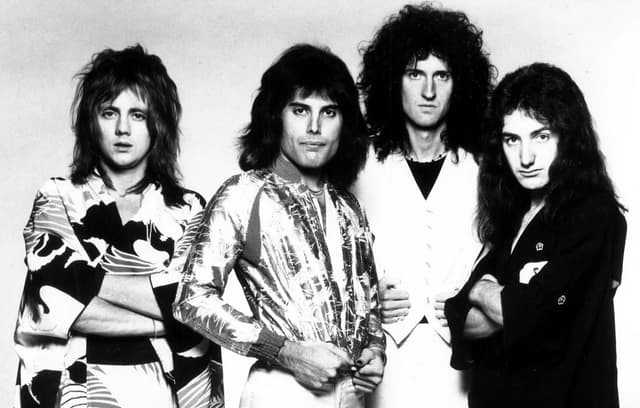
Queen emerged from London's early-70s glam rock scene with a proposition that seemed almost absurd: what if a rock band operated like an opera company, a science lab, and a heavy metal outfit simultaneously? Formed in 1970 when guitarist Brian May and drummer Roger Taylor recruited Freddie Mercury and bassist John Deacon, the quartet possessed a combination of technical ability and theatrical audacity that would reshape what rock music could attempt. Mercury's four-octave range and uncontainable stage presence became the band's signature, but Queen's true innovation was democratic — each member wrote hit singles, contributed distinct musical personalities, and pushed the others toward increasingly outlandish experimentation.
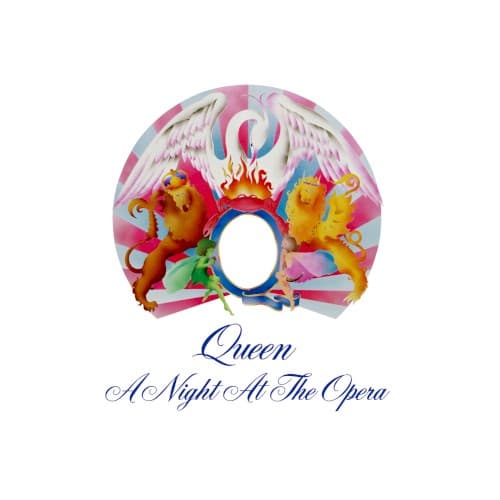
Their breakthrough came not through gradual refinement but through sheer maximalism. Where contemporaries stripped rock down to its essentials, Queen layered operatic vocal harmonies over hard rock riffs, spliced music hall pastiche into prog epics, and treated the recording studio as an instrument itself. By 1975's A Night at the Opera, they had perfected this approach, crafting an album that toggled between intimate balladry and the six-minute genre collision of "Bohemian Rhapsody" — a single that radio programmers initially deemed unplayable and fans turned into a cultural phenomenon.
What separated Queen from theatrical rock predecessors was their refusal to commit to a single identity. They could deliver crushing hard rock on "Stone Cold Crazy," disco-funk on "Another One Bites the Dust," rockabilly revival on "Crazy Little Thing Called Love," and gospel-tinged anthem rock on "Somebody to Love" — often within the same album cycle. This stylistic restlessness confounded critics who preferred their artists ideologically consistent, but it connected with a global audience that recognized ambition and craftsmanship when they heard it. Queen didn't just push boundaries; they treated genre itself as obsolete.
Orchestral Maximalism Meets Hard Rock Precision
Queen's sonic identity rests on a paradox: meticulous construction designed to sound spontaneous and overwhelming. Brian May's homemade Red Special guitar, built with his father from a 19th-century fireplace mantle, produced a tone simultaneously warm and piercing — he layered guitars into orchestral sections, treating rock instrumentation as a string ensemble. May's approach to soloing favored melodic development over flash, constructing phrases that functioned as countermelodies rather than virtuoso displays. His harmonic vocabulary drew from both blues tradition and baroque composition, creating a hybrid language that became instantly recognizable.
Mercury's vocal arrangements transformed the studio into a choir loft. Rather than hiring session singers, Queen recorded hundreds of vocal overdubs, stacking Mercury, May, and Taylor's voices into impossible harmonies that no live ensemble could reproduce. This technique reached its apex on tracks like "Bohemian Rhapsody," where the operatic middle section required weeks of tape bouncing — a pre-digital process that degraded audio quality with each generation but achieved a density of sound that felt genuinely overwhelming. The vocals weren't just accompaniment; they functioned as orchestration, filling the same textural space as horns or strings.
Rhythmically, Queen operated in the tension between Taylor's bombastic drumming and Deacon's economic bass lines. Taylor favored massive tom fills and explosive cymbal crashes that gave even ballads a sense of physical force, while Deacon's bass playing was almost minimalist — locking into grooves with precision that allowed the guitars and vocals to take absurd liberties. When Queen ventured into funk or disco, Deacon's foundation became the anchor, proving that the band's maximalism was built on rigorous structural discipline. Their production philosophy was simple: if a sound was theoretically possible in the studio, it was worth attempting, regardless of whether it could be recreated on stage.
From Glam Eccentrics to Stadium Dominators
Queen's first two albums established their virtuosity but not their identity. 1973's self-titled debut and Queen II showcased prog-metal ambition — multi-part suites, fantasy lyrics, May's guitar orchestrations — but struggled to carve out commercial space in a UK market dominated by glam's visual flair and prog's intellectual credibility. The band occupied an uncomfortable middle ground, too theatrical for hard rock purists and too heavy for art rock audiences. Their breakthrough came through sheer persistence and the realization that their eclecticism was the point, not a liability.
Sheer Heart Attack in 1974 began the commercial ascent. "Killer Queen" demonstrated that Mercury's music hall influences and May's guitar sophistication could coexist in a three-minute pop single. But A Night at the Opera in 1975 was the transformation moment — a album that cost more to produce than any rock record to that point and centered on a single that defied every radio convention. "Bohemian Rhapsody" became an unlikely number-one hit in the UK, its success driven by a groundbreaking promotional video and the sheer novelty of hearing opera, hard rock, and balladry collide within one track. The album's depth beyond the single — the folk-rock of "'39," the metallic thrust of "Death on Two Legs," the delicate "Love of My Life" — proved Queen could sustain ambition across an entire LP.
The late 70s saw Queen dominate stadiums worldwide. News of the World (1977) delivered the back-to-back anthems "We Will Rock You" and "We Are the Champions," tracks specifically designed for mass participation that became sports venue staples. Jazz (1978) pushed further into stylistic experimentation, while The Game (1980) embraced synthesizers and yielded their first US number-one single with the Deacon-penned "Another One Bites the Dust" — a funk-rock hybrid that crossed over to R&B radio. Critics often dismissed this period as commercial pandering, missing that Queen had always been populists who happened to possess conservatory-level technical skills.
The 80s brought both triumph and creative drift. Their 1981 compilation Greatest Hits became one of the best-selling albums in UK history, but studio albums grew increasingly uneven. Hot Space (1982) leaned into disco and funk, alienating rock fans without fully convincing dance audiences. The Works (1984) rebounded with "Radio Ga Ga" and the synth-driven "I Want to Break Free," but the band's imperial phase had clearly passed. What hadn't diminished was their live power — the 1985 Live Aid performance, a 20-minute set that many consider the greatest live rock performance ever captured on film, reminded the world that Queen's core strength was turning massive venues into shared communal experiences.
Mercury's 1991 death from AIDS-related illness ended Queen as a creative unit, though May and Taylor have continued the brand with various vocalists. The band's late-career resurgence came not through new material but through cultural rediscovery — Wayne's World's use of "Bohemian Rhapsody" in 1992 introduced Queen to a new generation, and the 2018 Bohemian Rhapsody biopic, despite historical liberties, sparked another wave of commercial success. Their catalog has never stopped selling, each generation finding different entry points into a discography that refuses easy categorization.
How Four Perfectionists Made Ambition Unfashionable — Then Timeless
Queen's influence operates on two distinct levels: the technical and the theatrical. Brian May's approach to guitar layering became a template for rock orchestration, demonstrating that density and clarity weren't mutually exclusive. Countless guitarists have attempted to replicate his harmonic stacking, but few achieve the same balance of power and nuance — May understood that arrangements need breathing room even when they contain dozens of tracks. His signature tone, combining treble bite with warm midrange, showed that homemade equipment could compete with any corporate-designed instrument.
Mercury's vocal approach and stage persona broke open possibilities for rock frontmen. His combination of operatic technique, rock aggression, and unashamed flamboyance challenged the genre's masculine conventions without making gender presentation the explicit focus. He simply performed as if grandeur and vulnerability were equally valid expressions of strength. Later artists from Muse to Panic! at the Disco to My Chemical Romance inherited Queen's belief that rock could be emotionally excessive and sonically maximalist without sacrificing credibility. The permission to be theatrical, to combine high and low culture without irony, traces directly to Mercury's refusal to choose between art and entertainment.
Culturally, Queen succeeded in making arena rock genuinely participatory. "We Will Rock You" and "We Are the Champions" function as call-and-response anthems that turn audiences into performers — a deliberate compositional strategy that anticipated how stadium rock would evolve into shared ritual. The band understood that size didn't have to mean distance; their largest shows felt intimate because Mercury conducted crowds like a maestro. This understanding of mass psychology influenced everyone from U2's arena spectacles to contemporary festival headliners who design moments for collective singing.
The critical reassessment of Queen, from 70s critical skepticism to current reverence, reflects broader shifts in how rock evaluates ambition. Punk's year-zero ideology dismissed Queen as pompous dinosaurs, and that judgment stuck for decades. But as rock's cultural dominance faded and the genre became historical rather than contemporary, Queen's craftsmanship and genre fluidity looked increasingly visionary. They never apologized for wanting to fill stadiums or for spending months on vocal overdubs. They believed rock could be both intellectual and populist, and their catalog proves the point on nearly every track.