
The Perfectionist Vision Behind Rock's Most Polished Debut
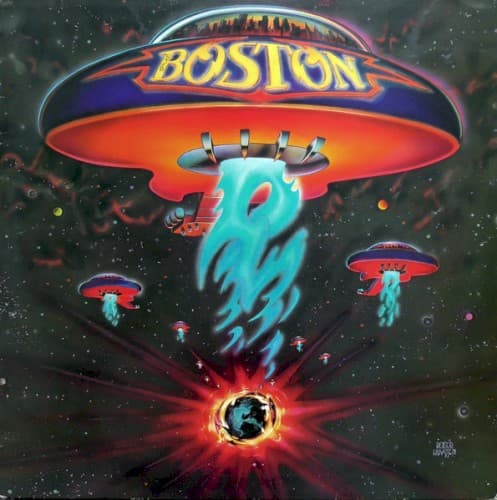
Boston emerged in 1976 not from club stages or label development programs but from a basement studio in Watertown, Massachusetts, where MIT-trained engineer Tom Scholz spent years crafting a sound so immaculate it redefined what rock records could achieve sonically. Their self-titled debut arrived fully formed, bypassing the typical developmental arc most bands required, because Scholz had essentially invented both the group and its revolutionary guitar tone in isolation before assembling musicians to execute his vision. The album's combination of technical precision and emotional accessibility—epitomized by "More Than a Feeling"—sold seventeen million copies and established a template that arena rock would follow for the next decade.
What made Boston unusual wasn't just their commercial success but the degree to which one person's obsessive studio methodology shaped every element of their identity. Scholz's layered guitar harmonies, achieved through custom-built effects units and endless overdubbing, created a wall of sound that felt simultaneously massive and crystalline. Singer Brad Delp provided the soaring vocals that humanized Scholz's technical perfectionism, delivering melodies with a warmth that prevented the production from feeling sterile. The tension between Scholz's control and the demands of a music industry expecting regular output would define Boston's entire career, resulting in just six studio albums across nearly five decades but maintaining a level of craft that made each release an event rather than product.
Layered Harmonies and the Science of Arena-Ready Guitar Tone
The Boston sound rests on Scholz's engineering innovations, particularly his approach to guitar layering that treated rock instruments like an orchestra. Rather than capturing live band energy, Scholz constructed songs in his home studio by recording multiple guitar parts—rhythm, lead, and harmonic layers—that interlocked with mathematical precision. His self-designed Rockman amplifier and signal processors allowed him to achieve consistent tone across dozens of tracks, building guitar parts that sounded like a single massive instrument rather than separate performances. This approach created the signature Boston shimmer: guitars that chimed and roared simultaneously, occupying sonic space usually reserved for synthesizers while maintaining rock authenticity.
Delp's vocal approach complemented this production philosophy through multi-tracked harmonies that mirrored the guitar layering. His clean, powerful delivery avoided the blues-based grit dominating hard rock vocals, instead drawing from pop sensibilities that made complex arrangements feel accessible. The rhythm section—bassist Fran Sheehan and drummer Sib Hashian on early records—provided the foundation, though Scholz often re-recorded parts to achieve his exacting standards. Songs structured around dramatic dynamics, moving from quiet verses to explosive choruses, showcased the production's range and gave radio programmers clear emotional arcs.
The progressive rock influence surfaces not in extended instrumental passages but in compositional complexity disguised as radio-friendly hooks. Songs like "Foreplay/Long Time" demonstrated Scholz's ability to incorporate classical music structures and technically demanding passages while maintaining commercial appeal. His arrangements favored clean separation between instruments, each element occupying its own frequency range in a mix that anticipated the clarity digital recording would later provide. This meticulous frequency management made Boston records sound 'bigger' than contemporaries without increased volume, a trick that became essential to AOR production standards.
From Basement Innovation to Industry Frustration Across Five Decades
Tom Scholz began recording Boston material in 1973 while working as a senior product designer at Polaroid, using a twelve-track recorder in his basement and funding the project himself. After rejection from multiple labels, Epic Records executive Charles McKenzie signed Boston in 1975, though Scholz had already completed most of what would become their debut album. When Boston was released in August 1976, it defied typical new artist trajectories by immediately climbing charts on the strength of "More Than a Feeling," a song that encapsulated both the era's guitar hero worship and a new standard for studio craftsmanship. The album stayed on the Billboard 200 for over two years, eventually becoming one of the best-selling debut albums in history and establishing expectations Scholz would struggle to meet on the industry's timeline.
The gap between Boston (1976) and Don't Look Back (1978) revealed the central conflict of the band's existence. Epic demanded a quick follow-up while Scholz insisted on replicating his painstaking process, resulting in an album that sold well but felt rushed by his standards. Legal battles with the label consumed the next years as Scholz fought for creative control, delaying Third Stage until 1986. That eight-year wait tested fan patience, but the album's success—particularly the number-one single "Amanda"—proved Scholz's methodology could still connect commercially. The delay also demonstrated his willingness to sacrifice career momentum for artistic control, a stance nearly unheard of in an industry built on regular product cycles.
Brad Delp's departure and return, alongside rotating lineups, illustrated how Scholz's vision superseded traditional band dynamics. While Delp remained the voice most associated with Boston, Scholz's studio dominance meant Boston functioned more as a brand for his production approach than a collaborative unit. Walk On (1994) and Corporate America (2002) arrived to diminishing commercial returns as rock radio formats shifted away from the arena rock template Boston had helped establish. Delp's death in 2007 marked an emotional endpoint for many fans, though Scholz continued with Life, Love & Hope (2013), using vocalists who could approximate Delp's style.
The extended gaps between albums became Boston's defining characteristic beyond their sound. Where most acts released albums every 18-24 months, Scholz operated on his own schedule, spending years perfecting material in his home studio before considering it releasable. This approach preserved quality standards but cost the band cultural relevance as newer acts with less meticulous approaches dominated album cycles. Scholz's lawsuits against media outlets and former bandmates over various disputes reinforced his reputation as uncompromising, someone who valued his specific vision above industry conventions or public relations. His 2006-2007 lawsuit against former Boston members and naming rights battles revealed how seriously he guarded the brand he'd created in that Watertown basement.
The Blueprint for Corporate Rock and the Cost of Perfectionism
Boston's influence operates on two levels: the sonic template they provided for arena rock production and the cautionary tale about artistic control versus commercial sustainability. Their debut album's production values became the standard aspiring rock acts chased throughout the late seventies and eighties. The layered guitar harmonies, pristine mix, and radio-ready song structures informed countless AOR acts, from Journey to Foreigner, who recognized that Scholz had cracked the code for making hard rock that sounded enormous on both arena PA systems and AM radio. The Rockman amplifier Scholz marketed commercially democratized his guitar tone, allowing bedroom players to approximate the Boston sound and inadvertently shaping the character of countless demo tapes and indie records throughout the eighties.
Yet Boston also represents the limits of the auteur approach in rock. While Scholz achieved unparalleled sonic consistency, his insistence on total control resulted in a catalog of just six albums across nearly five decades—a remarkably thin output for a band of their stature. This scarcity preserved quality but ceded cultural conversation to more prolific acts. The contrast between Boston's approach and contemporaries like Bruce Springsteen or Led Zeppelin, who balanced artistic ambition with regular output, raises questions about whether Scholz's perfectionism served the music or became its own obstacle. His legal battles and conflicts with former members reinforced perceptions of rock artistry as necessarily contentious, feeding narratives about difficult genius that dominated eighties and nineties music coverage.
The debut album's enduring presence in classic rock radio rotation ensures Boston remains culturally visible even as their limited catalog prevents deeper critical reevaluation. Songs like "More Than a Feeling" and "Peace of Mind" function as classic rock shorthand, instantly recognizable but rarely discussed with the depth afforded to more critically favored peers. Boston exists in a peculiar space—massively successful commercially, foundational to a entire subgenre's sound, yet somewhat dismissed by critics who associate their polished production with the 'corporate rock' epithet. Their story ultimately illustrates how a singular vision can achieve both unprecedented craft and commercial success while struggling to sustain momentum across changing musical landscapes.