Style & Context
Influences
Film noir, science fiction cinema, Andy Warhol's Factory aesthetics
Location
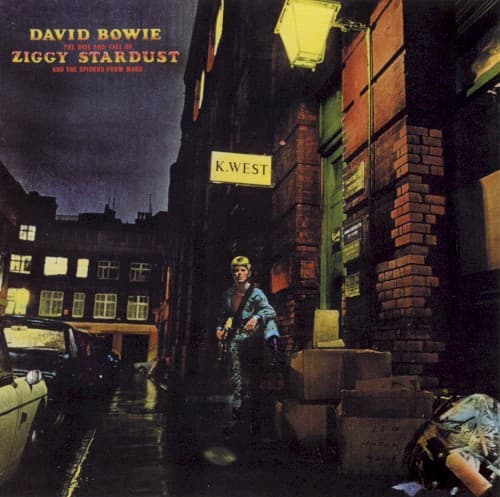
Heddon Street in London's West End became a pilgrimage site for fans seeking Ziggy's landing spot.
Visual Language
The lighting transforms a London back street into an alien landscape through precise color temperature control.
Symbols
K WEST street sign
The sign points toward a fictional geography where Bowie's alien persona can exist outside normal reality.
Rain-soaked street
The wet pavement reflects light and identity, suggesting that Ziggy exists only in distorted reflections.
Cardboard boxes and rubble
Urban debris marks the collision point between rock stardom's glitter and London's gritty working-class reality.
Where Sound Meets Image
The desolate street matches the album's narrative of an alien rock messiah arriving to save Earth through music during its final five years. Bowie's isolated figure mirrors songs like 'Five Years' and 'Rock 'n' Roll Suicide' that explore cosmic loneliness. The theatrical lighting and posed stance reflect the album's concept that identity is performance, while the gritty location grounds the space-age story in recognizable urban desperation.
The cover established the template for rock photography that treats urban spaces as stage sets and musicians as characters rather than performers. Its influence appears in countless album covers that position artists as aliens in ordinary settings, from Suede to Arctic Monkeys. The specific Heddon Street location became so famous that a plaque now marks the spot where photographer Brian Ward captured Bowie during a rainy night shoot.