The scorecard
9.0/10 · Essential
- Songwriting25%
- 9.5
- Production25%
- 9.0
- Performance15%
- 9.0
- Cohesion15%
- 8.5
- Originality10%
- 8.0
- Replay value10%
- 9.5
'Wild Horses' and 'Moonlight Mile' write melancholy without cliché, 'Brown Sugar' turns three chords into a riff no other band could claim, and even the blues cover 'You Gotta Move' sounds inevitable in the sequence.
Jimmy Miller captures the band loose and live in their own mobile studio at Stargroves, with Bobby Keys' sax and Billy Preston's organ placed exactly where the songs need them, though 'Sister Morphine' sounds thinner than the rest.
Jagger sings 'I Got the Blues' and 'Moonlight Mile' like he means the exhaustion, Mick Taylor's solo on 'Can't You Hear Me Knocking' moves from rock to jazz without a seam, and Charlie Watts never rushes.
Ten tracks, no filler, and the shift from the opening stomp to the closing string-laden drift works, though 'Bitch' and 'I Got the Blues' in the middle stretch test the momentum slightly.
The Stones sound more like themselves here than on the psychedelic detours of the late sixties, but they are synthesizing their own past—Delta blues, country, soul—not inventing it.
Five decades later the album still feels necessary front to back, with individual tracks that define what the band became and deep cuts that reward the hundredth listen as much as the first.
The Rolling Stones Sticky Fingers — The Album That Proved Decadence Could Be Discipline
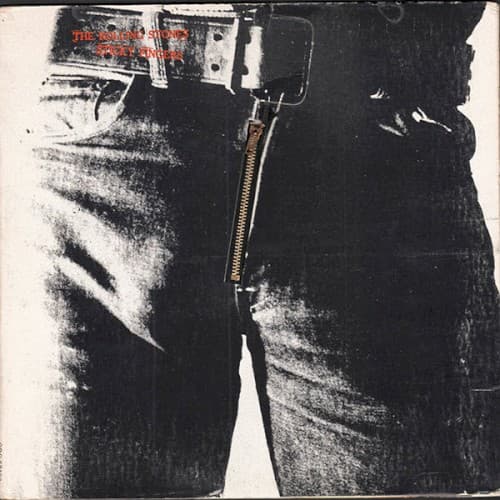
Sticky Fingers is the sound of the Rolling Stones deciding what they were going to be for the next two decades and then executing it without apology. Released in April 1971 on their own label after escaping Decca, it is the first album where the band—Mick Jagger, Keith Richards, Mick Taylor, Bill Wyman, Charlie Watts—had full control, and they used that freedom not to experiment but to synthesize. The ten tracks here draw from Delta blues, Bakersfield country, Memphis soul and Chicago rock, but the album does not sound like a survey. It sounds like a band that learned from all of those sources and then became the thing people would copy.
The thesis: Sticky Fingers is the Rolling Stones' most complete studio album because it balances the extremes they had been chasing since 1968—the brutality of 'Jumpin' Jack Flash' and the orchestral sprawl of 'You Can't Always Get What You Want'—and makes them work as a sequence. The first side opens with 'Brown Sugar', a riff so blunt it could have been a blues turnaround in 1949, and closes with 'You Gotta Move', a Mississippi Fred McDowell cover that sounds like the band recorded it in a shack. The second side opens with 'Bitch', all horns and sneer, and closes with 'Moonlight Mile', a string-laden comedown that could score the end of a long night or a short life. The album moves between those poles without a wasted track, and the production—handled by Jimmy Miller using the band's mobile studio at Stargroves—captures the performances live and loose, with just enough room around the instruments to let the groove breathe. Sticky Fingers does not try to be an event. It just is one.
The Sound of the Band Becoming the Standard
The songwriting here is deceptive. 'Brown Sugar' and 'Bitch' sound simple—verse, chorus, riff, repeat—but the riffs are so specific that no other band could claim them, and the vocal melodies, especially on 'Wild Horses' and 'Moonlight Mile', write melancholy without tipping into sentiment. Jagger sings 'Wild Horses' like he is too tired to lie, and the song earns its five minutes by withholding the release until the final chorus.
'Sway' is the album's most underrated moment: a mid-tempo churn with a Richards riff that spirals downward and a Jagger lyric about power and paranoia that could be about the music industry or just about being in a room with someone you do not trust. The song builds to a Taylor solo that moves through three moods in two minutes, and then it is over. No reprise, no fade. The band knows when to stop.
Mick Taylor, in his first full studio album with the group, plays with more restraint than Brian Jones ever did, but his solos—especially the seven-minute 'Can't You Hear Me Knocking', where he shifts from rock to Latin-inflected jazz in the second half—give the album a range it would not have had with just Richards. The solo was influenced by Santana's Abraxas, released the previous year, but Taylor makes it sound inevitable, and Bobby Keys' saxophone in the same track answers the guitar without crowding it. The rhythm section, Wyman and Watts, locks in and stays out of the way, and that is the highest compliment. On 'You Gotta Move', Watts plays so far behind the beat that the song almost stops, and it works because the band trusts him.
Jimmy Miller, who produced the band's albums from 1968 through 1972, records them in their own mobile unit, and the result is a record that sounds like a band playing in a room, not a band playing for a microphone. Billy Preston's organ on 'I Got the Blues' and Jack Nitzsche's strings on 'Moonlight Mile' are the only moments where the production reaches outside the core five-piece, and both additions feel necessary rather than decorative. Nicky Hopkins' piano appears on several tracks, but it is mixed low enough that it supports rather than leads.
The album's weakness is consistency of tone. 'Sister Morphine', held over from the Let It Bleed sessions and recorded earlier in March 1969, sounds thinner than the rest of the record, and its placement between 'I Got the Blues' and 'Dead Flowers' disrupts the second side's momentum. The song works as a composition—Marianne Faithfull's contribution to the lyric gives it a specificity about addiction that Jagger alone might not have reached—but the production does not match the Stargroves recordings, and the contrast is audible. 'I Got the Blues' itself, while well-performed, meanders for nearly four minutes without developing its central idea, and the album would have been tighter if the song had been half its length.
How the Album Moves From Stomp to Drift Without Breaking
The sequencing is the reason Sticky Fingers works as an album rather than a collection of singles. The first side opens with three of the band's most durable songs and then extends into the longest track at over seven minutes, the album's centerpiece. It starts as a hard rock riff, transitions into a jam where Taylor and Keys trade solos, and then ends without a proper conclusion, as if the band just stopped recording. The effect is that the listener is dropped into a two-and-a-half-minute blues cover that works as a palate cleanser and an exhale. The side ends quietly, which sets up the second side's opening jolt: the album's loudest and most aggressive track, built on a Richards riff and a Keys horn line that could have been lifted from a Stax record.
From there the album shifts downward. The middle stretch slows the tempo, and the country song with a lyric about heroin and a melody that Gram Parsons could have written keeps the energy low. The closer features strings, slide guitar, and Jagger singing about being exhausted, and the song works because it sounds like the end of something. The album does not overstay. Ten tracks, forty-six minutes, and the pacing is deliberate enough that even the weaker moments do not derail the whole. The length is earned because the band knows when to stop.
Where It Ranks and Why It Still Defines the Band
Sticky Fingers is the best starting point for listeners who want to understand what the Rolling Stones became after the sixties. It does not have the raw energy of their early singles or the sprawling ambition of Let It Bleed, but it is the most consistent album they made, and the one where the band sounds most like themselves. The record sits at the top of their catalog for songcraft, sequencing, and performance, and only Exile on Main St., released the following year, rivals it for depth. Exile is messier and longer, and some listeners prefer that. Sticky Fingers is tighter and more deliberate, and it has aged better because there is no fat to cut.
The album is for listeners who want rock played by musicians who understand blues and country, and who value groove over flash. It is not for listeners who want the Stones as a singles band—'Brown Sugar' is the only track here that fits that description—or who expect innovation. The band is refining, not inventing.
Start with 'Brown Sugar', 'Wild Horses', and 'Can't You Hear Me Knocking', which are the three tracks that define the album's range. If those work, play the whole thing front to back, because the sequencing is half the point. From there, the logical next step is Exile on Main St., which doubles down on the blues and country influences, or Let It Bleed, which is looser and more varied but less cohesive. Sticky Fingers remains the one album where the Rolling Stones sound like they know exactly what they are doing and exactly how to do it, and fifty years later no one has improved on the blueprint.
Track by track
Track Listing
Brown Sugar
StandoutThe opening riff is three chords and a rhythmic pocket so specific that it became the template for every Stones imitator who followed. Jagger sings about slavery and sex with a sneer that lands somewhere between provocation and obliviousness, and the band plays it as a stomp rather than a meditation. Bobby Keys' saxophone in the verses adds a Memphis soul undercurrent, and the whole track is over in under four minutes, which is exactly how long it needs to be. The song topped the Billboard Hot 100 in 1971 and remains the most recognizable moment on the album. It sets the tone: the Stones are not apologizing for anything.
Sway
StandoutA mid-tempo churn built on a Richards riff that descends in half-steps and a Jagger lyric about power and paranoia. Mick Taylor's solo in the back half spirals through three distinct moods—Blues, rock, and something close to flamenco—and the band never rushes. The vocal melody in the verses is deceptively strong, and the song builds tension without a big release, which makes it feel unresolved in the best way. One of the album's most underrated moments.
Wild Horses
StandoutThe band's most durable ballad, written by Jagger and Richards and stripped down to acoustic guitar, piano, and slide. Jagger sings the lyric about regret and distance like he is too tired to perform, and the restraint makes the emotion land harder. The song withholds the full arrangement until the final chorus, and the payoff is earned. Jim Dickinson's honky-tonk piano, mentioned in retrospective analyses, supports the melody without announcing itself. The track runs over five and a half minutes and never drags.
Can’t You Hear Me Knocking
StandoutThe album's centerpiece and its longest track, starting as a hard rock riff and then, around the four-minute mark, shifting into a Latin-inflected jam where Taylor and Bobby Keys trade solos. The transition is seamless, and the second half sounds like the band discovered it while recording and decided to keep going. Taylor's solo, influenced by Santana's Abraxas, moves from rock to jazz without a seam, and Keys' saxophone answers every phrase. The song ends abruptly, as if the band just stopped playing, and the effect is that the listener is dropped into the next track. A peak.
You Gotta Move
StandoutA Mississippi Fred McDowell cover recorded at Muscle Shoals in December 1969, and the only track on the album the band did not write. Charlie Watts plays so far behind the beat that the song almost stops, and the restraint makes it sound heavier than it is. Slide guitar and Jagger's vocal carry the track, and the performance is reverent without being precious. At two and a half minutes it works as a palate cleanser after the sprawl of 'Can't You Hear Me Knocking'.
Bitch
StandoutThe second side's opening jolt, built on a Richards riff and a Bobby Keys horn line that could have been lifted from a Stax record. Jagger sings the lyric with enough sneer to make it clear he is enjoying himself, and the band plays it as a stomp. The track is the album's loudest and most aggressive moment, and it works because the first side ended quietly. No subtlety, no apologies, just a three-and-a-half-minute blast that sets up the slower material to follow.
I Got the Blues
SolidA slow blues with Billy Preston's churchy organ solo in the middle, and the album's first real sag. Jagger sings about exhaustion and loss, and the performance is committed, but the song meanders for nearly four minutes without developing its central idea. The groove is solid, and Preston's solo is the high point, but the track would have been stronger at half the length. A rare moment where the Stones sound like they are filling time.
Sister Morphine
SolidHeld over from the Let It Bleed sessions in March 1969, and it shows. The production is thinner than the rest of the album, and the track sits awkwardly between 'I Got the Blues' and 'Dead Flowers', disrupting the second side's momentum. The lyric, co-written with Marianne Faithfull, is specific about addiction and despair, and Jagger's vocal sells it, but the recording does not match the Stargroves material. A strong composition that does not fit the sequence.
Dead Flowers
StandoutA country song with a lyric about heroin and a melody that Gram Parsons could have written. The vocal is dry and plainspoken, and the band plays it as a honky-tonk shuffle with just enough grit to remind you it is still the Stones. The track keeps the energy low after 'Sister Morphine', and it works as a bridge to the closing song. Not a peak, but a solid album track that fits the album's country-blues thread.
Moonlight Mile
StandoutThe album's longest emotional arc, closing with strings arranged by Jack Nitzsche, slide guitar, and Jagger singing about exhaustion and distance. The song builds slowly, and the string arrangement in the final section gives the track a cinematic weight without overwhelming the band. The lyric about being on the road and wanting to go home lands because Jagger sings it straight, and the track works as the end of something. The album's most deliberate closer, and one of the band's best album-ending moments.