From Chess Records Disciples to Rock's Most Enduring Institution
The Rolling Stones emerged from London's blues scene in 1962 as purists obsessed with American rhythm and blues, gradually transforming into rock's most commercially successful and creatively restless touring machine. Where their contemporaries softened or disbanded, Mick Jagger and Keith Richards have maintained a creative partnership spanning six decades, outlasting personnel changes, substance crises, and shifting musical trends through sheer stubborn persistence and an unmatched ability to absorb contemporary sounds without sacrificing their core identity. They didn't invent rock and roll, but they refined its outlaw mythology and proved its commercial viability as a lifelong endeavor.
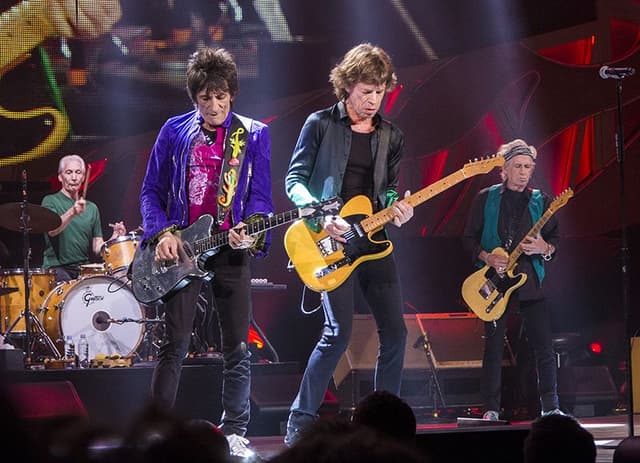
What separates the Stones from their 1960s peers isn't technical virtuosity but rhythmic instinct—the way Charlie Watts' jazz-inflected drumming and Bill Wyman's melodic basslines created space for Richards' open-tuned riffs to breathe. Their sound has always been deceptively simple, built on two or three chords but animated by swagger, tension, and the push-pull dynamic between Jagger's showmanship and Richards' workmanlike devotion to the groove. This fundamental chemistry allowed them to move from Chicago blues covers to psychedelic experimentation to country-rock hybrids without ever sounding like tourists.
Their cultural positioning as the dangerous alternative to the Beatles established a template for rock marketing that persists today. The Stones weren't just a band but a brand—the sneer, the androgyny, the barely controlled chaos. Yet beneath the mythology lies a pragmatic outfit that has always understood the business of longevity, balancing artistic ambition with commercial calculation in ways that frustrated critics but sustained a career long past its supposed expiration date.
The Weave: Open Tunings, Rhythmic Interplay, and the Power of Musical Restraint
The Rolling Stones' sonic signature rests on Keith Richards' guitar approach—particularly his use of five-string open G tuning, which removes the low E string and creates a ringing, harmonically rich foundation that defines their most iconic riffs. "Start Me Up," "Brown Sugar," and "Jumpin' Jack Flash" all exploit this tuning's natural resonance, allowing Richards to play complex-sounding parts with minimal finger movement while maintaining rhythmic drive. This technique, refined throughout the 1970s, gives Stones records their characteristic chime and chug, a sound that's simultaneously raw and precise.
Charlie Watts' drumming provides the crucial counterbalance—never flashy, always swinging, with a jazz musician's sense of dynamics and space. Watts played behind the beat rather than on top of it, creating a laid-back pocket that prevented even their hardest rockers from feeling rushed or aggressive. His partnership with Bill Wyman (and later Darryl Jones) established a rhythm section that prioritized groove over power, allowing the guitars and Jagger's vocals to float on top rather than fight for sonic dominance. This rhythmic sophistication distinguishes Stones productions from the heavier, more compressed sound of their hard rock contemporaries.
Jagger's voice evolved from early blues shouting to a more theatrical, almost conversational delivery by the late 1960s. He learned to use his voice as a rhythmic instrument, accenting beats and playing against the groove rather than simply riding it. His phrasing on "Gimme Shelter" or "Sympathy for the Devil" demonstrates this approach—words become percussive elements, and melodic lines weave through the arrangement rather than dominating it. This vocal restraint, combined with the band's aversion to over-production, created records that sound lived-in rather than polished, a quality that has aged remarkably well compared to the more dated production techniques of many 1970s rock albums.
Six Decades of Evolution: From R&B Covers to Stadium Rock Architects
The band's first phase, from 1962 to 1967, saw them move from Crawdaddy Club residencies playing Muddy Waters and Chuck Berry covers to chart-topping success with increasingly original material. Early albums like "The Rolling Stones" and "12 X 5" showcased their blues devotion, but the Jagger-Richards songwriting partnership quickly matured, producing "(I Can't Get No) Satisfaction" in 1965—a riff-driven prototype that established their commercial formula. Their attempt at psychedelia, "Their Satanic Majesties Request" (1967), remains their most divisive record, a self-conscious response to Sgt. Pepper that lacked the conviction of their blues-based work.
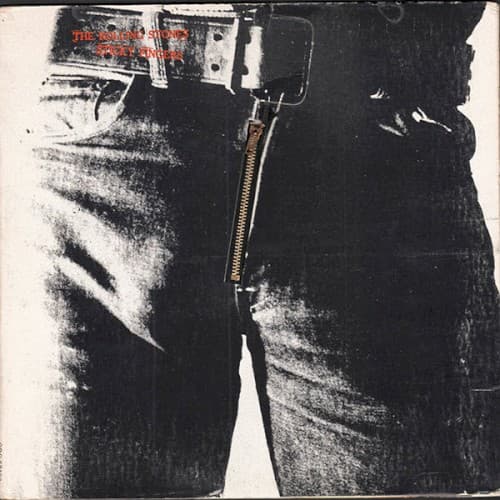
The period from 1968 to 1972 represents their creative peak, beginning with "Beggars Banquet" and its return to roots music filtered through a darker, more mature lens. "Sympathy for the Devil" introduced Afro-Cuban percussion and literary ambition, while "Street Fighting Man" captured late-1960s political turbulence through distorted acoustic guitars recorded on a cassette player. "Let It Bleed" (1969) and "Sticky Fingers" (1971) deepened this approach—the latter featuring their tightest performances, from the sleazy groove of "Brown Sugar" to the wounded balladry of "Wild Horses." Sticky Fingers, rated 9/10, showcases the band at their most focused, with Jimmy Miller's production capturing both intimacy and power. "Exile on Main St." (1972) pushed further into sprawling, loose arrangements that divided critics but has grown in stature as perhaps their most influential work, particularly on alternative and indie rock bands drawn to its ramshackle aesthetic.
The mid-1970s brought declining returns—"It's Only Rock 'n Roll" (1974) and "Black and Blue" (1976) contained strong individual tracks but felt transitional, with Mick Taylor's departure and Ronnie Wood's arrival shifting the band's chemistry. "Some Girls" (1978) delivered an unexpected commercial and artistic revival, incorporating disco and punk influences without pandering, producing hits like "Miss You" and "Beast of Burden." The 1980s saw increasing tension between Jagger's pop ambitions and Richards' traditionalism, resulting in competent but uninspired albums like "Undercover" (1983) and "Dirty Work" (1986). Solo albums from both principals nearly ended the partnership, but "Steel Wheels" (1989) marked their transformation into a heritage touring act that happened to release occasional new albums.
From 1990 onward, the Stones have operated as rock's most successful live enterprise while maintaining sporadic recording output. "Voodoo Lounge" (1994) and "A Bigger Bang" (2005) demonstrated that they could still craft solid rock records, even if they no longer shaped musical conversation. "Blue & Lonesome" (2016), a covers album of Chicago blues, returned to their origins with unexpected vitality, proving that their interpretive skills remained sharp even as original songwriting became increasingly difficult. Their touring production has grown into elaborate stadium spectacles that generate hundreds of millions in revenue, establishing a business model that influenced everyone from U2 to Metallica—the album as loss leader, the tour as primary product.
The Endurance Itself Became the Statement: Redefining Rock Longevity
The Rolling Stones' most significant cultural contribution may be their redefinition of what a rock band's lifespan could be. They proved that rock and roll, initially conceived as youth music with a built-in obsolescence, could sustain careers into old age without requiring reinvention or genre-hopping. Their willingness to continue performing the same catalog for decades influenced how audiences and artists alike view classic rock—not as a relic but as a living tradition. Every heritage act from Fleetwood Mac to Pearl Jam operates within a touring economy the Stones helped create.
Musically, their influence appears most strongly in bands that prioritize groove and restraint over technical display. The interplay between rhythm section and riff-based guitars became the template for everyone from Aerosmith to The Black Keys, while their ability to incorporate country, reggae, and disco without losing identity demonstrated that rock could be expansive without becoming prog. The alt-country and Americana movements of the 1990s drew heavily from the Stones' late-1960s and early-1970s experiments with roots music, while garage rock revivalists like The Strokes absorbed their minimalist approach to arrangement.
Their commercial acumen and branding expertise set standards for rock merchandising and tour production that persist today. The tongue-and-lips logo, designed by John Pasche in 1970, remains one of music's most recognizable symbols, licensing itself across contexts from high fashion to mass-market retail. They pioneered the corporate sponsorship model that allowed bands to mount ever-larger tours, for better and worse normalizing the relationship between rock music and big business. Critics have long debated whether their later-career pragmatism undermines their earlier rebellious image, but the Stones themselves have never pretended otherwise—they were always in it for the long haul, and they structured their career accordingly. What began as blues devotion evolved into rock's most successful ongoing concern, proving that survival itself could be a form of artistic statement.