
The Voice That Rewrote Rock's Language
Bob Dylan didn't just write songs. He recalibrated what rock music could say, how it could sound, and who could make it. Emerging from the Greenwich Village folk scene in the early 1960s, Dylan arrived as a protest singer in the Woody Guthrie tradition, but quickly outgrew every label anyone tried to pin on him. By 1965, he'd plugged in an electric guitar at the Newport Folk Festival and triggered a schism in American music that still echoes. His decision to marry folk's lyrical depth with rock's visceral power created a blueprint that countless artists would follow, from Bruce Springsteen to Radiohead.
Born Robert Zimmerman in Duluth, Minnesota, Dylan constructed his mythology as deliberately as his melodies. His early albums positioned him as the conscience of a generation, but he refused to stay there. Instead, he pursued a restless creative vision that led him through country, gospel, blues, and back to stripped-down folk across six decades. What remained constant was his refusal to repeat himself and his commitment to language as rock's primary instrument. The Nobel Prize in Literature he received in 2016 simply confirmed what musicians had known for half a century: Dylan fundamentally changed the relationship between words and music in popular culture.
Lyrical Density Meets American Vernacular
Dylan's sonic identity evolved drastically across eras, but certain elements persisted. His voice—nasal, conversational, deliberately imperfect—became one of rock's most divisive and influential instruments. He sang like someone telling you a story at a bar, not performing for an audience. That intimacy, combined with lyrics that read like modernist poetry, created a tension that defined his work. Early acoustic recordings leaned on sparse folk arrangements, harmonica flourishes, and direct melodic lines that showcased the words. Once he embraced electric instrumentation, Dylan surrounded himself with musicians who understood how to balance support with intensity.
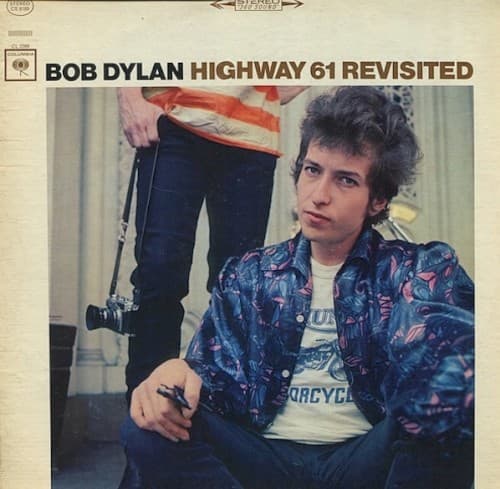
Production choices varied wildly depending on the era and collaborator. Tom Wilson's work on Highway 61 Revisited captured Dylan at his most surreal and electric, with Mike Bloomfield's guitar cutting through layers of organ and driving rhythm section. Later, Bob Johnston's production on Nashville Skyline brought country warmth and clarity. Daniel Lanois gave Oh Mercy a swampy, atmospheric depth in the late 80s. Dylan's approach to recording often favored spontaneity over polish—first takes, live tracking, minimal overdubs. He trusted the moment more than the studio. His harmonica work, often overlooked, functioned as a second voice, punctuating lines and filling spaces with blues-soaked commentary. The roughness was intentional. Dylan weaponized imperfection.
From Folk Messiah to Endless Reinvention
Dylan's arrival in New York in 1961 positioned him as heir to the folk revival, but his ambitions exceeded the movement's boundaries. His self-titled 1962 debut showcased traditional material and originals steeped in folk tradition. The Freewheelin' Bob Dylan (1963) and The Times They Are a-Changin' (1964) established him as the voice of political protest, with songs like "Blowin' in the Wind" becoming anthems for civil rights and anti-war movements. He didn't want the role. By Another Side of Bob Dylan (1964), he was already pulling away from topical songwriting toward more personal, surreal imagery.
The trilogy of Bringing It All Back Home, Highway 61 Revisited, and Blonde on Blonde (1965-1966) represents Dylan's imperial phase—six-string electricity, literary ambition, and rock swagger fused into something unprecedented. Highway 61 Revisited in particular captures Dylan at peak powers: "Like a Rolling Stone" reimagined the possibilities of the pop single, while "Desolation Row" sprawled across eleven minutes of vivid, hallucinatory narrative. These albums didn't just influence rock—they set new standards for what the form could express. The backlash from folk purists only confirmed he was doing something significant. A motorcycle accident in 1966 gave him an excuse to disappear and recalibrate.
He reemerged with John Wesley Harding (1967) and Nashville Skyline (1969), both stripped-down and rooted in country and folk traditions. The 70s brought uneven output—Blood on the Tracks (1975) stands as a harrowing meditation on personal dissolution, while Desire (1976) reconnected with narrative storytelling. His conversion to Christianity yielded Slow Train Coming (1979), polarizing fans but reaffirming his commitment to following his own vision regardless of commercial expectations. The 80s were a creative low point, but Oh Mercy (1989) signaled renewal. His so-called "Never Ending Tour" began in 1988 and continues to this day—Dylan as perpetual road artist, reinterpreting his catalog nightly.
The late-career renaissance started with Time Out of Mind (1997), a haunted, blues-steeped reflection on mortality that won Album of the Year at the Grammys. Love and Theft (2001), Modern Times (2006), and Tempest (2012) continued this trajectory—Dylan as elder bluesman, drawing from American roots music with renewed focus. Rough and Rowdy Ways (2020) arrived during a pandemic, a meditative double album that felt like a transmission from outside time. Throughout it all, Dylan never stopped touring, never stopped writing, never stopped chasing whatever musical idea gripped him at the moment.
The Poet Who Changed Rock's Intellectual Ceiling
Dylan's influence on rock is so comprehensive it's almost invisible. Before him, rock lyrics were largely about teenage romance and dancing. After him, they could encompass philosophy, politics, surrealism, and literary ambition. Every singer-songwriter who followed—from Leonard Cohen to Joni Mitchell to Patti Smith to Springsteen—worked in Dylan's shadow, whether they acknowledged it or not. He proved rock could be art without losing its visceral power. His willingness to abandon past successes and risk failure gave permission to countless artists to prioritize creative growth over commercial safety.
Beyond the music, Dylan shaped rock's relationship to authenticity and persona. He demonstrated that an artist could construct and deconstruct their public image, that mystery had value, that refusing to explain yourself was a valid artistic stance. His contentious interviews, his refusal to be a movement spokesman, his constant reinvention—all became models for how rock artists could maintain autonomy in an industry built on commodification. The Nobel Prize formalized what was already understood: Dylan elevated rock lyrics to the level of literature, proving popular music could carry the same weight as poetry.
His catalog remains a living document that artists continue to reinterpret. Hundreds of covers exist, from The Byrds' jangly "Mr. Tambourine Man" to Jimi Hendrix's scorched "All Along the Watchtower." Dylan's songs function as standards now, part of the shared vocabulary of American music. His impact extends beyond rock into folk, country, and indie traditions. He didn't just influence musicians—he changed what audiences expected from rock, raising the bar for lyrical substance and artistic integrity. In doing so, he ensured rock would never be dismissed as mere entertainment again.