The scorecard
9.3/10 · Essential
- Songwriting25%
- 10.0
- Production25%
- 9.0
- Performance15%
- 9.5
- Cohesion15%
- 8.5
- Originality10%
- 9.5
- Replay value10%
- 9.5
Every verse rewrites the blues cliché into language that feels both ancient and contemporary, from the four-verse demolition of "Like a Rolling Stone" to the eleven-minute scroll of grotesques in "Desolation Row".
Tom Wilson and Bob Johnston captured the reckless energy of the sessions without losing clarity, letting Bloomfield's guitar and Kooper's accidental organ riff cut through the mix on "Like a Rolling Stone" while preserving the intimacy of the acoustic "Desolation Row".
Dylan's snarl on "Ballad of a Thin Man" and his weary resignation on "Just Like Tom Thumb's Blues" prove he had found a voice that could carry contempt and exhaustion in the same breath, with a band locked in tight enough to follow every mood shift.
The sequencing moves from the six-minute opener through progressively darker material to the eleven-minute closer without sagging, though "From a Buick 6" and "Queen Jane Approximately" mark slight dips in intensity between the peaks.
Taking the blues form that had anchored Highway 61 for decades and filling it with biblical rewrites, literary references and Philistine-baiting, Dylan invented a new template that rock music spent the next decade trying to copy.
The album has aged into a period document that still sounds like it is happening now, with performances rough enough to stay urgent and writing dense enough to require multiple listens to parse.
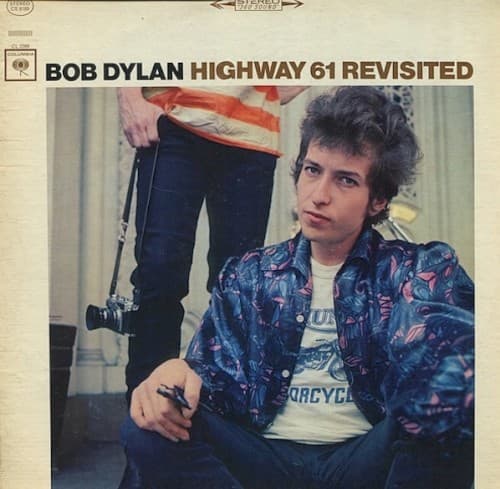
Bob Dylan Highway 61 Revisited — The Blues Learns to Sneer
The argument of Highway 61 Revisited is that the blues could absorb anything: literary references, biblical rewrites, contempt for the educated class, eleven-minute character parades, and a six-minute single that radio stations played anyway because nothing else sounded remotely like it. Dylan had spent the previous album, Bringing It All Back Home, testing the formula with one electric side and one acoustic side. This time he committed fully to rock backing on eight of nine tracks, using the same studio musicians who had captured "Like a Rolling Stone" in June to finish the rest of the album across six days in late July and early August 1965. The result was rock music that demanded to be taken as seriously as literature, performed by a band that played like they might not finish the take.
Dylan named the album after the highway that connected his birthplace in Duluth, Minnesota, to the Delta blues region of Mississippi, passing the homes of Muddy Waters, Son House, Elvis Presley and the spot where Robert Johnson allegedly sold his soul. The title announced a revisit to the form, not a departure from it. What Dylan brought back was the discovery that the blues could carry the weight of contemporary American absurdity without losing the two-chord drive or the narrative frame of the form. Where previous rock albums had used blues as a foundation for love songs and teenage grievances, Highway 61 Revisited used it to sketch a nation coming apart, with characters drawn from the Bible, literature and the nightly news. The stakes were whether rock music could function as social criticism without becoming folk music, and whether Dylan could hold an audience that had booed his electric set at Newport four days before he returned to the studio to finish the album.
Two Chords and a Cast of Thousands
The songwriting works by taking the twelve-bar blues structure and the narrative conventions of folk balladry, then populating them with figures who do not belong in either genre. "Tombstone Blues" parades outlaw Belle Starr, biblical temptress Delilah, Jack the Ripper as a successful businessman, and blues singer Ma Rainey sharing a sleeping bag with Beethoven, all in service of a two-chord blues driven by Michael Bloomfield's lead guitar. "Highway 61 Revisited" opens with God telling Abraham to kill his son, has Abraham responding like a hipster who thinks he is being put on, and ends with a promoter staging World War III on the highway. The verses develop through accumulation rather than resolution, each one adding another character or scene without building toward a climax, which gives the songs the structure of a list or a scroll rather than a story with a payoff.
The production captures the sound of a band playing fast and loose, with rough edges left in because they serve the mood. Tom Wilson produced the June sessions that yielded "Like a Rolling Stone", and Bob Johnston took over for the late July and early August sessions that completed the album. Both producers favored live takes with minimal overdubs, letting the musicians work through fifteen takes of "Like a Rolling Stone" and sixteen takes each of "Tombstone Blues" and "Just Like Tom Thumb's Blues" to find the version that clicked. Al Kooper, who had never played electric organ before the "Like a Rolling Stone" session, improvised the riff that drives the song, and the take they kept was the fourth attempt. The organ sound is thin and slightly out of tune, which makes it cut through the mix rather than blending in. Bloomfield's guitar on "Tombstone Blues" and "From a Buick 6" borrows riffs from Robert Johnson and Charlie Patton, played with enough distortion and volume to sound like a different instrument.
Dylan's vocal performance shifts from the snarl of "Like a Rolling Stone" and "Ballad of a Thin Man" to the weary resignation of "Just Like Tom Thumb's Blues", with the band following every mood change. Bobby Gregg's drums and Harvey Brooks' bass lock in tightly enough to support the chaos without imposing order on it, and the two pianists, Paul Griffin on tack piano and Kooper on Hohner Pianet, create a mood that complements the enervated tone of the lyrics. The only acoustic track, "Desolation Row", was recorded with just Dylan, Kooper on guitar, and session musician Charlie McCoy, who was visiting New York and invited to play by Johnston. The final master was spliced together from takes six and seven.
The weak spots are the moments when the band plays recklessly enough to sound merely hasty rather than urgent. "From a Buick 6" is a raucous blues that borrows from Sleepy John Estes' "Milk Cow Blues" and survives on the energy of the performance rather than the strength of the writing, which lists the ways a graveyard woman is both a lifesaver and a death-giver without landing on an image that sticks. "Queen Jane Approximately" offers sympathy in place of the relentless mockery of "Like a Rolling Stone", but the verses are structured as simple ABAB quatrains with a repeated chorus, and the ascending piano during the harmonica break is the most memorable moment in the track. Both songs are solid blues performances that would stand out on a weaker album but serve here as necessary dips in intensity between the peaks.
From Six Minutes to Eleven Without Filler
The album opens with a six-minute single that reached number two on the Billboard Hot 100 despite having no precedent in pop radio, and it closes with an eleven-minute acoustic ballad that parades historical and literary figures through a cowboy song about mid-sixties America. Between those two anchors, the sequencing moves through progressively darker material without losing momentum. The first stretch establishes the sound of the full band with a fast two-chord blues followed by a slow, sensual anthem that Dylan reworked at the piano during a lunch break to transform it from an insufferably smart-alec number into something tender. The closing track on side one lands as the purest protest song on the album, driven by Dylan's piano and spooky organ riffs, aimed at the media and its inability to understand the work.
Side two begins with a pair of solid but less essential songs before the back half describes a nightmarish experience in Juarez, Mexico, with six verses and no chorus, the anti-hero stumbling through sickness, despair, whores and saints before resolving to return to New York City. The album earns its length by saving the longest and densest track for last, opening with a report that they are selling postcards of the hanging and the circus is in town, then proceeding through ten verses of entropy featuring Albert Einstein, Nero, Noah, Cain and Abel, Ophelia, Romeo, T.S. Eliot and Ezra Pound. The sequencing works because the peaks are distributed evenly and the weaker tracks are short enough not to stall the momentum.
The Album That Made Rock Music Argue
Highway 61 Revisited is the album where rock music learned it could be about something other than romance and teenage rebellion, and where the blues proved it could carry the weight of literature and social criticism without losing the two-chord drive. It ranks as one of the essential Dylan albums and one of the defining records of the sixties, not because it captured the sound of the moment but because it invented a new way for rock music to function. The album is for listeners who want rock music that demands attention and rewards multiple listens, and who can tolerate rough edges in service of urgency. Skip it if you want polish or if you need Dylan to sing in tune.
The album has aged into a period document that still sounds urgent, with references that require footnotes but performances that cut through anyway. "Like a Rolling Stone" remains the obvious entry point, six minutes of snarl and organ that changed what a single could be, followed by "Ballad of a Thin Man" and "Desolation Row" for the full range of what the album attempts. Listeners who want more of this sound should hear Bringing It All Back Home next to understand the transition from half-electric to fully committed, then Blonde on Blonde to hear where Dylan took the formula when he had a full album budget and a band that could follow him anywhere. Highway 61 Revisited is the bridge between those two records and the moment when Dylan proved that the blues could absorb anything he threw at it.
Track by track
Track Listing
Like a Rolling Stone
StandoutThe six-minute single that changed what pop radio would tolerate, built on Al Kooper's accidental organ riff and Dylan's snarl asking how it feels to be on your own with no direction home. The lyrics sketch the fall of Miss Lonely, possibly based on Edie Sedgwick from Andy Warhol's Factory scene, though the song works as a Dylan cameo sung at least in part to himself. The composition eschews traditional pop themes like romance in favor of resentment and a yearning for revenge, delivered with a combination of electric guitar licks, organ chords and a voice at once so young and so cynical. The fourth take was selected as the master after fifteen attempts, with Kooper's thin, slightly out-of-tune organ cutting through the mix and Michael Bloomfield's guitar providing the blues foundation. The song reached number two on the Billboard Hot 100 and remains one of the most revolutionary singles in rock history, proof that a song could be about contempt and still dominate the charts.
Tombstone Blues
StandoutA fast-paced two-chord blues driven by Bloomfield's lead guitar, parading historical characters through an absurdist sketch of contemporary America. Belle Starr, Delilah, Jack the Ripper as a businessman, John the Baptist as a torturer, and Ma Rainey sharing a sleeping bag with Beethoven all appear in verses that accumulate rather than resolve. The king of the Philistines sending his slaves out to the jungle reads as a reference to President Lyndon B. Johnson and the escalating Vietnam War, though the song works equally well as pure chaos. The recording captures the band playing at the edge of control, with sixteen takes required to find the version that locked in. The song establishes the sound and the method of the album: take the blues form and fill it with figures who do not belong there.
It Takes a Lot to Laugh, It Takes a Train to Cry
StandoutDylan reworked this song at the piano during a lunch break on July 29, 1965, slowing down the tempo to transform it from an insufferably smart-alec number into a slow, tender, sensual anthem. The lyrics borrow from old blues numbers, adapting lines from "Solid Road" by Brownie McGhee and Leroy Carr about clouds looking lonesome shining across the sea and a gal looking good when she is coming after the singer. The slow version recorded that day became the album track, with the earlier fast version eventually released on The Bootleg Series. The result is one of the quieter moments on the album, a blues that earns its place through mood rather than intensity.
From a Buick 6
SolidA raucous, up-tempo blues played almost recklessly, opening with a snare shot similar to "Like a Rolling Stone" and borrowing its guitar part from older blues riffs by Robert Johnson, Charlie Patton and Big Joe Williams. Partially based on Sleepy John Estes' "Milk Cow Blues" from 1930, the song is an earthy tribute to a graveyard woman who is both a lifesaver and a death-giver. The track survives on the energy of the performance rather than the strength of the writing, which lists the number of ways this woman matters without landing on an image that sticks. It is the weakest link on side one, solid enough to avoid being filler but not essential.
Ballad of a Thin Man
StandoutDriven by Dylan's piano and Al Kooper's spooky organ riffs, this is one of the purest protest songs Dylan ever recorded, aimed at the media and its inability to understand both the singer and his work. The central character, Mr. Jones, is a Philistine, superficially educated and well-bred but not very smart about the things that count, and the refrain asking what is happening here and whether Mr. Jones knows epitomizes the hip exclusivity of the burgeoning counterculture. The song became an anthem for an in-group disgusted by the old and excited by the new, elated by their discovery of others who shared their feelings. The performance is relentless, with Dylan's vocal dripping contempt and the band following every shift in mood. The song remains one of Dylan's most performed live tracks, proof that the argument still resonates.
Queen Jane Approximately
SolidThe opening track of side two offers a touch of sympathy and even comfort in place of relentless mockery, structured as a series of ABAB quatrain verses with each verse followed by a chorus that simply repeats the last line asking Queen Jane to come see the singer. Some have speculated that the song is directed at Joan Baez and the folk movement Dylan had left behind, though the lyrics work as a general portrait of upper-class suffocation. The piano ascending the scale during the harmonica break evokes the stifling nature of an upper-class existence, but the track is the least interesting on Highway 61, a solid performance that does not match the intensity of what surrounds it.
Highway 61 Revisited
StandoutThe title track opens with God telling Abraham to kill his son and Abraham responding like a hipster who thinks he is being put on, which makes the song personal given that Dylan's father was named Abraham. The scope broadens to make the highway a road of endless possibilities, peopled by dubious characters and culminating in a promoter who seriously considers staging World War III out on Highway 61. The song is a raucous blues boogie befitting a highway central to the history of the blues, punctuated by the sound of a siren whistle credited as Police Car to Dylan in the liner notes. The track celebrates the road as a place of contradictions and endless movement, the same highway Dylan described in his memoir as the road he had always been on.
Just Like Tom Thumb’s Blues
StandoutSix verses with no chorus, describing a nightmarish experience in Juarez, Mexico, where the anti-hero stumbles amid sickness, despair, whores and saints, battling corrupt authorities, alcohol and drugs before resolving to return to New York City. The lyrics carry echoes of Malcolm Lowry's Under the Volcano, Edgar Allan Poe's "The Murders in the Rue Morgue" and Jack Kerouac's Desolation Angels, though the song works without recognizing the references. The backing musicians, Bobby Gregg on drums, Mike Bloomfield on electric guitar, Paul Griffin on tack piano and Al Kooper on Hohner Pianet, produce a mood that perfectly complements the enervated tone of the lyrics. Dylan took sixteen takes to get the effect he wanted, with lyrics that subtly skirt the edge of reason. The result is one of the album's strongest tracks, a blues that uses the form to carry genuine despair.
Desolation Row
StandoutThe sole acoustic exception to Dylan's rock album, an eleven-minute epic of entropy taking the form of a Fellini-esque parade of grotesques and oddities featuring a huge cast of iconic characters. Historical celebrities like Albert Einstein and Nero, biblical characters Noah and Cain and Abel, Shakespearean figures Ophelia and Romeo, and literary titans T.S. Eliot and Ezra Pound all appear in verses that open with a report that they are selling postcards of the hanging and the circus is in town. The song has been connected to the lynching of three black circus workers in Duluth, Minnesota, Dylan's birthplace, and described as a cowboy song, the Home On The Range of the frightening territory that was mid-sixties America. In the penultimate verse, the passengers on the Titanic shout Which Side Are You On, which satirizes simpleminded political commitment by asking what difference which side you are on makes if you are sailing on the Titanic. Recorded with Dylan, Al Kooper on guitar and Charlie McCoy on guitar, the final master was spliced together from takes six and seven. The track is the album's longest and densest, a fitting conclusion that earns its length by continually adding new characters and scenes without losing momentum. It remains one of Dylan's most ambitious compositions, a song that demands multiple listens to parse and rewards the effort.