Style & Context
Influences
Beat Generation aesthetics, cinema verité, Greenwich Village bohemianism
Location
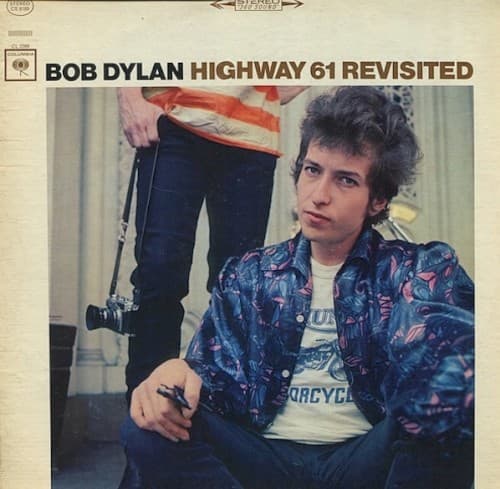
This image embodies Greenwich Village's transformation from coffeehouse acoustic sets to amplified electric rebellion.
Visual Language
The deliberately informal composition mirrors Dylan's raw, unpolished shift from carefully crafted folk to explosive blues-rock.
Symbols
Headless torso with guitar
The severed body represents Dylan's violent break from his acoustic folk past and identity.
Camera on floor
The discarded camera suggests Dylan's rejection of being documented or defined by others' expectations.
Psychedelic paisley shirt
The ornate pattern signals Dylan's embrace of electric experimentation and cultural upheaval.
Where Sound Meets Image
The visual chaos of the patterned shirt mirrors the album's dense, surreal lyrics and raucous band arrangements. Dylan's seated posture suggests both confidence and exhaustion—the same duality present in songs that blend caustic humor with profound cultural criticism. The truncated figure with the red guitar hovers like the album's ghosts and characters, from the desolate queen to the thin man, partially visible but never fully realized. The camera on the floor reinforces Dylan's role as observer-turned-participant in America's blues tradition.
This cover established the template for rock artists presenting themselves as cultural provocateurs rather than entertainers. The casual snapshot aesthetic influenced countless album covers that rejected studio polish for raw authenticity, while the symbolic use of cropped figures appeared in later psychedelic-era artwork. It remains a visual shorthand for the folk-rock revolution.