Style & Context
Influences
Marlene Dietrich portraits, Greta Garbo stills, 1930s Hollywood glamour photography
Location
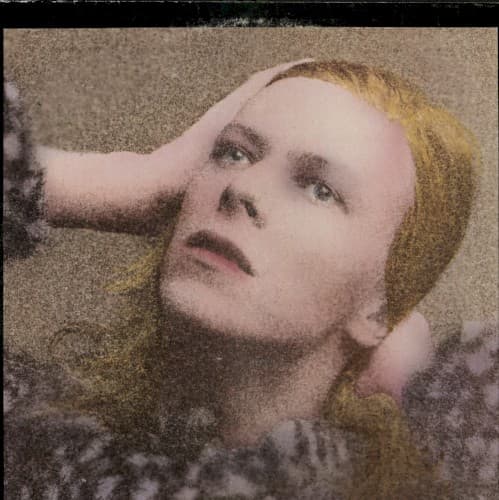
This European-style glamour shot rejected hippie naturalism for theatrical self-invention and studied poses.
Visual Language
The treatment channels Old Hollywood star portraiture, positioning Bowie within a lineage of androgynous beauty.
Symbols
Upward gaze
The heavenward look positions Bowie as aspirational and otherworldly, above earthly concerns.
Hand in hair
The self-touching gesture suggests vanity and self-awareness, key to glam rock's theatrical identity.
Soft focus grain
The deliberate blur romanticizes the subject, mimicking Golden Age Hollywood star portraits.
Where Sound Meets Image
The soft, romantic visual treatment mirrors the album's piano-driven pop sophistication and introspective songwriting. Where raw rock demanded gritty photography, Hunky Dory's baroque arrangements and literary lyrics called for refined aesthetics. The androgynous beauty echoes songs exploring identity, fame, and transformation. The vintage Hollywood reference connects to Bowie's fascination with cinema, performance, and constructed personas that would define his career.
The cover helped establish album art as gender-fluid territory and made androgyny visually acceptable in rock. Its influence appears in countless artists who later used soft-focus glamour shots to challenge masculine rock conventions. The vintage Hollywood aesthetic became a glam rock template, proving rock stars could present as beautiful objects rather than tough rebels.