The scorecard
8.3/10 · Great
- Songwriting25%
- 9.0
- Production25%
- 7.5
- Performance15%
- 8.5
- Cohesion15%
- 8.0
- Originality10%
- 8.0
- Replay value10%
- 8.5
Turner's Sheffield observations turn nightclub minutiae into proper songs: 'A Certain Romance' builds a defence of local lads from their Reebok Classics up, 'Dancing Shoes' notices the gap between what clubbers say and what they want.
Jim Abbiss keeps the garage-band snap live while tightening the punch: the drums crack, the guitars stay scuffed, and the vocal sits close enough to hear Turner's sneer on 'Fake Tales of San Francisco'.
Turner sings like he is reporting from the taxi queue, flat Yorkshire vowels intact, while Cook and Helders lock the riffs to the drums with the tightness of a band that has played these songs hundreds of times in small rooms.
The nightclub concept holds through ten tracks, then loses focus: 'Perhaps Vampires' adds four minutes of slower guitar without adding a new idea, and the sequencing front-loads the singles.
The Strokes template is obvious, but the Sheffield setting and the focus on bouncers, taxi ranks and mardy girlfriends instead of New York cool gave British indie rock a local voice it had not had since Pulp.
The singles still sound like singles and 'A Certain Romance' still earns its five minutes; the weaker tracks ('Red Light Indicates Doors Are Secured', 'Perhaps Vampires') are short enough not to break the run.
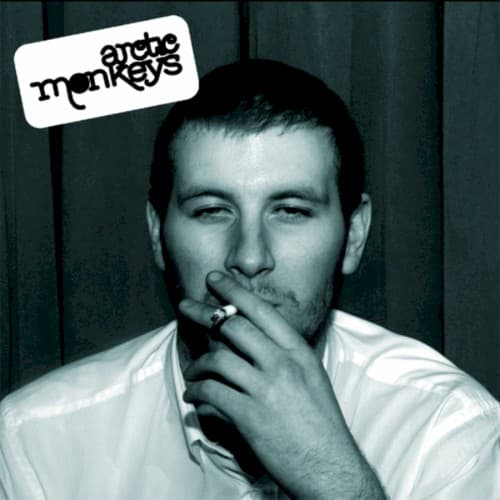
Arctic Monkeys Whatever People Say I Am, That's What I'm Not — The Dancefloor Observed, Not Mythologised
This album won because it reported instead of posed. When British guitar bands in 2006 were still chasing the Strokes' New York or recycling Britpop's lad swagger, Arctic Monkeys arrived with a debut that noticed the sticky floor, the bouncer's bad mood, and the calculation behind every pulled pint and pulled chatup line. Alex Turner was nineteen when these songs were written, but he sang like a court stenographer with a knack for rhyme, cataloguing the social algebra of a Saturday night in Sheffield: who gets in, who gets off, who takes the night bus home alone.
The album is built from riffs nicked from the Libertines and the Strokes, drums that hit like the Hives, and production that keeps the garage-band edges sharp. What it added was specificity. Turner did not sing about youth or rebellion in the abstract; he sang about a guy in a Reebok Classic tracksuit, about a taxi with its red light on, about a girl going mardy because her boyfriend will not get off his phone. The fast ones are built to make you move, the slow ones to make you wince in recognition, and the whole thing runs thirty-eight minutes without a single line that sounds like it was written for anyone but the kids who bought it.
The claim that the internet made this band is half true. Arctic Monkeys gave away demos at gigs in 2003 and 2004; fans uploaded them; message boards picked them up; by the time Domino signed them they had an audience before they had a record deal. But the reason the demos travelled is that the songs were already tight, already written with hooks that stuck after one listen. By the time Whatever People Say I Am, That's What I'm Not was recorded in 2005, many of these tracks had been played live for two years.
The album sounds like it: the band is locked in, the tempos do not sag, and the performances have the confidence of a setlist that has already worked in a room full of people who know the words. The question the album had to answer was whether Sheffield nightlife in 2005 was a subject that could carry thirteen songs, and whether a teenage narrator could make it interesting past the first three singles?
Riffs, Reporting and the Strokes Heard Through a Yorkshire Accent
The songwriting works because Turner treats observation as structure. Most of these songs are built on a verse that sets a scene, a chorus that states the point, and a second verse that adds a complicating detail. 'I Bet You Look Good on the Dancefloor' opens with a count-in and a two-note guitar line, then moves to a verse about a girl who knows she is being watched, then a chorus that just repeats the title with the urgency of someone who has to say it now before the moment passes. 'Still Take You Home' does the same thing with less charm: verse about a girl's bad behaviour, chorus admitting he will sleep with her anyway, no development.
The melodies are strong when they need to be and functional when they do not. 'When the Sun Goes Down' has a verse melody that rises and falls with the lyric's unease; 'Fake Tales of San Francisco' has a verse that barely moves and a chorus that is just the title shouted over a riff. The album's best songs are the ones where the structure does more than repeat. 'A Certain Romance' builds over five minutes from a verse that mocks the local townies to a chorus that defends them, and the song earns the turn by making the melody in the second half prettier than anything in the first.
'Mardy Bum' moves from complaint to apology and back, and the chord changes track the mood. The weaker songs either repeat the same idea for two minutes ('Dancing Shoes', 'You Probably Couldn't See for the Lights but You Were Staring Straight at Me') or stretch a thin idea past its natural length ('Perhaps Vampires Is a Bit Strong But...', which has one riff and four minutes).
The production by Jim Abbiss keeps the sound in the room. The guitars are recorded dry, with no reverb to suggest a bigger space than a practice room in Neepsend. The drums are close-miked and hit hard, especially the snare, which cracks on every backbeat. The bass is low and present but never fancy: Andy Nicholson plays roots and fifths and stays out of the way.
The vocal is pushed forward in the mix, close enough that you hear Turner's accent without effort, and the inflection is as important as the words. On 'From the Ritz to the Rubble' he sings the line about the bouncer with a sneer that makes the contempt clear before the lyric does. On 'Riot Van' he sings the story of kids getting picked up by the police with a flatness that makes it sound routine, not dramatic. The only track that changes the template is 'Riot Van', where James Ford adds electric piano and organ; the rest of the album is guitar, bass, drums and voice, with no strings, no synths, no guest spots.
That is a strength when the songs are good and a limitation when they are not. 'Red Light Indicates Doors Are Secured' is two minutes of the same riff and the same joke about trying to get a taxi; the production cannot add interest that the song does not have. 'Perhaps Vampires' tries to build tension with a slower tempo and a louder chorus, but the verse is too repetitive and the payoff is just volume. The mix is clean and the performances are tight, but the production does not hide weak material.
The band plays like they have been doing this for years because they have. Jamie Cook's guitar parts are built from power chords, single-note lines, and riffs that lock to the drums; nothing is flashy, but nothing is out of place. Matt Helders hits every snare and kick drum like he is trying to break it, and the tempo never drags. Turner's voice is the instrument that makes the album sound different from its influences.
He sings in his natural accent, with the flat vowels and the dropped consonants of South Yorkshire, and he phrases behind the beat, letting the words fall into the gaps between the drums and the guitar. On 'I Bet You Look Good on the Dancefloor' he sings the chorus like he is shouting it across a loud room; on 'Mardy Bum' he sings it like he is annoyed but trying not to show it. The delivery matches the content, and the content is specific enough that the delivery matters. The weakness is consistency.
The album has three great songs, five good ones, and five that are fine but not essential. The track-by-track will sort them.
Front-Loaded Singles and a Back Half That Sags
The album is built like a setlist: big songs first, slower ones in the middle, the longest one last. That works live; on record it makes the first half feel stronger than it is and the second half feel like it is running out of ideas. The first stretch hits fast with four tracks built on riffs and tempos under three minutes; by the time the fifth arrives, the template is already familiar. The two singles were placed at positions two and eleven, which makes sense for radio but breaks the flow.
The middle section has no weak tracks, but no essential ones either; these are songs that do their job and get out. One track over four minutes besides the closer does not earn the length. The riff is fine, the chorus is loud, but the song just repeats the same structure three times and then ends. It is the only moment where the album feels like it is filling time.
The sequencing peaks twice: early with 'I Bet You Look Good on the Dancefloor', and at the close with 'A Certain Romance'. Everything in between is either setup or decline. The slower track at position nine breaks the nightclub run with a more personal subject, and the second single at eleven gives the back half momentum. But the stretch between has three tracks that are fine but not necessary.
The length is thirty-eight minutes, which is short enough that the weaker tracks do not drag the whole thing down. If the album had been forty-five minutes it would have been a problem; at thirty-eight it is just front-loaded.
A Debut That Caught a Moment and Defined a Band's Ceiling
This is the best album Arctic Monkeys made because it is the only one where the concept, the sound, and the writing all locked in at once. Later records would try more: AM would borrow from hip-hop, Tranquility Base Hotel & Casino would go art-rock and lounge. But none of them would match the hit rate of the first eight tracks here, and none of them would have a song as complete as 'A Certain Romance'. The album ranks first in the catalog because it is the one that worked without trying to be more than it was: thirteen songs about nightlife in Sheffield, recorded live and fast, with no filler that could not be skipped.
It has aged well because the subject is specific enough to stay interesting and the production is plain enough not to date. The only thing that sounds tied to 2006 is the idea that a debut album from a British indie band could sell 360,000 copies in a week; that will not happen again.
This album is for anyone who wants to hear British indie rock when it still thought small rooms and tight songs were enough, and for anyone who wants to hear Alex Turner before he started singing like he was in a different band. It is not for anyone who needs variety in their guitar tones or their tempos; the palette is narrow and the album does not apologise for it. Start with 'I Bet You Look Good on the Dancefloor', 'A Certain Romance', and 'When the Sun Goes Down'; if those three work, the rest of the album will. Skip 'Perhaps Vampires Is a Bit Strong But...' and 'Red Light Indicates Doors Are Secured' unless you are a completist.
After this, play Favourite Worst Nightmare to hear the band write faster and louder, or play The Libertines' Up the Bracket to hear where half of these riffs came from. The album's place in British indie rock is secure: it is the one that proved a band could build an audience without radio, and the one that made Sheffield matter again. Its place in the Arctic Monkeys catalog is simpler: it is the one where they got it right the first time and never quite got back.
Track by track
Track Listing
The View From the Afternoon
StandoutOpens the album with a statement of intent: a count-in, a two-chord riff, and a verse about anticipation before a night out. The lyric sets the scene and the tempo, and the chorus builds to a shout that makes the weekend sound like a battle. The structure is verse-chorus-verse-chorus-solo-chorus, no bridge, no deviation. The guitar solo is four bars of single notes over the same two chords, and it works because the song is short enough that nothing outstays. This is not the best song on the album but it is the right opener: fast, loud, and clear about what is coming.
I Bet You Look Good on the Dancefloor
StandoutThe first single and the album's most famous song, built on a two-note guitar line that repeats for the entire track and a chorus that is just the title shouted with conviction. The verse melody is minimal, almost spoken, and the lyric is about watching someone who knows they are being watched. The production is raw: the drums are loud, the guitars are thin, and the vocal is pushed forward with no reverb. The count-in at the start was kept in to make it sound live. The song works because it is twenty seconds shorter than it should be; if it had a third verse it would be boring, but at two minutes fifty-three it is over before the riff wears out. The single version is the same as the album version. This is the song that made the band.
Fake Tales of San Francisco
StandoutA complaint about London indie bands who sing with American accents and claim influences they have not earned. The verse is talk-sung over a single chord, the chorus is the title repeated over a riff, and the bridge adds a second riff. The lyric is specific: it names San Francisco, it describes a band playing in a small venue, it mocks the idea of a songwriter who has never been to the place he is singing about. The song is a statement of regional pride dressed as a takedown, and it worked because in 2006 British indie rock was still full of bands trying to sound like they were from New York. The riff is good, the vocal delivery is confident, and the song does its job in under three minutes.
Dancing Shoes
SolidTwo minutes about the gap between what people say they want and what they actually do in a nightclub. The verse describes someone claiming they are not looking to pull, the chorus calls them out. The riff is fast and the melody is functional; the song works because it is short and because the subject is specific. Not essential, but solid.
You Probably Couldn't See for the Lights but You Were Staring Straight at Me
SolidThe longest song title on the album and one of the shortest tracks. A verse about trying to get someone's attention across a dancefloor, a chorus that is just the title broken into a melody. The riff is fine, the performance is tight, but the song does not add anything that the previous three have not already done. Filler.
Still Take You Home
SolidA verse about a girl's bad behaviour in a club, a chorus admitting the narrator will sleep with her anyway. The melody is stronger than the previous two tracks, and the guitar line in the verse has a swagger that matches the lyric. The production is the same as the rest of the album: dry guitars, loud drums, close vocal. The song is well-made but slight; it does not develop the idea past the first chorus, and the second verse just repeats the point. Solid, not essential.
Riot Van
StandoutThe only track with keys: James Ford added electric piano and organ, which gives the song a warmer sound than anything else on the album. The lyric is a first-person account of being picked up by the police as a teenager, told with no drama and no moral. The verse melody is gentle, almost conversational, and the chorus is just a restatement of the title. The track is two minutes fourteen seconds, which is the right length; if it had gone longer the lack of development would have been a problem. The production choice to add keys works because it makes the song sound different from the ten other guitar-bass-drums tracks, and the subject is specific enough to justify its place in the nightclub concept.
Red Light Indicates Doors Are Secured
WeakTwo minutes about trying to get a taxi after a night out. The riff is repetitive, the joke is thin, and the song does not build or develop. Skippable.
Mardy Bum
StandoutThe album's only straightforward love song, and the only track that was produced by Alan Smyth instead of Jim Abbiss. The lyric is about a relationship that has gone from easy to difficult, with the narrator trying to figure out why his girlfriend has gone mardy (Northern slang for moody or sulky). The verse is fingerpicked acoustic guitar, the chorus is full band, and the structure moves between the two. The melody is pretty, the vocal delivery is more vulnerable than anywhere else on the album, and the production is slightly warmer than the Jim Abbiss tracks, with more space around the instruments. The song was not released as a single but was playlisted on BBC Radio 1, and it remains one of the most-played deep cuts from the album. This is the track that showed Turner could write about relationships without the ironic distance of the nightclub songs, and it is placed well at track nine, where it breaks the run of fast riffs and gives the album a quieter moment before the final stretch.
Perhaps Vampires Is a Bit Strong But...
WeakFour minutes twenty-eight seconds built on one riff and one idea. The verse is slow and quiet, the chorus is loud and faster, and the structure just repeats that pattern three times with no bridge and no development. The riff in the chorus is strong, but the song does not earn its length. The lyric is about someone who uses people and then moves on, which is a fine subject, but the writing does not add detail or complexity past the first verse. This is the album's weakest track, the only moment where it feels like the band is stretching material to fill time.
When the Sun Goes Down
StandoutThe second single, and the album's most direct piece of social observation. The lyric was inspired by the prostitutes who worked near the band's practice room in the Neepsend district of Sheffield, and it is told from the perspective of someone watching the street at night. The verse describes the scene with specific details: a girl standing in a doorway, a car slowing down, the transaction implied but not stated. The chorus shifts perspective to address the girl directly, and the melody rises to match the shift in tone. The production keeps the verse quiet and the chorus loud, and the dynamic works. The song was originally called 'Scummy' when it circulated as a demo, and the re-recorded version is tighter and better produced. This is one of the album's three essential tracks, and it works because the writing is specific, the melody is strong, and the subject is treated with more care than the nightclub songs. The song debuted at number one on the UK Singles Chart in January 2006.
From the Ritz to the Rubble
SolidA three-minute complaint about nightclub bouncers, told from the perspective of someone who has been turned away. The verse describes the scene, the chorus is the narrator's frustration, and the bridge adds a moment of reflection before returning to the chorus. The riff is fast and the vocal delivery is sharp, especially on the lines about the bouncer's power. The song is well-made and the subject is specific, but it does not reach the level of the singles or 'A Certain Romance'. Solid.
A Certain Romance
StandoutThe album's longest track and its best song. The structure is unusual: two verses that mock the local townies for their Reebok Classics and their loud behaviour, then a chorus that defends them, then a second half that makes the defence explicit. The melody in the second half is prettier than anything in the first, and the shift in tone is earned by the writing. The lyric moves from observation to empathy, and the song works because it does not resolve the tension; Turner is both inside and outside the world he is describing, and the song lets both perspectives stand. The production builds gradually, adding guitars and volume as the song progresses, and the final chorus is the loudest moment on the album. The track was ranked number 90 in Pitchfork's Top 100 Tracks of 2006 and number 10 in NME's 100 Tracks of the Decade, and it remains the song that best represents what the album was trying to do. At five minutes thirty-one seconds it is the only track that justifies its length, and it is the right closer: it is the song that makes the case for the album as something more than a collection of nightclub sketches. Essential.