The scorecard
8.5/10 · Essential
- Songwriting25%
- 8.5
- Production25%
- 9.0
- Performance15%
- 9.0
- Cohesion15%
- 7.5
- Originality10%
- 7.0
- Replay value10%
- 9.5
Highway Star and Smoke on the Water prove the hooks, while Lazy and Space Truckin' show Deep Purple writing for the stage, songs built to stretch and sustain rather than just repeat.
Martin Birch captured the band live in a hotel hallway with the Rolling Stones Mobile Studio, getting drum sound and organ warmth no studio booth could match.
Ian Gillan screams through Highway Star and Pictures of Home with a voice that never cracks, while Ritchie Blackmore and Jon Lord trade solos that sound like arguments they are both winning.
Seven tracks with no filler, but the sequencing front-loads the singles and leaves the second half feeling like encores rather than a planned arc.
Deep Purple refined what In Rock and Fireball started, tightening the riffs and clearing the mix, but Machine Head invented no new forms.
Fifty years later every track still lands, Highway Star still accelerates, Lazy still sprawls, and the album holds up because the band recorded performances instead of constructing them.
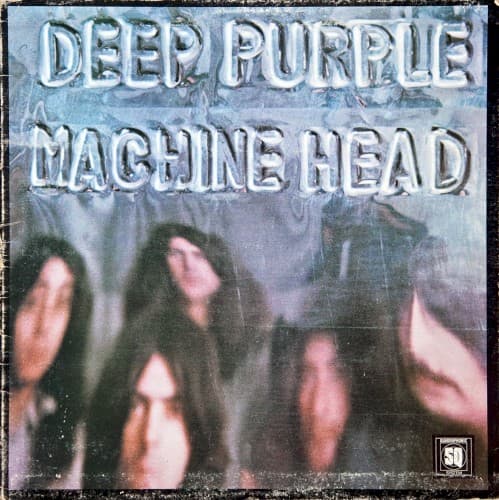
Deep Purple Machine Head — The Album That Proved Hard Rock Could Think
Machine Head is the sound of a hard rock band refusing to choose between heaviness and precision. Deep Purple arrived in Montreux in December 1971 with a plan to record away from studio sterility, hoping to capture what their earlier albums missed: the clarity and attack of their live shows. After a casino fire and a police eviction, they ended up in a closed hotel with the Rolling Stones Mobile Studio parked at the entrance and mattresses lining a hallway.
What they recorded there in three weeks became the blueprint for how a power trio plus Hammond organ and a screaming vocalist should sound on tape, and the album that defined their catalog. Highway Star opens with a riff Ritchie Blackmore wrote on a tour bus to answer a journalist's question, and it moves with the momentum of a band that had been playing the song live for months before they recorded it. Smoke on the Water locks into a four-note guitar line simple enough to be universal and specific enough to never sound like anything else.
The thesis is in the first two tracks: hard rock done this well does not need to break new ground, it just needs to execute with this much discipline and this little wasted motion. Machine Head is not the first heavy album or the loudest, but it is the one that showed the genre could be both powerful and economical, both live and controlled, and that a band could sound enormous without sacrificing the clarity that makes every riff and every drum fill audible.
Power Recorded as Performance
Machine Head works because Martin Birch recorded a band playing together in a room, not a constructed studio artifact. The Grand Hotel sessions put Ian Paice's drums at the end of a hallway and captured the natural reverb of the space, giving the snare crack on Highway Star and the floor tom rolls on Space Truckin' a dimension that baffled studios could not provide. Jon Lord's Hammond organ sits in the center of the mix with the same weight as Blackmore's guitar, the two instruments occupying separate sonic territory but locking together on the riffs. Roger Glover's bass does the work bass should do in a power trio setup: it anchors Blackmore's solos and doubles the guitar on the main riffs, audible but never showy.
The production is not polished in the sense of sanded edges; it is polished in the sense of clear and committed, every instrument doing one thing well.
Birch captured performances, not takes. The band stopped listening to playbacks during the sessions because walking from the hallway to the mobile studio van was too arduous, so they played until the take felt right and moved on. That decision is audible in the looseness of the instrumental sections: Blackmore's solo on Lazy was recorded in sections over two days and spliced together, but it sounds like a single improvised run because the tone and attack stay consistent.
The songs themselves are built for exactly this kind of recording. Highway Star is a riff that accelerates, a verse that matches the speed, and solos from Blackmore and Lord that race each other without stepping on each other. Pictures of Home moves between a steady verse and a guitar figure that climbs, the structure simple enough that the band can stretch the tempo live without losing the song. Smoke on the Water is four notes, a verse, and a chorus, the kind of writing that trusts the performance to carry the song instead of stacking parts.
The writing is strong enough that even when the band is clearly writing for the stage, as on Lazy and Space Truckin', the album versions work because the arrangements leave room for the instruments to move.
The weakness is in the lyrics, which do their job but rarely more. Ian Gillan wrote Highway Star as an improvisation on a tour bus and the verses reflect that: they describe driving fast and playing loud, functional images that fit the riff but do not add much. Maybe I'm a Leo is about Gillan's birth sign. Space Truckin' is a pastiche of 1950s rock and roll with science fiction phrases swapped in, openly nonsense.
The lyrics to Smoke on the Water are the exception, a detailed account of the casino fire and the search for a recording venue that gives the song a specificity the others lack. Elsewhere the words are there to give Gillan something to scream, and he screams them with enough conviction that the songs work anyway.
An Album That Peaks Early and Sustains
Machine Head opens with its two strongest tracks and never quite reaches that level again, but the sequencing works because the second half delivers live reveal pieces that earn their length instead of just filling time. The first stretch establishes the band's sound with back-to-back riff-driven pieces, the opening built on speed and the second on a riff that starts off the beat. The middle section eases the tempo slightly, the fourth track being the most commercial on the album and the one the band thought had single potential, though it is also the slightest.
Smoke on the Water closes the first side and is the album's center, the most famous track and deservedly so: the riff is simple, the story is specific, and the song builds to a guitar solo that moves in a straight line instead of showing off.
The back half is two long tracks and a closer, all three designed to stretch in concert. The opening track of the second side begins with an unaccompanied organ introduction from Lord and includes a harmonica solo from Gillan, the band clearly writing a vehicle for individual reveal. The closer ends the album with a drum solo from Paice and lyrics that do not try to mean anything. Both tracks work because the band plays them with the same focus they bring to the singles, and because the arrangements move instead of circling.
The sequencing front-loads the commercial material and leaves the closing run feeling like the encores, but the length is earned: seven tracks, thirty-seven minutes, no instrumentals used as filler and no half-finished ideas.
The Album That Defined Deep Purple and Set the Standard
Machine Head is the best album Deep Purple recorded and one of the essential hard rock records, the one that refined what In Rock and Fireball started and the one every album after had to measure against. It sits near the top of the genre for 1972 alongside releases by Black Sabbath and Led Zeppelin, not as heavy as the former or as wide-ranging as the latter, but more focused than either. The album works for listeners who want hard rock without the excess that came later in the decade, songs that hit hard without stretching past the point where the ideas run out.
Start with Highway Star and Smoke on the Water, the two tracks that show what the album does best: riffs that stick, vocals that push without overreaching, and production that captures the band live. If those tracks work, play the album straight through; the second half rewards the time. Skip this if you need innovation or complexity; Machine Head does not break new ground, it just covers known ground better than almost anyone.
The album aged well because the band recorded performances instead of chasing trends, and because Birch captured a sound that was already live-tested before they reached Montreux. For the next album, stay with Deep Purple and play Made in Japan, the live double album recorded eight months later that shows how these songs worked on stage and why the band wanted to record them that way in the first place. Machine Head proved hard rock could be both powerful and precise, and it remains the standard against which every power trio plus organ is measured.
Track by track
Track Listing
Highway Star
StandoutThe album's opening and strongest track, written on a tour bus when a journalist asked Ritchie Blackmore how he wrote songs and he answered by playing the opening riff on the spot. Ian Gillan improvised the lyrics around the fact that they were on the road, and the band arranged it at soundcheck the same day. The structure is a riff that accelerates, a verse that matches the speed, and dueling solos from Blackmore and Lord, the guitar solo based on a figure Blackmore learned from Johnny Burnette and shaped to sound like Bach. The song works because every part moves at the same momentum: Paice's drums lock into a straight eighth-note pattern that never drags, Glover's bass doubles the guitar riff, and Gillan screams the verses without needing vibrato or melisma to sell them. The production captures the drum sound and the organ warmth without losing the guitar attack. Highway Star is the template for the rest of the album: a simple riff, a functional lyric, and a performance that trusts speed and precision over complexity. Still a live staple fifty years later because the song is built to sustain that energy.
Maybe I’m a Leo
StandoutA riff-driven track built around a bass line Roger Glover wrote after listening to John Lennon's How Do You Sleep, shaped around a riff that starts off the first beat of the bar. The title and lyrics refer to Gillan's birth sign, a thin concept that gives him something to sing but does not add much to the song. The track works because the riff is strong enough to carry it and because the band plays it with the same attack they bring to Highway Star, Jon Lord's organ filling the spaces between the guitar phrases. The song was played live only once in 1972 but became a concert favorite after Joe Satriani joined the band in 1993, a sign that the songwriting holds up even when the lyrics do not.
Pictures of Home
SolidA mid-tempo track about the landscape around Montreux, with lyrics that describe being far from home and images of the local area. The song moves between a steady verse and a climbing guitar figure, the structure simple but effective. The original recording left off a drum introduction that Paice recorded; it was added for the 25th anniversary reissue. The track is solid but not essential, a showcase for Blackmore's guitar work that does not quite reach the level of Highway Star or Smoke on the Water. Still in the live set after Satriani joined Deep Purple, which suggests the band values it more than the album sequencing does.
Never Before
SolidThe most commercial track on the album, released as a single and considered by the band to have the most pop potential. It is also the slightest song on Machine Head, a mid-tempo rocker with a chorus that aims for accessibility but does not have the riff strength of the surrounding tracks. Played live once at a BBC session in 1972 and then dropped, which tells you how the band ranked it against the rest of the material. Functional but forgettable, the one track on the album that feels like filler even though it is only four minutes long.
Smoke on the Water
StandoutThe most famous track Deep Purple recorded, and the one song from Machine Head that became a cultural touchstone beyond the hard rock audience. The opening riff is four notes, simple enough that it became a beginner guitar exercise and specific enough that it never sounds like anything else. Ritchie Blackmore compared it to the opening of Beethoven's Fifth Symphony, a motif that works because it is economical and clear. The lyrics document the casino fire and the search for a recording venue, the most specific and detailed storytelling on the album. Gillan describes the flare gun, the evacuation, Claude Nobs rescuing people from the basement, and the smoke hanging over Lake Geneva, all concrete images that give the song a narrative weight the other tracks lack. The backing track was recorded at the Pavilion theatre before the police shut the session down, the only usable material from that location. The band did not think the song had commercial potential and it was one of the last tracks from the album to be played live, but after it was released as a single in the US in 1973 it reached number four on the Billboard Hot 100 and became the song they could not avoid playing. The guitar solo builds in a straight line, Blackmore moving up the neck without showing off, and the song ends cleanly instead of stretching. Smoke on the Water is the center of the album and the track that justified the entire Montreux experiment: a song about the recording process that only exists because the process went wrong.
Lazy
StandoutA long track designed as a vehicle for instrumental showcases, opening with an unaccompanied organ introduction from Jon Lord and including a harmonica solo from Ian Gillan. Roger Glover said the song was roughly based on an Oscar Brown song called Sleepy, while Ritchie Blackmore stated it was inspired by Eric Clapton's Stepping Out. The track was written to replace the instrumental Wring That Neck in the live set, and the structure reflects that purpose: a loose framework that allows each member of the band to take a solo and stretch the arrangement. Blackmore recorded his guitar solos in sections over two days, and Martin Birch spliced them together, but the tone stays consistent enough that it sounds like a single take. The song works because the band plays with focus even when the structure is open, and because the seven-minute length is earned by the movement in the solos rather than just repetition. Lazy was played live throughout 1972 and remained in the set after Gillan and Glover left the band, a sign that it worked as well on stage as it does on the album.
Space Truckin’
SolidThe album closer, written as a pastiche of 1950s rock and roll with science fiction phrases swapped in for the usual cars and girls. Deep Purple came up with nonsense lines like "music in our solar system" and built a song around them, the lyrics openly not meant to signify anything. Ian Paice plays a short drum solo on the track, and the arrangement is built to stretch in concert: the album version is four and a half minutes, but live versions from 1972 onward ran past twenty minutes, the song serving as a framework for improvisation. The track was first played in January 1972 and became the set closer, leading into the instrumental section of Mandrake Root. After Gillan and Glover left the band in 1973, Space Truckin' remained the final song, including a performance at California Jam in 1974 where Blackmore set fire to his amplifiers and destroyed a television camera with his guitar. The song works because the band commits to the riff and because the structure is strong enough to support the length, but it is the weakest of the seven tracks, a showcase piece that does its job without adding much. NASA used it as a wakeup call on Space Shuttle flight STS-107 in 2003, which is the kind of cultural afterlife a song called Space Truckin' deserves.