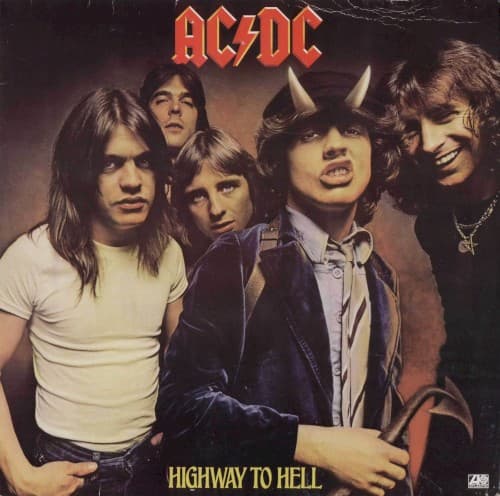
The scorecard
8.3/10 · Great
- Songwriting25%
- 8.5
- Production25%
- 9.0
- Performance15%
- 8.0
- Cohesion15%
- 7.5
- Originality10%
- 7.0
- Replay value10%
- 8.5
Every song is built on a locked-in riff and a one-line premise that Bon Scott can yell in a bar, from the stomp of the title track to the prowl of "Night Prowler," though "Love Hungry Man" wanders without a hook worth the runtime.
Mutt Lange carved the crunch into radio shape without sanding it down: the guitars are huge and clear, the backing vocals fatten the choruses, and the mix puts Scott's sneer right in front where it belongs.
Bon Scott never sounded more confident, turning every lyric into a smirk or a cackle, while Angus and Malcolm Young lock the riffs so tight that the solos feel like the only place the band lets loose.
Ten tracks of the same formula with no filler and no detours: it works because the tempo and tone shift just enough between songs, though the second side sags slightly before "Night Prowler" closes it out.
AC/DC refined their blues-based stomp into the template every arena rock band would copy for a decade, but Highway to Hell itself owes everything to Let There Be Rock and Powerage with shinier production.
The title track, "Girls Got Rhythm," and "Shot Down in Flames" never wear out, and even the weaker cuts hold up because the riffs are so direct and the performances so committed.
AC/DC Highway to Hell — The Formula Perfected Before the Tragedy
Highway to Hell is the sound of AC/DC learning to win without compromise. The argument over whether Mutt Lange polished the crunch off the band or sharpened it into a weapon ends the moment "Highway to Hell" kicks in: the riff is still a sledgehammer, but now it lands in a mix clean enough for American radio and thick enough to flatten a club. Lange gave AC/DC the production they needed to break the States without asking them to write different songs or hire a different singer. The result is ten tracks of the same blues-based stomp the band had been perfecting since Let There Be Rock, now recorded with the clarity and the chorus weight to reach the audience that Powerage should have found. It is not their most dangerous album and it is not their most inventive, but it is the one where everything the band did well finally sounded as big as it needed to.
The stakes were high. Atlantic Records wanted a hit and threatened to shelve the band if they did not work with a producer who could deliver one. AC/DC fired the label's first choice, Eddie Kramer, after three weeks of failed sessions in Miami, then recorded six songs in a single day and sent the tape to Lange as an audition. Lange took the job and spent three months at Roundhouse Studios in London drilling the band on takes, breathing technique, and solo construction until every song was as tight as the riff demanded.
The process exhausted them, but it worked. Highway to Hell became their first album to crack the American top twenty, sold millions, and established the sound that Back in Black would perfect a year later. It also became Bon Scott's final recorded statement, which gave the title track a mythic weight it was never meant to carry. Strip away the tragedy and what remains is a hard rock album that does one thing at the highest level: riffs, raunch, and swagger, played by a band that had finally figured out how to make a record as good as their live show.
The Sound of Discipline Meeting the Riff
The genius of Highway to Hell is that it sounds effortless and required three months of work to get there. Lange's production is all clarity and heft: the guitars are separated and enormous, the bass locks with the drums instead of doubling the rhythm guitar, and the vocals sit right in front of the band instead of buried in the crunch. Compare the mix here to Powerage and the difference is obvious. Powerage sounds like a band in a room playing loud; Highway to Hell sounds like a band playing loud in a room designed to make them sound bigger. The songs are the same stomp, but the production turns them into anthems.
Lange's biggest contribution was the backing vocals. Malcolm Young and Cliff Williams had sung behind Bon Scott before, but never with the precision or the volume that Lange demanded. On "Highway to Hell," "Girls Got Rhythm," and "Touch Too Much," the gang-vocal choruses are as much a part of the hook as the guitar riff, and they give the songs a size that the band's earlier records never achieved. Lange himself sang on the backing tracks, standing on the other side of the studio because his voice was too distinctive to blend. The result is a layer of melody that makes the songs catchier without softening them. The crunch is still there, but now it comes with a chorus you can yell.
The rhythm section does the hard work. Phil Rudd plays the same beat on almost every song—a straight four with the snare on two and four and the kick driving the whole thing forward—but he plays it with a precision that turns repetition into hypnosis. Cliff Williams follows the kick drum and leaves space for the guitars, which is the only way the mix stays this clear with two rhythm parts and a solo all fighting for the same frequency range. Angus Young's solos are still raw, but Lange made him sit down and map them out note by note, which gives tracks like "Highway to Hell" and "Shot Down in Flames" solos that feel like part of the song instead of a detour from it.
The band wanted this polish, even if they fought Lange to get there. Malcolm Young complained to the press that Atlantic had forced the choice, but the band worked fifteen-hour days at Roundhouse because they believed in the process. Lange showed Bon Scott how to control his breathing so he could sustain notes on "Touch Too Much" and taught Angus where to place his fingers for the "Highway to Hell" solo. The band did not need a producer to write their songs, but they needed one to make the songs sound as big as they were meant to be.
The weakness is in the writing. "Love Hungry Man" is four minutes of mid-tempo plod with no memorable riff and a chorus that goes nowhere. "Walk All Over You" has a strong verse but stretches past five minutes without earning the length. The rest of the album is ruthlessly efficient, but those two tracks prove that even AC/DC could not make every song worth the effort when the formula was this narrow. Lange's production hides some of the weaknesses, but it cannot invent hooks that are not there.
The Arc of a Ten-Track Stomp
Highway to Hell runs forty-two minutes and feels like thirty because the pacing is relentless. The opening stretch establishes the tone: every song will be a variation on the same hard rock stomp, and the only question is whether the riff and the chorus are strong enough to carry it. The answer is yes for seven out of ten tracks, which is a better ratio than most bands manage.
The first side is front-loaded with the strongest material. The opening four tracks include the three best songs on the album, and placing them there was the right call. The side closer has a riff that sounds familiar and a title that makes the innuendo so obvious it stops being clever, but the energy holds. The second side starts strong with two more burners, then sags with the two weakest stretches on the record.
The closing track delivers six minutes of slower, heavier groove that feels like a deliberate cooldown after nine tracks of sprinting. It is the only song on the album that changes tempo, and it works because it arrives after everything else has already peaked.
The sequencing is smart but not subtle. AC/DC front-loads the hits, coasts through the middle of side two, and ends with the one song that does not sound like the other nine. It is the sequencing of a band that knows which songs are the winners and does not pretend otherwise. The length is earned because no song overstays except one, and even that one has a strong enough riff to survive the extra minute.
The Last Word from the Best Voice the Band Ever Had
Highway to Hell ranks just below Back in Black in the AC/DC catalog, and the gap is narrow. Back in Black is tighter, heavier, and more consistent, but Highway to Hell has Bon Scott, and Scott's sneer and swagger give these songs a personality that Brian Johnson's blunt-force yell could never match. Scott turns every lyric into a punchline or a threat, and his vocal on "Shot Down in Flames"—ending with a cackle that sounds like he is enjoying the rejection—is the best moment on the album. Back in Black is the better record, but Highway to Hell is the one that feels like a band at the peak of their powers instead of a band recovering from tragedy.
This album is for anyone who wants to hear what arena hard rock sounded like before it became a cliché. It is the template that every band from Def Leppard to Mötley Crüe would follow, and it still sounds bigger and meaner than most of the records that copied it. Skip it if you need variety or subtlety; this is ten songs of the same idea executed at the highest level, and the band does not apologize for the repetition. It aged into a classic because the riffs are indestructible and the production holds up better than anything else from 1979 that tried to make hard rock sound huge.
Start with the title track, "Girls Got Rhythm," and "Shot Down in Flames." Those three songs are the album in miniature: riffs that lock, choruses that stick, and Bon Scott turning every line into a smirk. If those work, play the rest of side one and then decide whether you need the second side. After this, listen to Let There Be Rock to hear where the sound came from, then Back in Black to hear where it went. Highway to Hell is the bridge between the two, and it is the last time AC/DC sounded this hungry.
Track by track
Track Listing
Highway to Hell
StandoutThe title track is the album's thesis: a riff so direct it sounds like it has always existed, a lyric about life on the road that Angus Young later explained was just the band's experience of endless touring, and a vocal from Bon Scott that turns exhaustion into defiance. Mutt Lange's production is cleanest here, with the rhythm guitars separated wide, the solo placed exactly where it needs to land, and the gang-vocal chorus big enough to fill an arena. Angus later revealed that he and Malcolm recorded the initial riff and beat on a cassette in a Miami rehearsal studio, a cassette that was then unraveled by a child and repaired by Scott. The solo came from Lange sitting down with Angus and pointing to notes on the fretboard, a moment of instruction that Angus initially resisted but ultimately accepted. The song became an anthem, then a eulogy after Scott's death five months later, which gave the lyric about saying goodbye to friends and not stopping for anyone a weight it was never written to carry. Strip away the mythology and it is still the best song on the album: the riff is indestructible, the chorus is a chant, and the performance sounds like a band that knows they finally have the hit they needed.
Girls Got Rhythm
StandoutThe tightest song on the album, built on a riff that chugs without speeding up and a vocal melody that locks with the guitar instead of fighting it. Bon Scott delivers the lyric with a grin, and the backing vocals on the chorus—provided by Malcolm Young, Cliff Williams, and Lange himself—turn a simple hook into a singalong. The production is all separation and clarity: the rhythm guitar is dry and percussive, the bass follows the kick drum, and the solo is short and melodic instead of a sprint up the fretboard. Phil Rudd's drumming is the backbone, playing the same beat he plays on most of the album but with a precision that makes the repetition hypnotic. The song is three and a half minutes of the AC/DC formula working at peak efficiency, with no wasted notes and no detours. It is the second-best track on the album and proof that the band did not need complexity to write a song that lasts.
Walk All Over You
SolidA strong riff and a solid verse stretched past five minutes without enough ideas to justify the length. The first half works: the opening chug is heavy and deliberate, and Bon Scott's vocal on the verse is confident and sleazy in the way that makes the best AC/DC songs work. The chorus is weaker, built on a melody that does not stick and a lyric that repeats the title without adding much around it. The solo is fine but not memorable, and the song keeps going after it has already made its point. The production is as sharp as anything else on the album, but Mutt Lange cannot invent a hook that is not there. It is not a bad song, but it is the first sign that the band's formula has limits when the riff is not strong enough to carry the whole thing.
Touch Too Much
StandoutOne of the catchiest songs on the album, with a verse riff that swings and a chorus that opens up into melody instead of staying locked in the stomp. Mutt Lange's work on Bon Scott's breathing is most audible here: Scott sustains notes on the chorus that he would have barked through on earlier records, and the backing vocals are thick enough to make the hook sound massive. The song was first recorded in 1977 with different lyrics and a different arrangement, but this version is the one that works. AC/DC performed it on Top of the Pops a few days before Scott's death, which makes it one of the last filmed performances of the classic lineup. The production is glossy but not soft, and the solo is melodic without losing the edge. It is the third-best track on side one and one of the clearest examples of how Lange's production elevated the band's songwriting without changing what they did.
Beating Around the Bush
SolidThe riff is a clear lift from Fleetwood Mac's "Oh Well," which journalist Phil Sutcliffe noted in his writing on the album, and the innuendo in the title and lyric is so obvious it stops being clever halfway through. The song still works because the riff is strong and the performance is committed: Malcolm Young's rhythm playing is locked in, Phil Rudd's kick drum drives the whole thing forward, and Bon Scott delivers the lyric with enough conviction to sell it even when the wordplay is borderline juvenile. The chorus is functional but not memorable, and the solo is one of Angus Young's weaker efforts on the album, more a run through the pentatonic scale than a constructed melody. It is a solid track that benefits from its placement at the end of side one, where it keeps the energy high without needing to be one of the standouts.
Shot Down in Flames
StandoutThe best vocal performance on the album, with Bon Scott turning a lyric about getting rejected at a bar into a character study delivered with a cackle that Greg Kot of Rolling Stone compared to the Wicked Witch of the West. The riff is simple and direct, the chorus is a chant, and the production gives the whole thing enough space for Scott's personality to dominate. The backing vocals are lower in the mix than on the poppier tracks, which keeps the focus on Scott's lead, and the solo is short and melodic, arriving exactly where it needs to and leaving before it overstays. The song is three and a half minutes of AC/DC doing what they do best: a locked-in groove, a one-line premise, and a singer who can turn that premise into a story. It is the strongest track on side two and one of the three essential songs on the album.
Get It Hot
StandoutThe shortest song on the album at two and a half minutes, and it feels even shorter because the tempo is faster than anything else on the record. The riff is aggressive and percussive, the verse is rapid-fire, and the chorus is a shout instead of a melody. The production is raw compared to the rest of the album, with less separation in the guitars and a mix that feels closer to Powerage than to the polish of "Highway to Hell." It works because it arrives at the right moment in the sequence, providing a burst of energy after "Shot Down in Flames" and before the album starts to sag. The solo is a blur, and the song ends almost as soon as it starts. It is not one of the standouts, but it does its job without wasting time.
If You Want Blood (You've Got It)
WeakThe title comes from Bon Scott's reply to a journalist at the Day on the Green festival in 1978, when asked what fans could expect from an AC/DC show: "Blood." The song itself borrows the title of the band's live album from the previous year but does not live up to the promise. The riff is mid-tempo and plodding, the chorus is repetitive without being catchy, and the song stretches past four and a half minutes without developing into anything memorable. Mutt Lange's production is clean and powerful, but the songwriting is not strong enough to carry the length. It is the weakest stretch on side two and one of the two tracks where the formula fails to deliver.
Love Hungry Man
WeakAngus Young called this the worst song AC/DC ever recorded, blaming it on a night of bad pizza, and he was right. The riff is forgettable, the verse melody wanders without landing anywhere, and the chorus is built on a hook that does not stick. Bon Scott does his best to sell the lyric, but even his sneer cannot make the song interesting. The production is as polished as anything else on the album, but Mutt Lange cannot fix songwriting this weak. It is four minutes of filler on an album that otherwise avoids wasting time, and it drags the second side down just when the album needs to build toward the closer. Skip it.
Night Prowler
StandoutThe only song on the album that shifts tempo and dynamics, starting with a slow, heavy groove and building into a darker, more menacing mood than anything else on the record. The riff is simpler and more hypnotic, the verse is quieter, and the chorus is a chant instead of a shout. Bon Scott's vocal is lower in his range and more controlled, and the production gives the whole thing a space and a weight that the faster tracks do not have. The song gained infamy because of an alleged connection to serial killer Richard Ramirez, who reportedly loved the album and left an AC/DC hat at a crime scene. Ramirez never confirmed the connection, and the band later explained on VH1's Behind the Music that the song was about a boy sneaking into his girlfriend's bedroom at night, not a murderer stalking victims. The controversy brought unwanted attention to the band, but the song itself is a strong closer: it provides a cooldown after nine tracks of relentless stomp and ends the album on a note that feels deliberate instead of exhausted.