The scorecard
8.8/10 · Essential
- Songwriting25%
- 9.5
- Production25%
- 9.0
- Performance15%
- 8.5
- Cohesion15%
- 7.5
- Originality10%
- 9.0
- Replay value10%
- 9.0
From the Riley-meets-Baba drone of the opener through the political exhaustion of the closer, these are Townshend's most complete songs: hooks that earn their length, bridges that change the argument, codas that resolve ideas instead of repeating them.
Glyn Johns captured the band at full power while making space for synthesizer drones and acoustic guitars, turning the aborted Lifehouse concept into a coherent hard rock record without losing the ambition or the attack.
Daltrey sings with controlled force instead of Tommy-era theatrics, Moon plays with uncharacteristic restraint on the ballads, and Entwistle anchors the rhythm section while adding brass flourishes on his own track.
The sequencing moves from anthems to intimacy and back, but three mid-album tracks feel like stronger leftovers rather than essential statements, and the runtime sags slightly before the closer.
The synthesizer drones were built into the songs rather than layered on top, a structural innovation that changed how rock bands thought about keyboards, and the album proved a band could follow a rock opera without writing another one.
The two singles have been played to exhaustion for fifty years without wearing out, the deep cuts reveal more on repeat, and the production still sounds like a band in a room instead of a period piece.
The Who Who's Next — What Hard Rock Sounds Like When It Stops Posturing
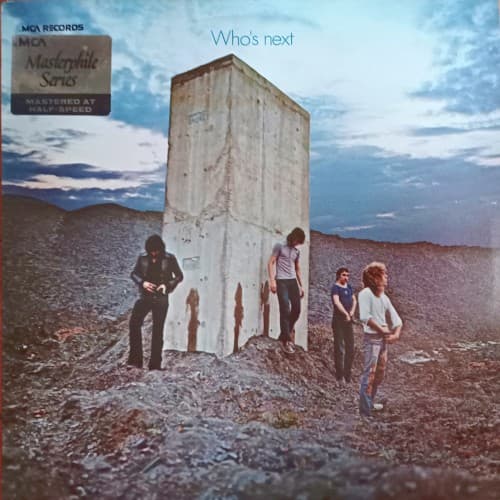
Who's Next is the album the Who made after their rock opera collapsed and nearly took Pete Townshend with it. The Lifehouse project was supposed to be Tommy's ambitious follow-up, a multimedia work about rebellion and technology that became too complex for its own structure and for the band's fraying relationship with manager Kit Lambert. What remains after stripping out the narrative scaffolding is something rarer: nine songs that work as hard rock without requiring a program guide, and that use synthesizers as architecture instead of decoration. The thesis here is that Who's Next succeeds precisely because the concept failed, forcing Townshend to write songs that could stand without a story and the band to play them with Glyn Johns capturing their live power in the studio.
The album opens with a Lowrey organ drone edited from thousands of cuts and closes with a synthesizer scream that runs eight minutes, both tracks built around the VCS 3 that Townshend originally intended as a futuristic plot device. In between, the band plays tighter and more deliberately than on any previous record, trading the chaos of Live at Leeds for arrangements that use space and dynamics instead of filling every measure with noise. Johns refused to let them hide behind effects or sprawl, insisting on performances that worked on the first listen and improved on the tenth. The result is the cleanest and most focused album of their career, one that proved a power quartet could think without losing the attack that made them worth hearing in the first place.
Synthesizers as Structure, Not Gloss
The synthesizer work on Who's Next is the element that aged best, not because it predicted electronica but because Townshend used the VCS 3 and ARP to build foundations rather than add texture. The organ drone on "Baba O'Riley" was recorded on Townshend's demo, edited down from a longer piece with thousands of cuts, and the band played the song on top of that loop rather than around it. The same method powers "Won't Get Fooled Again", where the synthesizer acts as a second rhythm section, locking the song into a groove that lets Moon play fills without losing the pocket. On "Bargain" and "Going Mobile", the drone sits lower in the mix but still dictates the tempo and the harmonic center. This is not the synthesizer as novelty or as orchestral sweetening; it is the synthesizer as the grid that the guitars and drums navigate.
Johns recorded the bulk of the album at Olympic Studios after dismissing the Record Plant sessions and the Rolling Stones Mobile material, with the exception of the "Won't Get Fooled Again" backing track from Stargroves. His production strips out the thin, brittle sound that marred Tommy and gives the band the resonance they had live but rarely captured on record. Moon's drumming is more formal here than on earlier albums, with fewer of the long fills that could derail a song's momentum, partly due to the synthesizer backing and partly due to Johns insisting on discipline over flash. The result is a drummer who plays the song instead of playing around it, most audibly on "Behind Blue Eyes", where Moon sits out the first half entirely and enters only when the dynamics require his weight.
The writing is Townshend at his most direct. "Baba O'Riley" and "Won't Get Fooled Again" are both anthems, but they earn their length with sections that develop the idea instead of repeating the hook. "Bargain" opens with a line borrowed from Meher Baba and turns spiritual devotion into a rock song without embarrassing either. "Behind Blue Eyes" was written for the Lifehouse villain and works as a ballad about self-justification, with three-part harmony from Daltrey, Townshend and Entwistle that never tips into softness. "The Song Is Over" closes with a coda quoting "Pure and Easy", a key Lifehouse track that didn't make the album, and the fragment works better as an elegy than the full song might have.
The weaknesses are in the middle. "Love Ain't for Keeping" is a decent acoustic sketch that runs two minutes and sounds like a palate cleanser rather than a statement. "Getting in Tune" and "Going Mobile" are solid mid-tempo tracks with strong playing and no real center, the kind of songs that fill out a setlist without justifying their place on a record this tight. John Entwistle's "My Wife" was added late in the sessions, originally intended for a solo album, and it shows: the brass overdubs are clever and the playing is sharp, but the song belongs to a different record. These are not bad tracks, but they are the moments where the album coasts instead of pushing.
How the Album Holds Together Without a Story
The sequencing on Who's Next is deliberate but not quite seamless. The album opens with its two strongest tracks, both of them anthems that declare the ambition and the sound. That front-loading works because the songs are different enough in tone and structure to avoid redundancy, and because both are long enough to establish the album's scope without needing a third track to make the point. The middle sags slightly, as the shorter rockers and mid-tempo material feel like stronger leftovers rather than essential statements.
The back half pulls the focus back by shifting to ballad territory, then closes with eight minutes that justify the runtime and end the album on its own terms. The pacing is uneven in a way that reflects the album's origins as salvaged material rather than a planned sequence. Johns assembled the final tracklist from the songs he believed worked best, and the result is a record that peaks early, wanders for three tracks, and then recovers for a strong finish. The length is earned by the bookends, but the middle third tests patience on repeat listens. The album works better as a collection of great individual tracks than as a front-to-back statement, which is both a departure from the rock opera model and a sign that the band had not fully committed to either approach.
Where It Ranks and Who Should Start Here
Who's Next is the Who's most consistent studio album and the one that proved they could write rock songs without needing a narrative crutch. It ranks ahead of Tommy on songwriting and production, and it holds up better than anything they recorded afterward, when the synthesizer experiments became less disciplined and the ambition started to outpace the execution. This is the album to start with if you want to hear what the band sounded like when they stopped trying to be an opera company and focused on being a power quartet with ideas. It is also the album that non-fans should try first, because the two singles are unavoidable and the deep cuts reward attention without requiring homework.
The record has aged remarkably well, in part because the synthesizer work was structural rather than decorative and in part because Johns captured a live sound that doesn't date the way more produced records from the same era do. The weak tracks are still weak, but they are short enough to skip without disrupting the flow, and the strong tracks are among the best hard rock songs of the decade. Start with "Baba O'Riley" and "Won't Get Fooled Again" to hear the synthesizer innovation, then move to "Bargain" and "Behind Blue Eyes" for the songwriting range. If those four tracks work, the rest of the album is worth owning.
For the next step, Live at Leeds shows the band's raw power without studio polish, and Tommy demonstrates the ambition that Lifehouse was supposed to exceed but couldn't. Who's Next is the record where the Who sound like themselves instead of chasing a concept, and it remains the best argument for what they could do when the songs came first.
Track by track
Track Listing
Baba O’Riley
StandoutThe album's opening statement and its most complete innovation, built on a Lowrey organ drone that Townshend edited from thousands of cuts and the band played over rather than around. The synthesizer acts as the song's foundation, locking the rhythm into a groove that lets Moon and Entwistle play with precision instead of chaos. Dave Arbus's violin enters in the final section, adding a pastoral edge that contrasts with the power chords without softening them. The lyrics reference the "teenage wasteland" that became the song's informal title, and Daltrey sings the verses with controlled force, saving the scream for the final chorus. The structure moves through distinct sections without feeling episodic, and the length is earned by the development rather than repetition. This is the track that demonstrated how synthesizers could be built into rock songs instead of layered on top, and it remains the clearest example of the album's central idea. The song has been played to exhaustion for five decades without wearing thin, which is the best evidence for the strength of the writing and the arrangement.
Bargain
StandoutThe second anthem, driven by acoustic and electric guitars interweaving with a synthesizer drone that sits lower in the mix than on the opener but still dictates the harmonic center. The opening line, "I'd gladly lose me to find you", comes from a phrase used by Meher Baba, and Townshend turns spiritual devotion into a rock song without making either side uncomfortable. Daltrey's vocal is forceful without tipping into theatrics, and the backing vocals from Townshend add texture without cluttering the arrangement. The song builds through its five-and-a-half-minute runtime, with Townshend's guitar work growing more aggressive in the final section as the rhythm section locks into a groove that justifies the length. The production is clear enough to hear each instrument while maintaining the density that makes the song work as hard rock. This is Townshend at his most direct, writing about belief without requiring a concept album to frame the argument, and the result is one of the band's strongest deep cuts.
Love Ain’t for Keeping
SolidA two-minute acoustic sketch that was reworked from a rock arrangement into a gentler version during the Olympic sessions. The playing is clean and the melody is pleasant, but the song feels like a palate cleanser rather than a statement, offering a breather between the two opening anthems and the tracks that follow. It serves a sequencing purpose without justifying its inclusion on a record this focused.
My Wife
SolidJohn Entwistle's contribution, written after an argument with his wife and exaggerated into a comic narrative about fleeing from domestic conflict. The track features overdubbed brass instruments recorded in a single half-hour session, and Entwistle's vocal delivery leans into the humor without losing the edge. The playing is sharp and the arrangement is inventive, but the song was added late in the sessions and originally intended for a solo album, which shows in the way it sits awkwardly in the middle of the tracklist. It is a strong individual track that belongs to a different record, one with more room for this kind of character sketch. The brass work is clever and the bass playing is characteristically inventive, but the song disrupts the album's flow rather than contributing to it.
The Song Is Over
StandoutA six-minute ballad that shifts between delicate verses with Nicky Hopkins on piano and heavier choruses that bring the full band in without losing the dynamics. Townshend and Daltrey share lead vocals, and the three-part harmony in the final section adds weight to the conclusion. The song closes with a coda quoting the opening line of "Pure and Easy", a key Lifehouse track that didn't make the album, and the fragment works as an elegy for the abandoned project without requiring the listener to know the reference. The structure is more episodic than the opening tracks, moving through distinct sections that don't always connect smoothly, but the playing is strong enough to hold the song together. Hopkins's piano work is subtle and effective, supporting the verses without dominating them, and Moon's drumming is restrained in the quieter sections and forceful where the dynamics require his presence. The song earns its length through development rather than repetition, though the middle section sags slightly before the final build.
Getting in Tune
SolidA mid-tempo rocker with Nicky Hopkins on piano and a solid groove, but no real center to justify its place on the album. The playing is professional and the arrangement is clean, but the song coasts on competence without offering a memorable hook or a compelling idea. It is the kind of track that fills out a setlist without demanding attention, and on a record as focused as Who's Next, that makes it feel like filler.
Going Mobile
SolidTownshend on lead vocal, singing about life on the road with a lightness that contrasts with the heavier material on the rest of the album. The synthesizer drone is present but understated, and the song moves at a brisk pace without building to much of a payoff. The playing is solid and the production is clean, but the track lacks the weight of the best material here, settling for pleasantness where the album's strongest songs aim higher.
Behind Blue Eyes
StandoutWritten for Jumbo, the villain in the abandoned Lifehouse project, and repurposed as a ballad about self-justification and resentment. The first half features three-part harmony from Daltrey, Townshend and Entwistle, with no drums, and the restraint is striking in the context of a Who album. Moon sits out the longest stretch of his career, and his absence lets the vocal arrangement and the acoustic guitars carry the section without clutter. The second half shifts into a harder rock outro, with Moon entering and the band building to a climax that resolves the tension set up in the verses. The dynamics are handled with precision, and the transition between the two sections is smooth enough to feel earned rather than arbitrary. Daltrey's vocal is controlled and effective, conveying the bitterness in the lyrics without overselling the emotion. The song works as both a ballad and a rocker, and the structure demonstrates the band's range without requiring a concept to justify the shifts in tone.
Won’t Get Fooled Again
StandoutThe eight-and-a-half-minute closer, built on a synthesizer drone from Townshend's demo that runs through the entire track and defines the groove. The song is a critique of revolutions, with Townshend writing about the cycle of power and disillusionment in lyrics that avoid sloganeering by focusing on the human cost rather than the ideology. The structure moves through verses, choruses and instrumental sections that develop the idea without repeating it, and the length is justified by the progression rather than the jamming. Daltrey's scream in the final section is the most famous moment on the album, a wordless expression of frustration that works because the song has earned the climax through eight minutes of controlled build. Moon's drumming is disciplined throughout, playing the groove instead of soloing over it, and his restraint makes the final section hit harder when he opens up. The synthesizer scream that follows Daltrey's vocal is the second defining moment, a mechanical howl that mirrors the human one and closes the song on its own terms. The track has been edited down for radio and overplayed for fifty years, but the full album version still works because the arrangement is too strong to wear out. This is the song that justifies the album's ambition and closes the record with a statement that matches the opener in scale and execution.