
From Mod Rebellion to Rock Opera Architects
The Who emerged from London's mid-sixties mod scene as angry young men with Marshall stacks and a penchant for destruction, then spent the next six decades redefining what rock could contain. Pete Townshend's windmill guitar attacks, Roger Daltrey's primal howl, John Entwistle's melodic bass runs, and Keith Moon's controlled chaos behind the kit created something fundamentally unstable — a band that sounded perpetually on the edge of collapse yet somehow channeled that tension into anthems of teenage frustration and operatic ambition.
What separated The Who from their British Invasion peers was their willingness to push past three-minute singles into conceptual territory that rock hadn't yet explored. They weren't content to simply amplify blues progressions or chase pop hooks. Townshend harbored artistic ambitions that manifested in sprawling narratives about deaf, dumb, and blind pinball wizards and disillusioned mods, while the rhythm section operated with a freedom that made conventional timekeeping seem quaint. This combination of intellectual reach and visceral power made them simultaneously cerebral and savage.
Their trajectory from Maximum R&B destroyers to architects of the rock opera remains one of the genre's most audacious transformations. Few bands have balanced commercial accessibility with genuine ambition as successfully, and fewer still have maintained creative relevance across generations while losing half their original lineup. The Who didn't just witness rock's evolution — they forced several of its most important mutations.
Controlled Demolition: The Who's Sonic Architecture
The Who's sound rested on a fundamental paradox: four virtuosos playing with reckless abandon while maintaining structural coherence. Townshend's rhythm guitar work redefined the instrument's role in rock, using open chords and suspended voicings to create harmonic spaces that felt both massive and empty. His approach wasn't about solos — it was about texture, attack, and the strategic deployment of feedback as a compositional element. The windmill technique became iconic not because it looked dramatic but because it forced a particular kind of aggression into every downstroke.
Entwistle's bass playing operated almost as a lead instrument, weaving melodic counterpoint through arrangements while Moon's drumming destroyed any notion of the rhythm section as timekeeper. Moon played with the melodic sensibility of a horn section, accenting fills and rolls that anticipated chord changes rather than simply marking them. This created a fluid, almost conversational interplay where Daltrey's vocals became another instrument in the mix rather than the singular focus. The space between instruments mattered as much as the notes themselves.
Production-wise, The Who embraced both rawness and studio experimentation. Early singles like "My Generation" captured their live intensity with minimal embellishment, while later works incorporated synthesizers, orchestration, and multi-tracking without losing their essential punch. Kit Lambert and Glyn Johns understood that The Who's power came from preserving their internal tension rather than polishing it away. Even their most ambitious studio constructions retained a live-band immediacy that made the conceptual material feel urgent rather than academic.
Maximum Everything: The Who's Arc from Mod Anger to Arena Triumph
The Who's origin story involves calculated image construction as much as musical development. Manager Pete Meaden initially positioned them as the High Numbers, a pure mod band designed to capture the movement's fashion-conscious following at clubs like the Scene. That incarnation lasted months before Kit Lambert and Chris Stamp took over management and recognized that Townshend's songwriting and the band's explosive live show deserved a larger canvas. The name change to The Who coincided with their instrument-smashing finale becoming a signature — partly accident, partly art statement, entirely effective at generating attention.
Their early singles established the template: "I Can't Explain" and "Anyway, Anyhow, Anywhere" captured mod anxiety with power chord fury, while "My Generation" became a generational anthem by articulating teenage frustration with uncommon aggression. Townshend's stutter wasn't affectation — it was anger made audible. These weren't love songs or blues progressions; they were sonic manifestations of class resentment and youthful rage. The albums of this period — "My Generation" and "A Quick One" — felt more like collections than statements, but they contained flashes of the conceptual thinking that would define their next phase.
The turning point arrived with "Tommy" in 1969, a double-album rock opera about a traumatized boy who becomes a messianic figure through pinball mastery. Critics debate its narrative coherence, but its ambition was undeniable. Townshend had been experimenting with song cycles and thematic continuity, influenced by his interest in Meher Baba's teachings and a genuine belief that rock could contain literary complexity. "Tommy" succeeded commercially and critically, establishing The Who as more than a singles band and paving the way for rock's theatrical turn in the seventies. The subsequent live performances and film adaptation cemented its cultural impact.
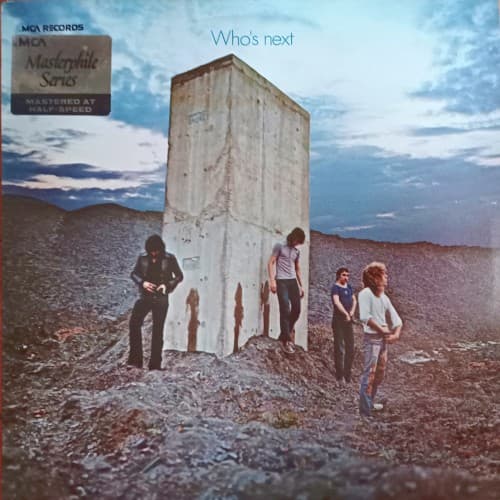
But it was "Who's Next" in 1971 that captured The Who at their most powerful and accessible. Originally conceived as another rock opera called "Lifehouse," the project collapsed under its own conceptual weight, leaving Townshend with exceptional songs stripped of their narrative framework. Tracks like "Baba O'Riley" and "Won't Get Fooled Again" became FM radio staples, combining synthesizer experimentation with anthemic choruses that filled arenas. The album represented a perfect balance — ambitious enough to satisfy Townshend's artistic drives, direct enough to connect with massive audiences. It remains their most consistently celebrated work and perhaps their most influential on subsequent rock generations.
The seventies continued with "Quadrophenia" in 1973, another concept album examining mod culture with autobiographical intensity. More musically sophisticated than "Tommy" but less immediately accessible, it divided fans and critics before gaining recognition as their most fully realized narrative work. Moon's drumming reached its creative peak here, and Townshend's production integrated orchestration and sound effects without sacrificing the band's core power. Tours grew larger, but internal tensions mounted as Moon's substance abuse worsened and Townshend grappled with hearing damage and creative exhaustion.
Moon's death in 1978 fundamentally altered The Who's identity. They continued with Kenney Jones on drums, releasing "Face Dances" and "It's Hard" in the early eighties, but these albums felt workmanlike compared to their peak work. The chemistry that made The Who dangerous had depended on Moon's unpredictability. Without him, they were a great rock band rather than a force of nature. They disbanded in 1983, reuniting periodically for tours and specific projects but never recapturing their original intensity.
Entwistle's death in 2002 left Townshend and Daltrey as the only surviving original members, yet they've continued performing and occasionally recording with hired musicians. These later iterations serve as celebration and preservation rather than innovation. Their 2019 album "Who" received respectful reviews but didn't pretend to compete with their classic period. What these continued activities demonstrate is The Who's transformation from active artists into custodians of their own legacy — a role they've accepted with appropriate reverence and occasional flashes of their original defiance.
The Who's Enduring Impact on Rock's Possibilities
The Who's influence operates on multiple levels — sonic, conceptual, and performative. Their use of power chords and feedback as compositional tools rather than effects directly informed punk's stripped-down aggression and hard rock's emphasis on texture over technique. Bands from The Clash to Pearl Jam have cited Townshend's rhythm guitar approach as foundational, recognizing that his restraint created more space and power than virtuosic soloing. The rhythm section's conversational interplay became a model for progressive rock and jam bands seeking to escape rigid timekeeping.
Conceptually, their willingness to attempt rock operas and thematic albums legitimized ambition in a genre that had previously valued immediacy over extended narratives. While "Tommy" and "Quadrophenia" have their flaws, they demonstrated that rock could sustain attention across double albums and complex storylines. This opened doors for everything from Pink Floyd's elaborate productions to Green Day's punk operas decades later. The idea that a rock band could have something substantial to say — beyond teenage romance or blues clichés — became partially validated through The Who's example.
Culturally, The Who represented a specifically British working-class perspective that differed from the blues purism of the Stones or the experimental pop of the Beatles. Their mod origins and Townshend's articulate interviews positioned them as thinking person's rock, capable of both intellectual discourse and physical catharsis. This combination influenced generations of British bands seeking to balance artistic credibility with popular appeal. Their impact on stadium rock's visual spectacle and sonic intensity remains visible every time a band destroys equipment or uses video screens to enhance live performance — gestures The Who pioneered or perfected.