The scorecard
9.3/10 · Essential
- Songwriting25%
- 9.5
- Production25%
- 10.0
- Performance15%
- 8.5
- Cohesion15%
- 8.0
- Originality10%
- 10.0
- Replay value10%
- 9.0
Harrison's taxman satire and Lennon's dream logic on tracks three and fourteen prove melody and meaning can coexist without compromise.
Emerick's close-miked drums, ADT invention and tape loop construction created sounds no one had captured on a rock record before.
McCartney's unaccompanied string arrangement vocal and Harrison's backwards solo show technical ambition occasionally outpacing emotional connection.
The leap from children's singalong to Indian raga to psychedelic closer demonstrates range but sacrifices the flow Rubber Soul achieved.
First pop album to route vocals through Leslie speakers, reverse entire guitar solos and build arrangements from prepared tape loops.
The experimental tracks reward study more than the conventional ones reward repetition, making this less immediately gripping than the hits suggest.
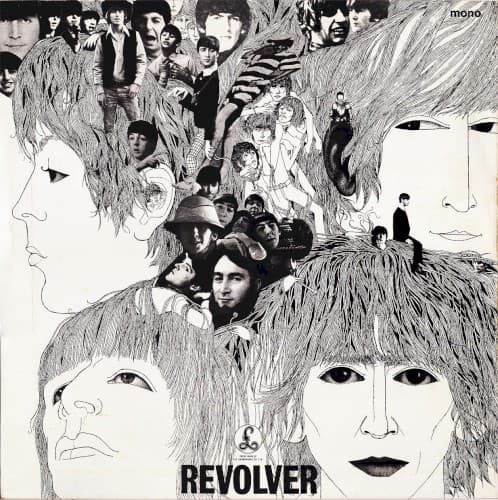
The Beatles Revolver — The Album That Turned the Studio Into an Instrument
The argument over whether Revolver or its more famous successor represents the Beatles' peak misses what makes this album unrepeatable: it is the only time the band had absolute freedom and no template. Rubber Soul had shown them the album format could hold together without filler. The touring grind was about to end but had not yet stopped. Abbey Road's equipment was primitive enough to force invention but advanced enough to capture it.
They had three months off, access to London's art scene and avant-garde, and no obligation to perform any of this music live. The result is not their most consistent album but their most genuinely experimental, the one where studio technique became composition rather than decoration. Half the record consists of songs no guitar band had attempted before 1966; the other half refines approaches they had already proven. That imbalance is the point.
Revolver is the sound of a group using their commercial invincibility to find out what rock records could be, accepting that some experiments produce blueprints and others produce curios. Sgt. Pepper would apply these discoveries to a concept. This album just makes the discoveries, in public, without a net.
Four Tracks, Five Hundred Hours and No Rules Left
The production credit belongs to George Martin, but the methodology belongs to the band and engineer Geoff Emerick, who was twenty and willing to ignore every rule EMI's older engineers considered inviolable. The album's reputation rests on its technical firsts—automatic double tracking, vocals through a Leslie speaker, reversed guitar solos, tape loops mixed live across multiple machines—but the more important shift is philosophical. The Beatles stopped asking whether a sound was achievable with their live setup and started asking whether it was achievable at all.
Emerick close-miked Ringo Starr's bass drum with a sweater stuffed inside it and a microphone three inches from the head, then ran the signal through a Fairchild limiter. Studios in the United States heard the result and tore their drum booths apart trying to replicate it. McCartney's bass, recorded through a repurposed loudspeaker, sits higher in the mix than on any prior Beatles release. The guitars, run through new Fender amps and heavily compressed, sound like they are in the room.
Every element is closer and louder than it should be, as though the record is pushing against the edges of the vinyl. Martin and McCartney co-wrote the string arrangement for Eleanor Rigby and then had Emerick mic the octet so closely that the players complained. The result is a string section that bites instead of sweetens, turning a chamber pop experiment into something that sounds like a threat.
Martin's role had shifted from authority to facilitator: the band described the sound they wanted and he found a way to make it possible, even when the sound was Lennon asking for his voice to sound like the Dalai Lama chanting from a mountaintop. The answer was running the vocal through a Leslie speaker cabinet, an organ effect never used on a voice before. These are not tricks deployed for novelty. Each choice serves a song that could not exist without it.
The tabla and tambura on Love You To and the backward guitar on I'm Only Sleeping are not embellishments; they are the arrangements. That said, the experimental imperative does not rescue every track. Doctor Robert and And Your Bird Can Sing are well-played guitar pop with no particular reason to exist on an album this ambitious, and the decision to include a children's singalong immediately after an Indian classical piece makes the sequencing feel more like a bag of ideas than a planned statement.
But the peaks justify the sprawl.
Got to Get You Into My Life uses a six-piece horn section to make a Motown homage that sounds nothing like Motown, because the horns are compressed and close-miked into a blare no Detroit arranger would have allowed. The band spent over 220 hours recording these fourteen songs, nearly triple the time for Rubber Soul, and the extravagance shows in the density of the arrangements and the willingness to scrap entire takes when a better idea emerged.
Side Two Earns What Side One Promises
Revolver peaks in its final six minutes and sags in its middle, a structure that makes the album feel like a suite with a long preamble. The opening stretch establishes the range with a protest song about tax policy, a string-backed character study with no band at all, and a Lennon fever dream. Then it coasts.
The middle section includes a novelty, a beautiful song that would fit on any Beatles album since 1964, and solid but not essential material. The first half ends with the sense that the band is showing you what they can do rather than building toward anything.
The back half corrects the imbalance. Two short tracks are both perfect within their modest goals, one a music hall piano sketch and the other a breakup miniature with a French horn solo. The third Harrison contribution still offers a dissonant piano part that signals the band's increasing comfort with sounds that unsettle rather than resolve.
Then the closing run uses horns the way most bands used guitars, and Tomorrow Never Knows uses tape loops and a single-chord drone to construct something that belonged to no genre that existed in August 1966. That closing track is the only one on the album that sounds like the future rather than an expansion of the present, and it makes the case that the Beatles in 1966 had no competition because no one else knew the competition had changed. The sequencing suffers from the lack of a unifying concept and from the Capitol Records decision to pull three tracks for the North American release, which meant the band was not sure which version of the album would define it. The result plays more like a collection than a journey, though a collection this strong does not require a narrative to justify its length.
The Blueprint Every Successor Built On
Revolver ranks second in the Beatles catalog, behind Abbey Road and ahead of the album that usually gets called their best. Sgt. Pepper has the concept and the press, but Revolver has the songs and the innovations without the vaudeville. It is the album where the band stopped being a rock and roll group and became a recording project, which makes it the most important album they made even if it is not the most fully realized.
Three weaknesses keep it from all-time status. The sequencing is front-loaded with experiments and back-loaded with peaks, leaving the middle of side one feeling like a tour of capabilities rather than a sustained argument. The stylistic range, from children's music to Indian classical to tape collage, demonstrates ambition but costs the album the cohesion that Rubber Soul and Abbey Road both achieve. And the experimental tracks, particularly Tomorrow Never Knows, reward analysis and admiration more than they invite repeated casual listening, which means the record's reputation slightly exceeds its replay value.
That said, no other rock album from 1966 comes close. The Beach Boys' Pet Sounds has the emotional through-line this album lacks, but it does not have three George Harrison songs, a reversed guitar solo, or a track built from tape loops. Bob Dylan's Blonde on Blonde has the writing, but the production is intentionally raw where this is intentionally constructed. Revolver is the album that taught rock bands the studio was an instrument, which makes it the most influential album of the decade whether or not it is the best.
Start with Eleanor Rigby, Tomorrow Never Knows and Taxman if you want the reputation justified in under eight minutes. For No One and Here There and Everywhere show the band could still write a perfect two-minute song when they chose to. Listeners allergic to experimentation should skip this and go straight to Abbey Road, which applies these lessons with more discipline.
Listeners who want to hear the moment rock became self-conscious about its own possibilities have no better option. If you finish this album and want to hear where it led, try Sgt. Pepper next for the refinement or The White Album for the sprawl.
Track by track
Track Listing
Taxman
StandoutGeorge Harrison's first album-opening track is a complaint about the British tax system set to the nastiest guitar tone the Beatles had recorded. The lyric names Harold Wilson and Edward Heath by name and describes a 95 percent supertax rate with the specificity of someone who had just hired an accountant. The verses are sung with clipped consonants that make the grievance sound like a demand, and the guitar solo—played by Paul McCartney, not Harrison—is a distorted snarl that owes more to Indian vocal melisma than to Chuck Berry. The count-in includes coughs and the sound of coins, a detail that seems clever until you realize it is exactly as clever as the song needs to be and no more. The track establishes that the album will not be polite.
Eleanor Rigby
StandoutA string octet arranged by George Martin and McCartney, recorded with close mics that made the players nervous, and not a single guitar or drumbeat. The lyric is a character study of loneliness that ends with a priest wiping dirt from his hands after burying Eleanor in a ceremony no one attended, and McCartney sings it with no vibrato or decoration, as though he is reading a news report. The octave leap on the word "nobody" is the only moment where the vocal allows itself drama, and the effect is devastating because everything around it is so controlled. The staccato string rhythm is relentless and the arrangement never resolves, leaving the song suspended in the same loneliness it describes. This is McCartney at his most ambitious and least sentimental, and the fact that it was a double A-side single with Yellow Submarine suggests the Beatles had no interest in giving the public what it expected.
I’m Only Sleeping
StandoutLennon's meditation on the appeal of staying in bed, recorded at a faster tempo than the final version and then slowed down to give the vocal a drowsy, drugged quality. The backward guitar solo, composed and recorded by Harrison with the tape direction in mind, is the first time a pop record used that technique as arrangement rather than accident. The song is a defense of laziness disguised as a love song to sleep, with Lennon delivering the verses in a yawn and the overdubbed harmonies answering him like a Greek chorus of enablers. The production matches the subject: every element sounds like it is half awake, from the slurred tambourine to the guitars that seem to drift in and out of focus. A small masterpiece of mood.
Love You To
SolidHarrison's Hindustani classical composition, featuring tabla player Anil Bhagwat, tambura drone and sitar, with only a faint Western rhythm section buried in the mix. The lyric dismisses material concerns and romantic games in favor of a spiritual connection, which makes it the most overtly Eastern-philosophy track the Beatles had recorded. The vocal melody follows the sitar line, and Harrison sings it with almost no dynamics, letting the arrangement do the work. The track is significant as an early example of Western rock incorporating Indian music without parody, but it plays more like a respectful exercise than a song that needed to exist. Interesting once, skippable on repeat.
Here, There and Everywhere
StandoutMcCartney's most delicate ballad since Yesterday, with a three-part harmony structure on the verses and a bridge that lifts into a major key resolution. The fingerpicked guitar and the gentle bass are the only instruments, which gives the vocal space to show off the tune's construction without overwhelming it. The lyric is a standard love song about wanting someone present in all places and times, and McCartney sings it with enough warmth to sell the sentiment without tipping into schmaltz. It is beautifully made but unremarkable within the album's context, a reminder that the band could still write a flawless conventional pop song when it chose to.
Yellow Submarine
SolidA children's song sung by Ringo Starr, with sound effects and party vocals overdubbed in a session that included Brian Jones, Marianne Faithfull, and assorted friends blowing bubbles and shouting in the background. The track was a single and a hit, and it serves no purpose on an album that includes tape loop collages and Indian classical music except to prove the Beatles could write a novelty song and have it be charming rather than insufferable. It is charming. It is also filler.
She Said She Said
SolidLennon's account of a bad acid trip, inspired by a comment Peter Fonda made during a group LSD session in Los Angeles. The lyric describes a conversation about death and childhood with someone who does not understand what Lennon is trying to communicate, and the frustration comes through in the vocal, which is clipped and impatient. The guitar riff shifts between time signatures without announcing it, giving the track a stumbling, disoriented feel that matches the subject. McCartney walked out during the final session for this track after a disagreement, and the song was completed without him. It is solid mid-tier Lennon, more interesting for its backstory than for the song itself, though the guitar work is strong enough to carry it.
Good Day Sunshine
StandoutA music hall piano vamp with McCartney's vocal double-tracked and sped up slightly to give it a cheerful, cartoonish quality. George Martin plays the honky-tonk piano, and the track builds from a simple verse-chorus structure into a brief breakdown where the vocal harmony lifts the whole arrangement into a major-key celebration. It is two minutes long, completely unpretentious, and succeeds at exactly what it attempts. A palate cleanser.
And Your Bird Can Sing
WeakA Lennon rocker with a dual guitar riff played in harmony by Harrison and McCartney, and not much else to distinguish it. The lyric is a dismissal of someone who thinks they have everything figured out, and Lennon sings it with a sneer, but the song has no hook strong enough to justify its inclusion on an album this ambitious. Well-played filler.
For No One
StandoutMcCartney's miniature about the end of a relationship, sung with almost no emotion and accompanied by clavichord, bass and a French horn solo played by Alan Civil. The horn solo is given the space usually reserved for a guitar, and Civil plays it with a classical purity that makes the song feel like a chamber piece rather than a pop ballad. The lyric describes a woman who no longer cares and a man realizing he has no leverage left, and McCartney sings it like he is observing someone else's breakup from across the room. Two minutes, no wasted notes, perfect.
Doctor Robert
WeakLennon's song about a doctor who dispenses pills, widely understood to be about a New York physician who provided amphetamines and other substances to celebrities. The track has a strong bass line and a call-and-response harmony vocal, but the production is flat compared to the rest of the album and the song never develops past its central riff. It is the weakest Lennon contribution and feels like it was included to fill space rather than because it earned its spot.
I Want to Tell You
SolidHarrison's third composition, a song about the frustration of being unable to articulate what you are thinking, set to a dissonant piano part that plays a flattened note against the vocal melody. The tension is deliberate and effective, giving the track an uneasy quality that matches the lyric's theme of communication breakdown. The vocal is strained in places, as though Harrison is pushing his range, but the performance adds to the sense of someone struggling to express an idea they cannot quite reach. The best of the three Harrison tracks in terms of production, though the weakest in terms of melody.
Got to Get You Into My Life
StandoutMcCartney's Motown homage, recorded with a six-piece horn section arranged by Martin and McCartney and compressed into a blare that sounds nothing like the smooth Detroit productions it references. The lyric is a love song that McCartney later said was about marijuana, though nothing in the words makes that reading necessary. The horns are so loud and so insistent that they function as the lead instrument, with the vocal and guitar pushed into a supporting role. The production is aggressive in a way that contemporary soul records were not, and the result is a hybrid that borrows a template and then reimagines it with rock studio techniques. The best example on the album of the band synthesizing influences rather than imitating them.
Tomorrow Never Knows
StandoutLennon's vocal routed through a Leslie speaker, singing a lyric adapted from the Tibetan Book of the Dead, over a single-chord drone and a backing track constructed from tape loops that McCartney and the band prepared at home and mixed live across multiple tape machines. The loops include backward guitar, sped-up laughter, distorted orchestral recordings and seagull sounds, layered into a collage that shifts throughout the track. Ringo Starr's drumming is compressed and miked so closely that it sounds like a heartbeat, and the tambura drone, played by Harrison, runs underneath the entire arrangement. The production took more hours than any other track on the album, and the result is the most fully realized piece of studio experimentation the Beatles ever recorded. The song has no precedent in pop music and no real successors, because it exists at the intersection of Indian classical music, musique concrète, and rock in a way that cannot be replicated by imitation. It is more interesting than enjoyable, which is both its achievement and its limitation. Essential to understanding what the album represents, even if it is not the track you will return to most often.