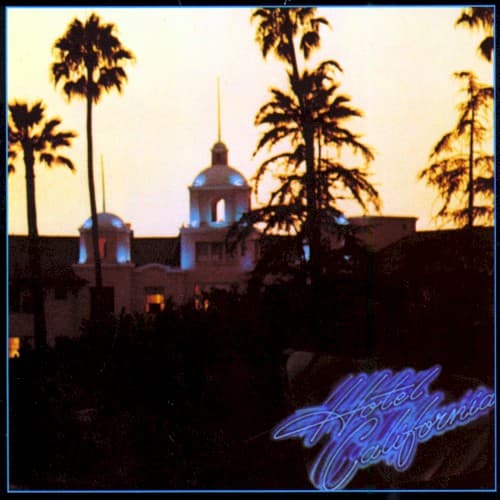
The scorecard
8.3/10 · Great
- Songwriting25%
- 8.5
- Production25%
- 9.0
- Performance15%
- 8.0
- Cohesion15%
- 7.5
- Originality10%
- 7.0
- Replay value10%
- 8.5
Title track builds tension through chord motion and image accumulation; weaker songs like "Victim of Love" lean on grooves instead of development.
Bill Szymczyk captures room ambience and separation across 33 edits on the title track while recording "Victim of Love" live in one take.
Henley's weariness suits the material but the band's vocal blend smooths over what should cut deeper on tracks like "Life in the Fast Lane".
Side one peaks early and sustains it; side two sprawls across Walsh's ballad, Meisner's valediction and a seven-minute closer that earns its length.
Joe Walsh's arrival pushes the band toward straight rock on "Life in the Fast Lane" but most songs refine the country-rock template rather than break it.
The singles and "The Last Resort" reward repeated listens; the album's length and two or three forgettable tracks make full playthroughs less common over time.
Eagles Hotel California — The Dream Decays in High Fidelity
The Eagles made an album about disillusionment that sold forty-two million copies, which means they either misjudged their audience or understood it better than the audience understood itself. Hotel California argues that the Southern California promised land is a trap, that success is corrosive, that every frontier eventually closes, and it makes the argument with such meticulous craft and such pretty harmonies that it became the soundtrack to the very excess it claims to critique. The thesis is in the title track, which opens the album: a man checks into a hotel he can never leave, the imagery hovering between literal luxury and allegorical damnation, and the song works because Don Henley sings it like a man already resigned to his sentence. The stakes are whether the band can sustain that claim across nine songs without the polish undermining the point.
This is the first Eagles album with Joe Walsh, who replaced Bernie Leadon after One of These Nights, and Walsh's presence tilts the sound toward straightforward rock and away from the country inflections that had defined the band. Bill Szymczyk produced the sessions at Criteria Studios in Miami and Record Plant in Los Angeles between March and October 1976, and the recording is immaculate: room tone, string arrangements by Jim Ed Norman, vocal stacks that lock without ever sounding mechanical. The album topped the Billboard 200, spun off two number one singles and eventually moved twenty-eight million units in the United States alone, which makes it one of the most commercially successful arguments against commercial success ever recorded, alongside albums like Fleetwood Mac's Rumours and Pink Floyd's Dark Side of the Moon. Whether it is also a good album depends on whether you think the craft justifies the sermon and whether the sermon is specific enough to matter.
Precision as Both Weapon and Liability
The songwriting on Hotel California splits between songs built on specific images and songs built on grooves, and the difference is audible. The title track, written by Don Felder on the chord progression and Don Henley and Glenn Frey on the lyrics, works because it accumulates detail: mirrors on the ceiling, pink champagne on ice, voices down the corridor, a beast you cannot kill. The melody moves through the changes without settling, which keeps the song from feeling resolved even as it circles back to the refrain. The twin guitar outro, traded between Felder and Walsh, stretches past two minutes and earns every second because the solos develop ideas instead of restating them. "New Kid in Town," co-written with JD Souther, disguises a breakup song as a comment on fame, and the verse melody is strong enough that the lyric's shift from romantic jealousy to professional replacement feels like the same emotion. "The Last Resort," seven and a half minutes of environmental jeremiad, risks preachiness but Henley's phrasing and Norman's strings give it enough gravity to close the album without deflating it.
The weaker songs mistake smoothness for structure. "Victim of Love," recorded live in one take apart from vocals and harmonies, has a riff and a groove but no chorus that sticks, and the lyric about heartbreak as a car crash is the kind of metaphor that sounds clever in a writing session and obvious on record. "Pretty Maids All in a Row," the only Walsh solo composition, is a competent ballad about a failing relationship, but it offers neither the specificity of "Wasted Time" nor the thematic weight of the songs around it. "Try and Love Again," written entirely by Randy Meisner, is Meisner's quiet exit from the band, and while it has a resigned melancholy that fits the album's themes, the melody does not develop and the five-minute runtime feels unearned. The album has no filler in the sense of throwaway tracks, but it has three or four songs that survive on performance and production rather than construction.
Bill Szymczyk's production is the album's greatest asset and occasionally its problem. He recorded the basic tracks live, which gives the album a band feel even when the arrangements are dense, and the mix balances clarity with warmth: Henley's drums punch without dominating, Meisner's bass sits in the pocket, the guitars have space to breathe. The title track required thirty-three edits on the two-inch master to assemble the final version, and the seams are invisible. But the same precision that makes "Hotel California" and "Life in the Fast Lane" sound massive also makes "Victim of Love" and "Pretty Maids All in a Row" sound too clean for their own good. The band wanted to prove they could play without overdubs, hence the live take on "Victim of Love," but the proof does not make the song better.
Henley's vocals carry the album's emotional weight, and he sings with the weariness the material requires. Frey's voice is lighter and more versatile, and he takes the lead on "New Kid in Town" with just enough bitterness to sell the lyric. Walsh, on "Pretty Maids All in a Row," sounds earnest but tentative, as if he is still figuring out where he fits in the band's vocal hierarchy. The harmonies are flawless, which is both the point and the problem: the blend is so smooth that it can sand the edges off a lyric that should cut. "Life in the Fast Lane," a song about drug-fueled recklessness, sounds too controlled to be dangerous, even with Walsh's opening riff providing the foundation.
An Album Front-Loaded by Design
The album is sequenced to peak in its first stretch and then test your patience in the back half. The opening run delivers the central hook, the first single, the hardest-rocking moment, and the most nakedly personal song Henley had written to that point. Side two opens with an orchestral palate cleanser under two minutes. From there the album sprawls: one song feels disposable, two others are competent but not essential, and the closer is either bold or a seven-minute lecture depending on your tolerance for environmental allegory.
The sequencing is deliberate, with the weaker material placed where it does the least damage, but the album would be stronger at seven tracks. Only the title track justifies its length on every listen. The closer earns its runtime on the first few plays, but its didacticism becomes more obvious over time.
The rest of the album is paced well enough that the sags do not kill momentum, but they prevent the album from being essential front to back. The decision to open side two with a ninety-second instrumental reprise is a gamble that pays off: it gives the listener a breath before the back half, and the shift from vocal to strings makes the transition feel intentional rather than arbitrary.
The Eagles' High-Water Mark, for Better and Worse
Hotel California is the best Eagles album because it is the most ambitious and because Joe Walsh gave them a harder edge without erasing the band's identity. It is also the album where the seams start to show: the tension between Henley and Frey's vision of the band as social critics and the reality of the band as a massively successful touring act, the craft that made them rich applied to songs about how that craft and that wealth are hollow. The album argues its thesis convincingly on the title track, "New Kid in Town," and "The Last Resort," and it makes a strong case for itself as a production highlight throughout. The weaker songs do not ruin it, but they keep it from being a classic without qualifications.
If you know the Eagles from the singles, start with the title track and "Life in the Fast Lane," then move to "New Kid in Town" and "The Last Resort." If those four songs work for you, the rest of the album will either deepen the experience or feel like well-executed filler. Skip "Victim of Love" and "Pretty Maids All in a Row" unless you are committed to the full listen. This is not an album for listeners who want raw rock and roll, and it is not an album for listeners who want country-rock, because it splits the difference and polishes both sides to a gleam. It is an album for listeners who want meticulous craft in service of a downbeat argument, and who can tolerate the irony of that argument being delivered by a band at the absolute peak of its commercial powers.
The album has aged well in the sense that its themes, loss of innocence and the corruption of idealism, are evergreen, and it has aged poorly in the sense that its production is so much a product of mid-seventies Los Angeles rock that it can sound like a period piece. The band has never topped it, and it remains the easiest entry point into their catalog. If you want to hear what comes next, Desperado is the other conceptually ambitious Eagles album, and One of These Nights is the album that immediately preceded this one and established the template. If you want to hear where the sound came from, start with the Byrds' Sweetheart of the Rodeo and work forward.
Track by track
Track Listing
Hotel California
StandoutThe album's thesis in six and a half minutes: a traveler checks into a hotel that is also a metaphor for fame, California, America, or damnation, depending on which verse you emphasize. Don Felder wrote the chord progression, a descending minor sequence that never resolves, and Henley and Frey built the lyric around images that accumulate without explaining themselves. The verse melody moves through the changes without settling, which keeps the song feeling unresolved even when it circles back to the refrain, and Henley sings it with the weariness of a man who already knows he is trapped. The production, assembled from thirty-three edits on the two-inch master, is invisible: the song sounds like a single performance. The twin-guitar outro, traded between Felder and Walsh, stretches past two minutes and justifies every second because the solos develop motifs instead of repeating licks. The song works because it refuses to explain itself, and because the melody and the arrangement are strong enough to carry the ambiguity. This is the peak of the band's songwriting and the reason the album exists.
New Kid in Town
StandoutA breakup song disguised as a comment on fame, co-written with JD Souther, and the verse melody is strong enough that the shift from romantic jealousy to professional replacement feels like the same emotion. Frey takes the lead vocal and sings it with just enough bitterness to avoid sentimentality, and the harmony on the chorus is the kind of flawless blend that made the Eagles unavoidable on seventies radio. The lyric about being replaced by someone younger and hungrier applies equally to relationships and to the music industry, which gives the song more weight than a straightforward breakup ballad would carry. The arrangement is restrained, with Randy Meisner's guitarrón adding texture without overwhelming the vocal, and the song's four-minute runtime feels earned. It topped the Billboard Hot 100 and won a Grammy for Best Arrangement for Voices, and it deserved both.
Life in the Fast Lane
StandoutJoe Walsh's opening riff, developed into a full song with Frey and Henley, and the title came from a conversation between Frey and his drug dealer during a high-speed car ride. The riff is the song's strongest element, a grinding two-chord vamp that Walsh plays with enough swing to keep it from feeling monotonous, and Henley's vocal has the weariness the lyric requires. The problem is that the production is too controlled: a song about cocaine and reckless driving should sound more dangerous than this, and the harmony vocals smooth over what should be jagged. The lyric is specific enough to work, paranoia and freeway adrenaline and the sense that the ride will eventually end badly, but the track never fully commits to the chaos it describes. Still a strong single and the hardest-rocking moment on the album, even if the execution does not quite match the concept.
Wasted Time
StandoutThe most nakedly personal song Henley had written to that point, based on his breakup with Loree Rodkin, and he sings it with enough regret to make the emotion land without overplaying it. The verse melody is patient, giving Henley space to phrase the lyric naturally, and the chorus lifts without turning triumphant. The arrangement builds gradually, adding strings and backing vocals as the song progresses, and the production supports the vocal without overwhelming it. The song risks sentimentality but avoids it because Henley's phrasing is specific enough to feel lived-in rather than generic. The four-minute runtime is just right: long enough to develop the idea, short enough to avoid repetition. Not a single, but one of the album's strongest album tracks and a necessary counterweight to the more allegorical material on side one.
Wasted Time (reprise)
SolidA ninety-second orchestral reprise arranged by Jim Ed Norman, bridging side one and side two with a string arrangement that recaps the melody of "Wasted Time" and shifts the album's tone. It works as a palate cleanser and as a signal that side two will be more varied and less focused than side one.
Victim of Love
WeakRecorded live in one take apart from lead vocals and harmonies, originally an instrumental by Felder titled "Iron Lung," and the final title came from a conversation about breakups in which JD Souther compared a broken heart to a car crash. The riff and groove are solid, and the band proves they can play together without overdubs, but the song has no memorable chorus and the lyric is the kind of metaphor that sounds clever in a writing session and obvious on a record. Henley took over the lead vocal after Felder's early takes were judged insufficient, and Henley's performance is committed, but the song itself is the weakest on the album. It functions as a showcase for the band's live chops and not much else.
Pretty Maids All in a Row
SolidThe only song on the album written solely by Joe Walsh, a piano ballad about a relationship nearing its end, and Walsh sings it with sincerity but not much authority. The melody is competent, the lyric is serviceable, and the arrangement is tasteful, but the song offers neither the specificity of "Wasted Time" nor the thematic weight of the material around it. It fits the album's themes of loss and disillusionment, but it does not add anything the album has not already said better elsewhere. A solid album track that would stand out more on a lesser record but gets lost in the middle of this one.
Try and Love Again
SolidRandy Meisner's swan song with the band, written entirely by Meisner, and it can be heard as both a song about a failing relationship and a comment on Meisner's approaching departure from the Eagles. The melody is patient and the lyric has a quiet resignation that fits the album's themes, but the song does not develop over its five-minute runtime, and the length feels unearned. Meisner's vocal is understated and effective, and the arrangement supports him without overwhelming the performance, but the song lacks the melodic strength of the album's best material. A respectable effort that suffers from its placement between two more forgettable tracks on side two.
The Last Resort
StandoutSeven and a half minutes of environmental allegory, tracing the destruction of the American frontier from the Pilgrims to twentieth-century overdevelopment, and it is either the album's boldest statement or its most didactic depending on your tolerance for sermons. Frey said the song was the first time Henley took it upon himself to write an epic story, and the lyric is specific enough in its imagery, call some place paradise and kiss it goodbye, to avoid pure abstraction. The arrangement builds gradually, adding synthesizer and strings and pedal steel, and Henley's vocal is patient enough to let the lyric breathe. The song had to be re-recorded multiple times at Criteria Studios because Black Sabbath were too loud in the adjacent room, and the final version justifies the effort. The length is a risk, but the song earns it on the first few listens; over time the didacticism becomes more obvious and repeat listens are less rewarding. Still, a bold closer that reinforces the album's thesis and prevents side two from feeling like an afterthought.