The scorecard
8.1/10 · Great
- Songwriting25%
- 8.5
- Production25%
- 9.0
- Performance15%
- 7.5
- Cohesion15%
- 7.5
- Originality10%
- 7.5
- Replay value10%
- 7.5
The concept is ambitious and mostly cohesive, with strong melodies on 'Comfortably Numb' and 'Mother,' but the 26-track structure forces repetition and padding that dilutes the narrative.
Bob Ezrin and James Guthrie deliver layered, theatrical production with orchestral arrangements by Michael Kamen that serve the rock opera format, though some tracks feel overproduced.
Waters's vocals carry the emotional weight of Pink's descent, and Gilmour's guitar solos—especially on 'Comfortably Numb'—are exceptional, but the performances lack the spontaneity of earlier Floyd records.
The rock opera structure imposes tight sequencing, but 26 tracks across 80 minutes include obvious filler like 'Stop' and 'Goodbye Cruel World,' and the doubled 'Another Brick' motif feels padded.
The rock opera format and wall metaphor are executed with theatrical ambition rare in 1979 rock, but the concept leans heavily on Waters's autobiography and lacks the sonic invention of Dark Side.
The singles and 'Comfortably Numb' endure, but the album's length, didactic tone, and stretches of dialogue and sound effects make full playthroughs more exhausting than rewarding over time.
Pink Floyd The Wall — Where Autobiography Became Architecture
The Wall argues that isolation is both self-inflicted and inevitable, that the traumas we collect become the bricks we stack between ourselves and the world. Roger Waters built this argument across 26 tracks and 80 minutes, a rock opera that diagrams the psychological collapse of a rock star named Pink through childhood loss, schoolyard humiliation, marital betrayal and fascist fantasy. The thesis is clear: every wound is a brick, every brick makes the wall higher, and the wall is both protection and prison.
The stakes are personal. Waters modeled Pink partly on himself—the dead father, the overbearing mother, the failed marriage, the alienation from audiences during the 1977 In the Flesh tour—and partly on Syd Barrett, whose departure from the band in 1968 still haunted the group. The Wall makes that haunting literal, turning private grievance into public spectacle.
It topped the US charts for 15 weeks, produced Pink Floyd's only number-one single in 'Another Brick in the Wall, Part 2,' and sold over 30 million copies. It also marked the end of the band as a creative partnership. Richard Wright was fired during production, and the tensions between Waters and David Gilmour that Bob Ezrin mediated in the studio would fracture the group within four years. The Wall is Pink Floyd at their most ambitious and most divided, a concept album that demands total commitment from the listener and delivers both grandeur and bloat in equal measure.
The Studio as Theater
Waters wrote most of The Wall, with Gilmour co-writing the music for 'Comfortably Numb,' 'Young Lust,' and 'Run Like Hell,' and Ezrin co-writing 'The Trial.' The songwriting ranges from melodic craft to functional scene-setting. 'Comfortably Numb' is the album's melodic peak, with Gilmour's verse chords and Waters's numbed-out chorus lyric combining into a song that works independently of the narrative. Gilmour's two guitar solos are the album's most expressive moments, the second one soaring above Michael Kamen's orchestral arrangement with a clarity and emotional release the rest of the album rarely allows.
'Mother' is similarly strong, with a fingerpicked acoustic verse that opens into a Hammond-driven chorus, the overprotective parent made audible in the smothering harmonies. 'Hey You' has a simple, desperate hook that cuts through the concept's theatrical distance. 'Run Like Hell' locks into a motorik groove with a processed Gilmour vocal and a synth-guitar riff that pulses with paranoia.
But much of the album is architecture, not melody. The three 'Another Brick in the Wall' segments are built on the same bass-synth riff, with Part 2's disco pulse and children's choir making it a radio hit but also a novelty. The motif returns twice more, each time shorter and less melodically developed, serving the narrative rather than the songs. 'Young Lust' is a blues-rock pastiche with a Gilmour vocal that sounds like a parody of arena rock excess.
'Waiting for the Worms' is a marching chant with processed vocals that mimic a fascist rally, effective as theater but inert as music.
The production, handled by Ezrin, James Guthrie, and the band, is meticulous and expensive. Ezrin brought orchestral ambition to tracks like 'Comfortably Numb,' 'Nobody Home,' and 'The Trial,' with Kamen's arrangements performed by musicians from the New York Philharmonic and New York Symphony Orchestras. The orchestration serves the rock opera format, giving the album a dramatic sweep that justifies the concept's scale. Guthrie's engineering captures the band's playing with precision, and the sound effects—telephone calls on 'Young Lust,' smashing crockery on 'One of My Turns,' tire screeches on 'Run Like Hell'—are integrated into the mix as narrative devices.
The album sounds expensive, and it was.
The production's weakness is its uniformity. Every track is layered and deliberate, with little room for the band to breathe or deviate from the script. Waters's bass and vocals anchor most tracks, Gilmour's guitar provides texture and solos, and Wright's keyboards—recorded largely at night and in isolation—are functional rather than inventive. Mason's drums, often spliced together from earlier sessions, lock into steady grooves but lack the dynamic shifts that made earlier Floyd records unpredictable.
The album is controlled, and that control feels like compression.
The Album as Descent
The Wall is sequenced as a narrative arc, not a collection of songs, and the pacing reflects Pink's psychological collapse. The first stretch establishes the traumas: the dead father, the abusive teachers, the rebellious chorus. The sequencing here is tight, with short tracks functioning as scene transitions, and the opening side peaks melodically at its emotional center before it even reaches the intermission.
The second quarter follows the marriage and its collapse, and the pacing sags. The surrounding material consists of brief and underdeveloped pieces, more like sketches than completed songs. The wall is finished by this section's end, and so is the album's momentum.
The middle section rebuilds slowly, offering a moment of clarity before the isolation deepens. The drugged rock star is revived for one more performance, and that placement is earned. The back half delivers the album's most aggressive music in the hallucination and the trial, concluding with a five-minute courtroom fantasia that leans into full Broadway excess.
The sequencing is deliberate, but the 26-track count spreads the ideas thin.
An Opera That Forgot the Songs
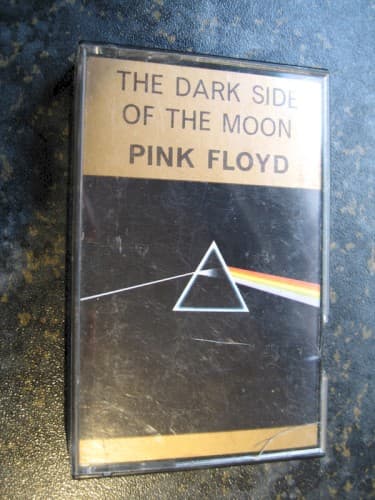
The Wall ranks below The Dark Side of the Moon in the Pink Floyd catalog because it prioritizes concept over melody, architecture over songs. Dark Side had a thesis about modern life and existential dread, but it also had 'Time,' 'Money,' 'Us and Them,' and 'The Great Gig in the Sky'—tracks that functioned as songs first and concept pieces second. The Wall has 'Comfortably Numb' and 'Hey You,' and the rest is scaffolding.
The album works best for listeners who want a rock opera to be an opera, who will accept theatrical excess and narrative pacing over the pleasures of a rock record. It is not for listeners who expect Pink Floyd to deliver the sonic invention and instrumental interplay of their early-to-mid-1970s work. The Wall is Roger Waters's vision, executed with Ezrin's help and Gilmour's reluctant participation, and it sounds like a solo project disguised as a band album.
The album has aged into a classic by reputation, but not by replay. The singles endure: 'Another Brick in the Wall, Part 2' is unavoidable, 'Comfortably Numb' is taught in guitar classes, 'Run Like Hell' still sounds tense and propulsive. The rest of the album is a commitment, and the 80-minute runtime punishes casual listening. The film adaptation and the touring spectacle have sustained The Wall's cultural presence, but the record itself is more admired than loved.
Start with 'Comfortably Numb,' 'Hey You,' and 'Mother' to hear the album's melodic core. If those tracks connect, move to 'Run Like Hell' and 'Another Brick in the Wall, Part 2' for the album's teeth. The full double album is for completists and rock opera devotees. For a Pink Floyd album that balances ambition and songs, The Dark Side of the Moon remains the clearer choice.
Track by track
Track Listing
In the Flesh
SolidThe album opens with crowd noise and a descending guitar riff, Waters addressing a stadium audience before the narrative flashback begins. The question mark in the title signals uncertainty, and the track functions as a prologue. Gilmour's guitar tone is dry and aggressive, and the fade-out leaves the question unanswered.
The Thin Ice
StandoutGilmour and Waters trade verses over a delicate piano and synth arrangement, warning that the thin ice of childhood will crack. The melody is pretty, almost a lullaby, and the production is restrained. Wright's Prophet-5 adds texture without overwhelming the vocal. A solid scene-setter that establishes the album's tone of impending collapse.
Another Brick in the Wall, Part 1
SolidThe first iteration of the album's central riff, played on bass synth with a steady drum machine pulse. Waters sings the verse about his father's death, and the chorus introduces the brick metaphor. The track is short and functional, more effective as a motif than as a standalone song.
The Happiest Days of Our Lives
SolidA transitional piece that sets up the schoolroom abuse, with Mason's drums rolling and crashing to mimic the violence of the teachers. The track is under two minutes and exists to cue the children's choir that follows.
Another Brick in the Wall, Part 2
StandoutPink Floyd's only number-one single, built on the same riff as Part 1 but with a disco-funk rhythm, a Gilmour guitar solo, and a children's choir singing the 'we don't need no education' hook. The production is slick, the groove is undeniable, and the lyric is blunt enough to be a playground anthem. It works as a single, but the repetition of the riff across three tracks reveals the concept's structural limitations. The most commercially successful moment on the album, and also the most obvious.
Mother
StandoutThe album's first fully realized song, with Gilmour and Waters trading verses about an overprotective, smothering parent. The fingerpicked acoustic guitar opens into a Hammond-driven chorus, and the harmonies between Gilmour and Waters carry a cloying sweetness that makes the maternal control audible. Ezrin's piano and Hammond arrangement adds weight without overproduction. The song functions independently of the narrative and ranks among the album's strongest melodic writing. Jeff Porcaro plays drums here in Mason's absence, and the performance is steady without being flashy.
Goodbye Blue Sky
WeakA Gilmour-sung acoustic piece with a childlike melody and a lyric about bombers over London during the Blitz. The production includes birdsong and layered vocals, and the track feels slight, more like an interlude than a developed song. The metaphor is obvious and the execution is precious.
Empty Spaces
SolidA brief, ominous track with reversed vocals and a sparse arrangement. The track was shortened from the originally planned 'What Shall We Do Now?' to fit the album's runtime, and the truncation is audible. It functions as a transition, nothing more.
Young Lust
SolidA Gilmour-sung blues-rock pastiche with a strutting riff and a lyric about seeking casual sex on tour. The vocal is processed to sound like an arena-rock cliché, and the track includes a phone call sound effect that interrupts the groove. The song works as a narrative device but feels like a parody of the touring rock lifestyle rather than a convincing dramatization of it.
One of My Turns
StandoutA two-part track that begins with a quiet, unsettling verse—Waters speaking over minimalist piano and synth—before exploding into a violent, distorted climax. The arrangement includes sound effects of a television being smashed and crockery breaking, and the shift from calm to chaos is effective. Gilmour's guitar solo in the second half is raw and unhinged, one of the few moments where the band sounds spontaneous. A strong track that earns its dramatics.
Don’t Leave Me Now
WeakA bitter, sarcastic ballad with Waters and Gilmour trading vocals over a slow, bluesy arrangement. The lyric fantasizes about violence against the unfaithful wife, and the melody is intentionally cloying. The track drags, and the sentiment is ugly without being insightful.
Another Brick in the Wall, Part 3
SolidThe briefest iteration of the brick riff, with Waters singing alone and the arrangement stripped to bass and synth. The track is 74 seconds and exists only to complete the motif before the wall is finished.
Goodbye Cruel World
WeakPink's final goodbye before sealing himself inside the wall, sung by Waters over a single acoustic guitar. The track is 73 seconds and ends with a door slamming shut. Filler.
Hey You
StandoutThe strongest track on side three, with a desperate, repeated vocal hook and a Gilmour guitar solo that conveys the isolation the lyric describes. The arrangement builds gradually, with Wright's Prophet-5 and Gilmour's bass providing a steady foundation. The song was moved from the end of side three to the beginning during sequencing, and the placement gives the second half of the album a melodic anchor it would otherwise lack. One of the few tracks that balances narrative function and musical quality.
Is There Anybody Out There?
SolidAn instrumental interlude with classical guitar, synth effects, and television audio. The track is atmospheric and brief, setting up the hotel room isolation of 'Nobody Home.' It works as a transition.
Nobody Home
StandoutWaters sings a catalog of possessions and symptoms—elastic bands, gohills boots, a Hendrix perm, a silver spoon on a chain—over orchestral arrangement and sparse piano. The lyric mirrors Syd Barrett's unreleased 'Vegetable Man,' and the track is a direct acknowledgment of Barrett's absence. Kamen's strings add melancholy without overwhelming the vocal. A quiet, effective moment that earns its length.
Vera
SolidA brief, wistful track referencing Vera Lynn and wartime nostalgia. The melody is simple and the lyric is sentimental. The track is 93 seconds and functions as a memory fragment.
Bring the Boys Back Home
SolidA short choral piece with the New York City Opera choir singing a plea to end the war. The track is 87 seconds and feels like an interlude, not a song.
Comfortably Numb
StandoutThe album's melodic and emotional peak, with Gilmour singing the verse about the doctor and the injection, and Waters singing the numbed-out chorus. The verse is built on Gilmour's chords, salvaged from his debut solo album, and the orchestral arrangement by Kamen gives the track a cinematic sweep. Gilmour's two guitar solos are the album's most expressive instrumental moments, the second one building to a sustained, singing climax that releases the tension the rest of the album compresses. The compromise between Gilmour's stripped arrangement and Waters's orchestral vision is audible, and the result is the one track where the concept and the music are equally strong. The song functions independently of the narrative and has become Pink Floyd's most enduring composition from The Wall.
The Show Must Go On
SolidA short, urgent track with Gilmour singing over a ticking clock and rising synth lines. The track is 96 seconds and serves as a transition into the fascist rally hallucination. It works as a narrative device.
In the Flesh
StandoutThe album's most aggressive track, with the question mark removed and the rally in full swing. Gilmour's guitar riff is sharp and propulsive, and the backing vocals chant in unison. Waters sings as the dictator, and the track delivers the menace the concept demands. The arrangement is tighter than most of the album, and the energy is sustained for over four minutes.
Run Like Hell
StandoutA motorik groove with a synth-guitar riff, processed vocals, and a paranoid lyric about fascist pursuit. Gilmour sings the verse, and the track locks into a steady pulse that feels modern for 1979. The production includes tire screeches and sound effects, and the song works both as a narrative piece and as a propulsive rock track. One of the album's most successful fusions of concept and craft.
Waiting for the Worms
SolidA marching chant with processed vocals and a rally crowd, dramatizing the violence-inciting speech. The track is effective as theater but inert as music, with no melodic development and a repetitive structure. It functions as a scene in the rock opera, not a song.
Stop
WeakPink's plea to end the hallucination, sung by Waters over a single chord. The track is 30 seconds and exists only to pivot from the rally to the trial. Filler.
The Trial
SolidThe album's Broadway climax, with Ezrin arranging and co-writing a five-minute courtroom fantasia. The track includes multiple vocal characters—the prosecutor, the schoolmaster, the mother, the wife, the judge—and a full orchestral arrangement with the New York Opera choir. The production is excessive by design, and the track is either thrilling or exhausting depending on the listener's tolerance for rock opera excess. The verdict is delivered: tear down the wall. The track is ambitious and ridiculous, the furthest the album travels from rock music and the closest it comes to musical theater.
Outside the Wall
StandoutThe album's quiet epilogue, with Waters singing over acoustic guitar, mandolin, clarinet, and concertina. The melody is simple and the lyric closes the loop, suggesting the cycle will repeat. The track ends with 'Isn't this where...' which connects to the opening line of 'In the Flesh?' and implies that the wall will be built again. A gentle, understated ending to a bombastic album.