The scorecard
9.0/10 · Essential
- Songwriting25%
- 9.5
- Production25%
- 9.0
- Performance15%
- 8.5
- Cohesion15%
- 8.0
- Originality10%
- 9.0
- Replay value10%
- 9.5
Every song earns its melody and its position: the title track switches from music-hall sample to garage roar without losing the thread, while "There Is a Light That Never Goes Out" builds a death-wish around a stolen Stones riff and makes it feel necessary.
Stephen Street's engineering captures Marr's layered guitars without clutter and makes the vocal treatments on the title track and "Bigmouth Strikes Again" sound like band decisions rather than studio tricks, though the Farnham sessions lack the live room presence of RAK.
Morrissey shifts from the deadpan sarcasm of "Frankly, Mr. Shankly" to the unguarded grief of "I Know It's Over" without missteps, and Mike Joyce's tom-tom loop on the title track proves the rhythm section could match Marr's ambition when given space.
The first five tracks form a deliberate arc from monarchy to loneliness, but the second half scatters: "Vicar in a Tutu" breaks the mood "There Is a Light That Never Goes Out" was building, and the closing track feels like an afterthought rather than a resolution.
Marr rewired the Stooges and the Stones into something specifically British and specifically 1986, avoiding both the synth that dominated the decade and the revivalism that would follow, though the musical debts are audible throughout.
Thirty-eight years later the album has lost none of its bite or its melancholy, and the weak tracks remain weak in the same proportions, which is how records age when the ambition was structural rather than tonal.
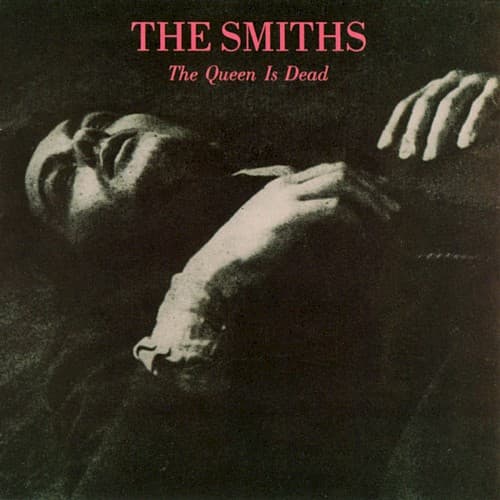
The Smiths The Queen Is Dead — Indie Rock Before It Needed the Name
The Smiths made their argument early and defended it for thirty-seven minutes. The Queen Is Dead, their third album, arrived in mid-1986 with a claim that British guitar music could matter again without stadium ambition or transatlantic cosplay, and it proved the point by borrowing from the Velvet Underground and the Stooges while sounding like neither. Johnny Marr wrote riffs that glittered and snarled in the same bar, and Morrissey matched him with lyrics that treated self-pity as a legitimate subject for rock songs if the self-pity was specific and the songs were built to last. The combination worked because both knew when to pivot: the title track opens with a music-hall sample, shifts into garage-rock drums and then lands on a verse melody too pretty for the rage underneath it, and the whole sequence feels deliberate rather than restless. The album that followed was harder and sadder than Meat Is Murder, with less filler and more focus, though the second half loses the thread the first half earns.
The stakes were higher than usual for an indie-rock record in 1986. The Smiths had spent two albums establishing themselves as the band serious British fans cared about while the charts belonged to synth-pop and stadium rock, and The Queen Is Dead was the chance to prove that indie authenticity and actual songcraft could coexist. Marr and Morrissey wrote most of it at Marr's home in Bowdon during 1985, retreating from London and from Rough Trade to focus without interference, and the distance shows in the music. The album sounds like the work of two people who knew what they wanted and had the skill to get it onto tape without concessions.
Stephen Street engineered, Morrissey and Marr produced, and the result was a record that sidestepped the decade's dominant sounds while mining the previous two for parts. It ranked second on the UK Albums Chart, spent twenty-two weeks there, and has appeared on every major greatest-albums list since, most recently at number 113 on Rolling Stone's 2020 revision. The argument held.
Garage Rock Rewired for Bedsits and Bus Rides
The album works because Marr understood that citing influences and recycling them are different acts. The title track was based on a song he began as a teenager, influenced by the Velvet Underground and Detroit garage rock, and the finished version keeps the Stooges' template while replacing the Detroit sprawl with Manchester claustrophobia. The tom-tom loop that drives the song was built by drummer Mike Joyce and engineer Stephen Street using a sampler, a studio solution that sounds like a band decision, and Marr's line of feedback through a wah-wah pedal holds the whole structure together without overwhelming it. "Never Had No One Ever" borrows directly from the Stooges' "I Need Somebody" but swaps the American alienation for something specifically British: Morrissey's lyric about feeling unsafe on the streets where he was born and raised. The music is beautiful and dark in the way Marr intended, and the performance never tips into pastiche because the rhythm section treats it like a song rather than a homage.
Marr's other debts are just as audible and just as transformed. "There Is a Light That Never Goes Out" pulls its guitar part from the Rolling Stones' cover of "Hitch Hike," which itself traced back to the Velvet Underground's "There She Goes Again," and the result is a lineage that enriches the song rather than explaining it. The melody Marr wrote is his own, and the arrangement—strings implied rather than played, guitars layered without clutter—sounds nothing like the Stones or the Velvets. "Bigmouth Strikes Again" was recorded at RAK Studios in August 1985 with a sped-up Morrissey vocal processed through a harmoniser, credited to the fictional Ann Coates, and the effect gives the song a manic edge that matches the punk-speed drum rolls Joyce delivers. Kirsty MacColl's backing vocal was scrapped because it sounded too strange, which says something about the band's tolerance for strangeness given what they kept.
Stephen Street's engineering captures Marr's dense web of guitars without turning them into sludge, and the production choices—Morrissey's voice run through effects on two tracks, the fade-in-out-in opening of "Some Girls Are Bigger Than Others"—feel like ideas that served the songs rather than decoration. The sessions were split between Drone Studios in Manchester, RAK Studios in London and Jacobs Studios in Farnham, and the album was completed by Christmas 1985 under the working title "Margaret on the Guillotine." The Farnham sessions produced the bulk of the album, though the earlier RAK work has a live-room presence the later tracks lack. "Frankly, Mr. Shankly" was re-recorded at Wessex Studios with John Porter after a technical fault rendered the first version unusable, and the final take sounds rushed compared to the rest of the album: the band tried to recreate the vibe of Sandie Shaw's "Puppet on a String" and missed, leaving a song that works on melody and lyric but not on feel.
The weaknesses are few but real. "Vicar in a Tutu" is a rockabilly pastiche with a music-hall swing and a cross-dressing clergyman, and it does nothing the album needs: the track breaks the mood between "The Boy with the Thorn in His Side" and "There Is a Light That Never Goes Out," and no amount of gender-norm subversion compensates for the hole it leaves in the sequence. "Some Girls Are Bigger Than Others" closes the album with a lyric Morrissey described as deliberately reduced of meaning, and it sounds like an ending because it is the last track, not because it earns the position. The fade effect Street devised is clever, the guitars are fine, and the song still feels like an afterthought.
A Record Front-Loaded by Design, Not Accident
The album peaks in its first half and coasts through portions of its second, which would be a problem if the peaks were not as high as they are. The opening stretch forms a deliberate arc: anti-monarchist garage roar, meta critique of the music business, unguarded despair, immigrant unease, and a light swipe at plagiarists. The sequence moves from public anger to private grief to a moment of levity, and the pacing works because each song earns its length and its position. The longest track runs nearly six minutes and justifies every second; the shortest runs two and a half and feels complete.
The back half starts strong, stumbles in the middle, recovers near the end, and then closes on a track that is neither strong enough to justify the position nor weak enough to cut. The problem is not the individual tracks but the sequencing: the penultimate song should close the record, and the fact that it does not suggests the band either could not see that in the studio or could not agree on it. One song was recorded at Drone Studios in July 1985 and was initially intended as a demo, but the band decided it was good enough to release as a single, and they were right.
The album is thirty-seven minutes, which is exactly the right length for what it attempts, though the distribution of those minutes could have been reconsidered. The eighteen months from first sketches to release gave the band time to write and record extensively, and the result is a tracklist with no obvious filler but also no ruthless final edit. A stronger record would have closed on the penultimate song and left the final track as a B-side, where it would have been fine.
The Album That Defined Indie Rock and Then Stopped Defining It
The Queen Is Dead is the best argument the Smiths made and the record that turned indie rock into a sound with expectations and a template, which means it is also the record that started the process of making indie rock predictable. In 1986 it was a jolt: guitar music that was literary without being pompous, British without being revivalist, and willing to treat loneliness and self-loathing as subjects for songs that cared about melody and arrangement. Marr's guitar work set a standard for what jangle could do when it was layered and sequenced with purpose, and Morrissey's lyrics proved that wit and sincerity could coexist in the same song if the wit was sharp enough and the sincerity was specific. Thirty-eight years later the album sounds exactly like what it is: a record made by two people at the height of their partnership, before the exhaustion and the legal disputes that delayed its release by seven months caught up with them. Marr later admitted he was "extremely ill" by the time the tour finished, and the album was the last the Smiths supported with live dates.
The album ranks as the Smiths' peak, though without other albums rated on the site yet that claim rests on critical consensus rather than comparative evidence. It is the record to start with if you are new to the band, because it has the best songs and the fewest duds, and "There Is a Light That Never Goes Out" and the title track are the two tracks that make the case most efficiently. "I Know It's Over" is the one to play if you want to understand why Morrissey's self-pity resonated with so many listeners, and "Bigmouth Strikes Again" is the one that connects the Smiths to punk without pretending they were a punk band. Skip "Vicar in a Tutu" and "Some Girls Are Bigger Than Others" unless you are a completist, and if the album works for you then the logical next step is Meat Is Murder, which is darker and more political, or the compilation Hatful of Hollow, which collects the singles and Peel sessions that show what the band sounded like before they had album-length ambitions.
The album aged better than most of its peers because it avoided the decade's dominant sounds and because Marr and Morrissey were solving problems specific to their moment rather than chasing trends. The production has dated in small ways—some of the vocal treatments sound like 1985, and the sampled drums on the title track are audibly sampled—but the songs have not, which is what happens when the writing is strong enough to survive the studio choices. The influence the album had on Britpop a decade later is obvious in retrospect, and the fact that Britpop became a dead end says more about the imitators than about the template. The Queen Is Dead remains what it was: a record that proved indie rock could be ambitious and specific at the same time, before ambition and specificity became indie rock's default settings and then its limitations.
Track by track
Track Listing
The Queen Is Dead
StandoutThe title track opens with a sampled snippet from the 1962 film The L-Shaped Room, then pivots into a music-hall excerpt of "Take Me Back to Dear Old Blighty" before the garage-rock assault begins. The tom-tom loop Joyce and Street built on a sampler drives the whole structure, and Marr's feedback line through a wah-wah pedal holds it together without dominating. The anti-monarchist lyric portrays the royal family as useless tabloid fodder, and Morrissey delivers it with the same deadpan snarl he uses for self-pity, which makes the public anger feel personal. The sped-up vocal processed through a harmoniser and credited to Ann Coates adds a manic edge to the final minute. The song runs over six minutes and earns every second by switching moods without losing coherence: it is a garage-rock song, a music-hall joke and a political screed at the same time, and all three elements work because the melody underneath them is strong enough to carry the weight. The track was among the last recorded for the album and was based on a song Marr began writing as a teenager, which explains both its confidence and its sprawl.
Frankly, Mr. Shankly
SolidA meta reflection on Morrissey's position in the music business, delivered with self-aware wit and a melody that almost compensates for the rushed production. The band tried to recreate the vibe of Sandie Shaw's "Puppet on a String" and did not quite get there, and a technical fault on the tape forced a re-recording at Wessex Studios with John Porter that sounds hurried compared to the rest of the album. The lyric about fame playing hideous tricks on the brain and the admission that Morrissey would rather be famous than righteous or holy is funny because it is plainly true, and the song works on that honesty even when the arrangement does not quite lock in. A solid track that does its job without being essential.
I Know It’s Over
StandoutThe album's emotional low point and one of Morrissey's most unguarded performances. The lyric about waking up alone and watching loutish lovers take their partners for granted is self-pitying in the way that made Morrissey famous, but the melody Marr wrote gives the self-pity a shape that makes it bearable and even moving. The song runs nearly six minutes and justifies the length by developing its ideas instead of repeating them: the verse about being kind and gentle requiring rare courage, the bridge about love being natural and real even if not for Morrissey, and the final verse that circles back to the loneliness without resolving it. Simon Goddard noted Morrissey's obvious depression in the lyric, but the song retains hope by framing kindness as a noble trait and love as real even when unfulfilled. The performance is restrained, with Morrissey singing just behind the beat and letting the pauses do as much work as the words. The guitars are layered but not dense, and the rhythm section stays out of the way. A song that could have been insufferable but is instead one of the album's peaks.
Never Had No One Ever
StandoutBased directly on the Stooges' "I Need Somebody," with Marr composing the track to evoke a mood that was beautiful and dark, inspired by his teenage experiences listening to Raw Power. The lyric reflects Morrissey's feeling of being unsafe on the streets of Manchester despite being from there, and the immigrant unease is specific enough to avoid sounding like generic alienation. The demo was recorded in December 1984, and a first version was completed in August 1985, which gave the band time to refine the arrangement until it balanced the Stooges influence with something distinctly Smiths. The guitars shimmer and brood at the same time, and Joyce's drumming is more restrained than on the title track, which lets the melody breathe. A strong track that earns its place in the first-half arc.
Cemetry Gates
StandoutA light, jaunty pop song that Stephen Street described as a nice bit of blessed relief within the broader flow of the album. The lyric takes swipes at plagiarists, and the music-hall backing gives the whole thing a playful edge that contrasts with the despair of "I Know It's Over" and the unease of "Never Had No One Ever." Marr recalled that the song originated during an informal writing session in his kitchen with Morrissey, and he was uncertain about it until Morrissey responded enthusiastically. The final version came together effortlessly, and it sounds like it: the guitars are sprightly, the melody is immediate, and the track runs two and a half minutes without overstaying. A minor song that does exactly what the sequence needs at that moment.
Bigmouth Strikes Again
StandoutDriven by fast drum rolls that give it a shot of punk adrenaline, with a sped-up Morrissey vocal processed through a harmoniser and credited to Ann Coates. Kirsty MacColl's backing vocal was scrapped because it sounded too weird, which suggests the band knew exactly how much strangeness the song could handle. The lyric casts Morrissey as a martyr with imagery evoking Joan of Arc's execution by fire, and Simon Reynolds noted a hint of reveling in the martyr posture, which is accurate and does not diminish the song. The melody is immediate, the arrangement is tight, and the track was the right choice for the lead single even though many at Rough Trade wanted "There Is a Light That Never Goes Out" instead. Marr insisted on this one because it was more energetic and striking, and he was correct. The song does not develop its ideas so much as repeat them at higher intensity, but at three minutes that is enough.
The Boy With the Thorn in His Side
StandoutMorrissey's recurring theme of being misunderstood, framed in more universal terms than usual. The lyric asks how people can hear the words and still not believe them, which NME described as one of his most poetic moments, and the metaphor of the thorn in the side works because it is specific enough to suggest the music industry's failure to appreciate the band without being limited to that reading. Marr composed the melody while riding a bus during the Meat Is Murder tour, and the final version was recorded at Drone Studios in July 1985 as what was intended to be a demo. The band decided it was strong enough to release as a single, and they were right: the guitars chime without clattering, the rhythm section locks in without overwhelming, and Morrissey's vocal is restrained in a way that makes the self-pity feel earned. A key track that justifies its status as a single and its place on the album.
Vicar in a Tutu
WeakA rockabilly pastiche with music-hall elements and a lyric about a cross-dressing clergyman. Terence Cawley noted its casual dismissal of gender norms and described it as sneakily subversive, which is true and also beside the point: the song does not work because it breaks the mood the album has been building and offers nothing in return. The guitars are fine, the melody is slight, and the whole thing feels like a joke that needed to stay a B-side. The weakest track on the album.
There Is a Light That Never Goes Out
StandoutMarr said that when they first played it, he thought it was the best song he had ever heard, and he was not far wrong. The lyric draws from the New York Dolls' "Lonely Planet Boy" and builds a death-wish around the image of being hit by a double-decker bus, with Simon Reynolds noting that Morrissey's depiction of doomed love and romanticised death evokes sincere yearning without lapsing into parody. The guitar part pulls from the Rolling Stones' cover of "Hitch Hike," which traced back to the Velvet Underground, and the result is a lineage that enriches the song without explaining it. The melody is Marr's own, and the arrangement—guitars layered without clutter, strings implied rather than played—sounds like nothing else on the album or in the Smiths' catalog. The performance is restrained, with Morrissey singing just ahead of the beat and letting the melody do the work. The song was not released as a single until 1992, five years after the band split, which was a mistake: it should have been the lead single and the closing track, and the fact that it was neither suggests the band could not see what they had or could not agree on it. The album's undeniable peak.
Some Girls Are Bigger Than Others
SolidMorrissey described the lyric as a deliberate reduction of meaning, intended to highlight the basic absurdity of recognising the contours of one's body, which is an interesting idea for a song that does not justify its position as the album closer. The fade-in-out-in opening is a clever studio trick devised by Stephen Street, the guitars are fine, and the whole thing feels like an afterthought. A decent song that belongs on a B-side compilation rather than as the final statement of the Smiths' best album.